


 English
 Español
 عربى
عربى
About Us
Exquisite Craftsmanship,
Excellent Quality
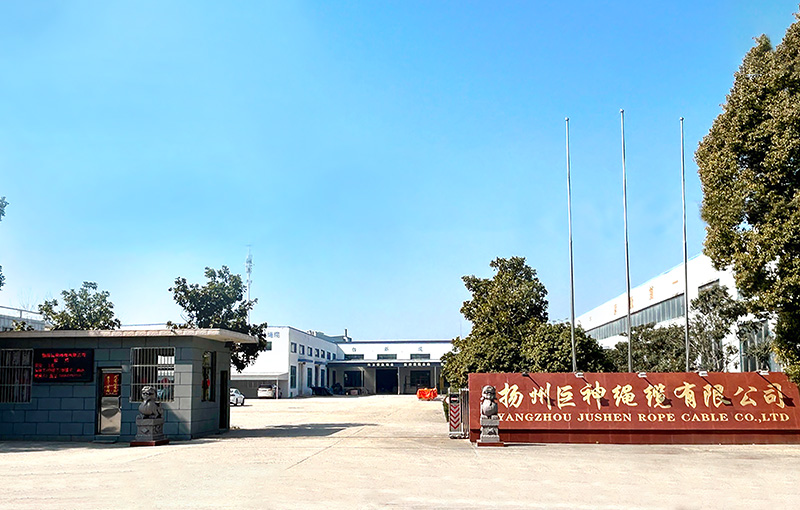
As a professional Net manufacturers and Net factory in China, Jushen has two trademarks: “JUSHEN” and “JSR”, designed production ability of mooring ropes is more than 8,500 tons annually, it has the modern, standard, full automatically mechanized workshop and inspection facilities. “JSR” ropes, which is applying international standard and with various products and full specifications, such as JSRLINE,JSRPET, JSRPA ,JSRHMPE, JSR-WINCHLINE and JSRMIX. Structure:3, 4, 6, 8, 12, 16, 24, 32, 48 strands and double braided, sizes is from dia. 3mm up to dia. 280mm for your option.
Jushen has achieved ISO9001: 2008 in accordance with Quality Management System of CCS and GJB900B- 2009 with certificates. It has obtained the plant certificates of CCS, GL, BV, NK and DNV, and it will be able to obtain the certificates of LR, ABS, KR, RINA etc. According to client’s requirements. Nowadays, Jushen has got the membership of China Ship building Industry Association and has been their authorized supplier and collaborator. It has already been a globally recognized professional and powerful manufacturer of mooring ropes in China, products of “JUSHEN” and “JSR” ropes are widely used on board oceangoing ships and offshore facilities, at wharfs and terminals, as well as in sports and military areas, clients are from all over the world: USA, Korea, Japan, Singapore, Europe, South America, etc.
We do promise to offer all our clients with high-quality and reliable service under the business philosophy “Integrity-based, Customer first” and create a bright future together with all our collaborators.
Welcome your contact and visit!

Latest
Update
News & Exhibition
-
2025.03.03
What are the causes of cable breakage and how to handle it?
The geographical location and meteorological environment of the berth are the main reasons for ship cable breakage. Generally speaking, berths are located in areas where rivers, sea currents are turbulent, or at the intersection of rivers and seas. Ports affected by strong swells... -
2025.03.03
How to avoid problems with the use of nylon ropes?
Nylon rope is a type of fiber silk product constructed from nylon slices. Due to the low production cost of this type of rope, its price on the market is also relatively low, which can be widely used. Moreover, the characteristic of nylon ropes is their strength, heat resistance,... -
2025.03.03
What are the types of safety ropes that can be classified according to their purpose?
There are many types of safety ropes, and if classified according to their purpose, they can be divided into three categories: horizontal safety ropes, vertical safety ropes, and fire safety ropes. Safety ropes with different functions have different characteristics:1、 Horizontal...

Related Products
-
 View More
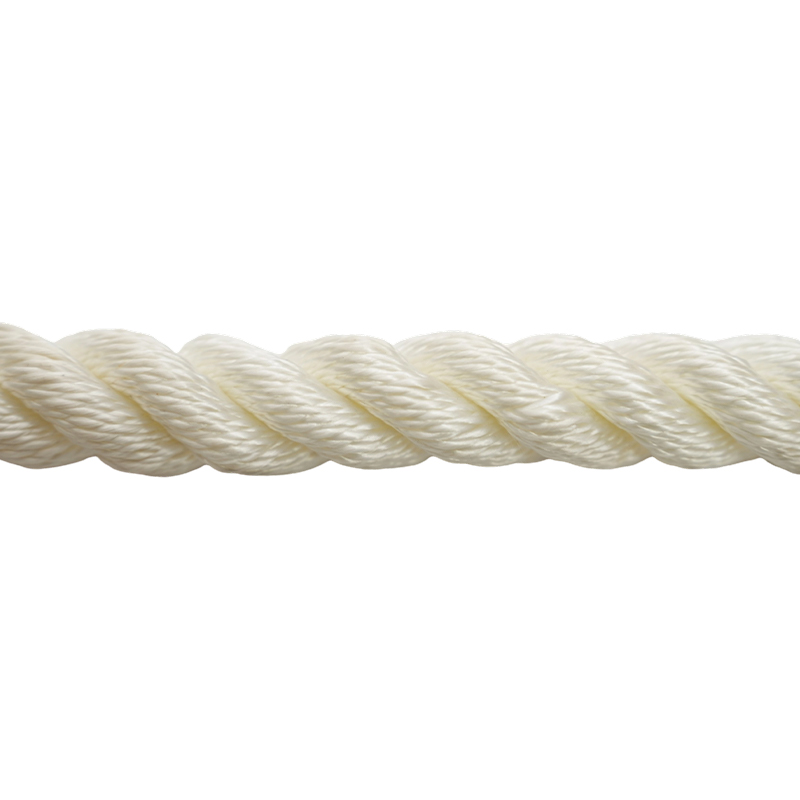
3-Strand Polypropylene Mono-filament Mooring Rope / Line
-
 View More
3-Strand Polypropylene Multi-Filament Hawser Mooring Rope / Line
-
 View More
8-Strand Polypropylene Mono-filament Hawser Mooring Rope / Line
-
 View More
8-Strand Polypropylene Multi-filament Mooring Rope / Line
-
 View More
12-Strand Polypropylene Multi-filament Hawser Mooring Rope / Line
-
 View More
Polypropylene Multi-filament Double Braided Hawser Mooring Rope / Line


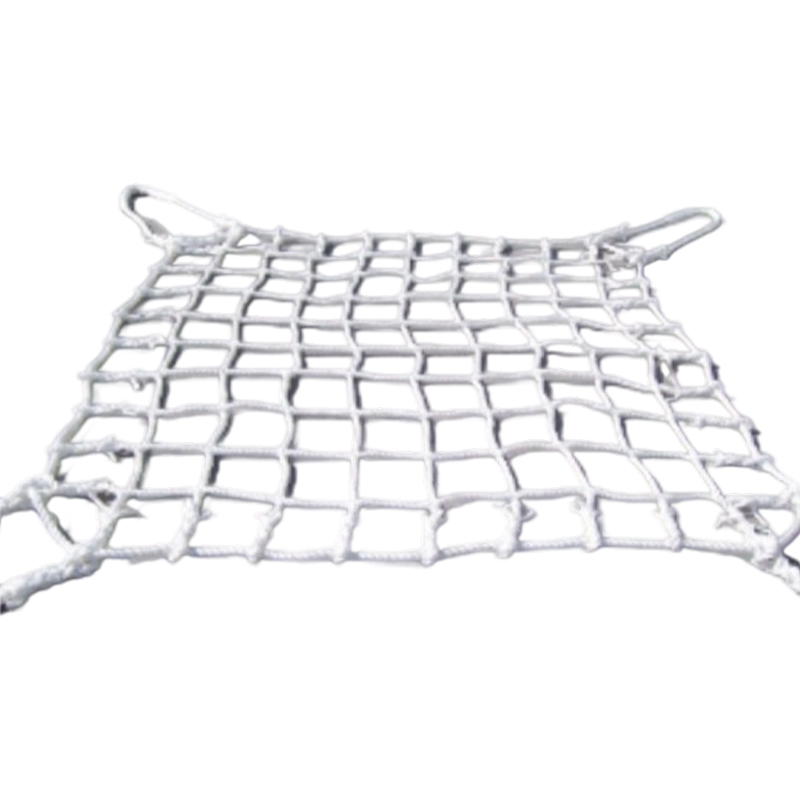
Nets, as a key rope and cable product, play a vital role in industry and daily life. Yangzhou Jushen Rope Co., Ltd., with its strong R&D team, is able to efficiently develop and produce customized net products based on customer drawings or samples. This demonstrates the company's deep expertise in rope and cable technology.
What type of structure does a net typically refer to in the rope and cable industry? How do its underlying principles impact practical applications?
In the rope and cable industry, a net generally refers to a mesh-like structure woven from fibers or ropes, such as protective nets, safety nets, or industrial nets. The design of such structures is based on mechanical principles, such as uniform load distribution through the tension distribution of the mesh, thereby improving overall strength and durability. Improper mesh design can lead to localized stress concentrations, posing a risk of failure. During R&D, Yangzhou Jushen Rope Co., Ltd. optimizes the mesh's weave density and node strength based on specific customer requirements (such as drawings or samples). For example, for construction safety nets, the company's team simulates load distribution to ensure the net structure remains stable in dynamic environments and avoids tearing or deformation. This highlights how the company leverages its R&D expertise to transform fundamental principles into reliable product solutions.
What are the key considerations in selecting materials for nets? How do these factors affect product performance and lifespan?
Material is a core element of nets, encompassing fiber type, coating treatment, and environmental adaptability. Common materials include synthetic fibers (such as nylon or polyester), which require properties such as UV resistance, corrosion resistance, and flexibility. If the material is not weather-resistant, it can be easily degraded by UV rays or chemicals in outdoor applications, leading to embrittlement or a loss of strength. When developing custom nets, Yangzhou Jushen Rope Co., Ltd. analyzes material requirements based on customer samples. For example, for fishing nets used in marine environments, the team prioritizes composite fibers that are resistant to saltwater corrosion. Through laboratory testing, the company ensures that the material maintains its elasticity over long-term use, reducing maintenance requirements. This material development process demonstrates how the company balances cost, performance, and sustainability to provide customers with durable netting products.
What engineering principles are involved in the net design process? How can the design be ensured to meet the requirements of a specific application?
Net design adheres to engineering mechanics principles, including mesh geometry, load calculations, and failure mode analysis. The mesh shape (such as square or diamond) affects impact resistance and breathability. Designs that ignore dynamic loads can lead to unexpected breakage in sports nets, such as tennis nets. Yangzhou Jushen Rope Co., Ltd.'s R&D team performs parametric modeling based on customer drawings, optimizing mesh size and boundary reinforcement. For example, when customizing industrial safety nets, the team simulates the impact of falling objects and adjusts node connection points to distribute stress. This design approach ensures the net operates efficiently in specific scenarios, such as construction sites. The company also verifies the feasibility of the design through iterative prototype testing to avoid potential risks.
What innovative trends are emerging in net production technology? How do these trends enhance product customization?
Net production involves weaving processes, heat treatment, and quality control. Innovative trends include automated weaving equipment and high-precision coating applications, which improve production efficiency and consistency. Underdeveloped technology can lead to uneven mesh size or fluctuating strength. Yangzhou Jushen Rope Co., Ltd. leverages its R&D strengths to integrate advanced technologies, such as computer-aided manufacturing (CAM), to quickly adjust production line parameters based on customer samples. For example, for customized safety nets, the company uses a modular weaving system to seamlessly produce complex patterns. This not only shortens delivery cycles but also ensures product reliability under extreme conditions. Through continuous R&D, the company integrates emerging technologies into its production processes to meet diverse needs.
What are the quality assessment standards for nets? How is the R&D process used to ensure that products meet these standards?
Quality assessment focuses on strength testing, durability verification, and environmental simulations. Key criteria include tensile strength, elongation, and weather resistance; neglecting these can lead to product failure in critical applications. Yangzhou Jushen Rope Co., Ltd.'s R&D team oversees the entire process, from material screening to finished product testing. For example, based on customer-provided samples, the team conducts accelerated aging experiments to simulate long-term exposure conditions and assess the performance degradation of the net structure. This R&D-driven approach allows the company to identify potential defects (such as fiber degradation) and optimize the formulation or process. This ensures the safety of nets in harsh environments such as mines or ships while reinforcing the company's commitment to quality.
How do net applications vary across industries? How does the R&D team customize development to address these differences?
Net applications vary across industries: construction emphasizes impact resistance, agriculture focuses on lightweighting, and the marine sector requires corrosion resistance. These differences require the net structure to possess specific features, such as breathability or buoyancy control. If the development process doesn't consider the application scenario, the product may not meet actual needs. Yangzhou Jushen Rope Co., Ltd. leverages its R&D agility to analyze customer drawings and identify industry-specific characteristics. For example, when customizing trawl nets for fishing clients, the team optimizes mesh size to reduce drag while enhancing biofouling resistance. Through interdisciplinary R&D, the company integrates knowledge from materials science and fluid mechanics to ensure the nets operate efficiently in target industries, such as aquaculture or sports.
What is the core role of the R&D team in net product development? How does it drive innovation and problem-solving?
The R&D team's core role is to integrate theoretical knowledge with practical applications, solving customer challenges through iterative optimization. This involves failure analysis, prototype testing, and technological iteration; lacking R&D depth can hinder the ability to address complex requirements. The Yangzhou Jushen Rope Co., Ltd. team leverages its multidisciplinary expertise to develop customized solutions based on customer samples. For example, when faced with high-load requirements, the team experiments with new braiding techniques to increase the net's load-bearing capacity. This R&D-oriented approach not only shortens innovation cycles but also helps the company anticipate future trends, such as sustainable materials, and provide customers with forward-thinking products.

More than 20 years of experience in providing solutions to large, medium and small enterprises around the world.

+86-15150801053(Mr. Yang )
+86-514-88777688


Copyright © 2025 by Yangzhou Jushen Rope.Co.,Ltd.
All Rights Reserved.
 Custom Net Manufacturers
