


 English
 Español
 عربى
عربى

About Us
Exquisite Craftsmanship,
Excellent Quality
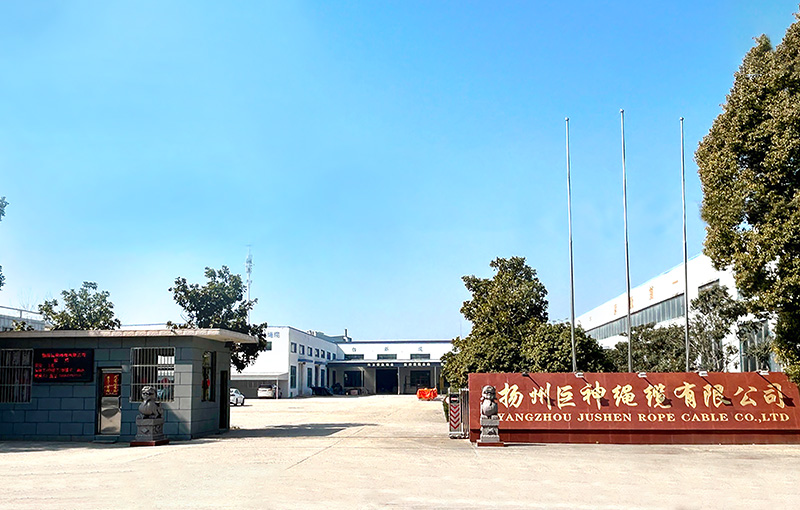
As a professional Sling manufacturers and Sling factory in China, Jushen has two trademarks: “JUSHEN” and “JSR”, designed production ability of mooring ropes is more than 8,500 tons annually, it has the modern, standard, full automatically mechanized workshop and inspection facilities. “JSR” ropes, which is applying international standard and with various products and full specifications, such as JSRLINE,JSRPET, JSRPA ,JSRHMPE, JSR-WINCHLINE and JSRMIX. Structure:3, 4, 6, 8, 12, 16, 24, 32, 48 strands and double braided, sizes is from dia. 3mm up to dia. 280mm for your option.
Jushen has achieved ISO9001: 2008 in accordance with Quality Management System of CCS and GJB900B- 2009 with certificates. It has obtained the plant certificates of CCS, GL, BV, NK and DNV, and it will be able to obtain the certificates of LR, ABS, KR, RINA etc. According to client’s requirements. Nowadays, Jushen has got the membership of China Ship building Industry Association and has been their authorized supplier and collaborator. It has already been a globally recognized professional and powerful manufacturer of mooring ropes in China, products of “JUSHEN” and “JSR” ropes are widely used on board oceangoing ships and offshore facilities, at wharfs and terminals, as well as in sports and military areas, clients are from all over the world: USA, Korea, Japan, Singapore, Europe, South America, etc.
We do promise to offer all our clients with high-quality and reliable service under the business philosophy “Integrity-based, Customer first” and create a bright future together with all our collaborators.
Welcome your contact and visit!

Latest
Update
News & Exhibition
-
2025.03.03
What are the causes of cable breakage and how to handle it?
The geographical location and meteorological environment of the berth are the main reasons for ship cable breakage. Generally speaking, berths are located in areas where rivers, sea currents are turbulent, or at the intersection of rivers and seas. Ports affected by strong swells... -
2025.03.03
How to avoid problems with the use of nylon ropes?
Nylon rope is a type of fiber silk product constructed from nylon slices. Due to the low production cost of this type of rope, its price on the market is also relatively low, which can be widely used. Moreover, the characteristic of nylon ropes is their strength, heat resistance,... -
2025.03.03
What are the types of safety ropes that can be classified according to their purpose?
There are many types of safety ropes, and if classified according to their purpose, they can be divided into three categories: horizontal safety ropes, vertical safety ropes, and fire safety ropes. Safety ropes with different functions have different characteristics:1、 Horizontal...

Related Products
-
 View More
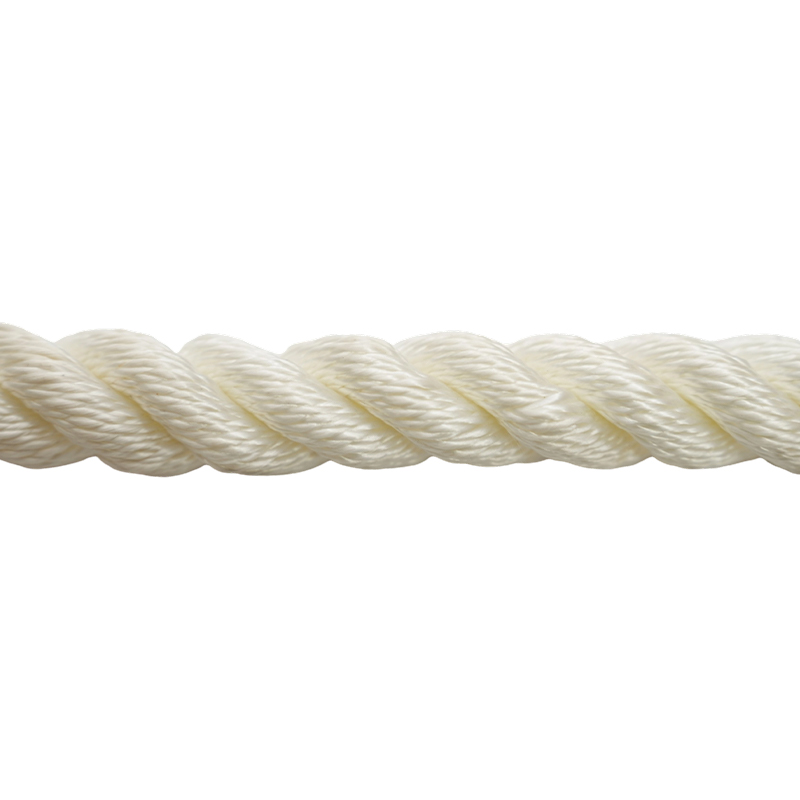
3-Strand Polypropylene Mono-filament Mooring Rope / Line
-
 View More
3-Strand Polypropylene Multi-Filament Hawser Mooring Rope / Line
-
 View More
8-Strand Polypropylene Mono-filament Hawser Mooring Rope / Line
-
 View More
8-Strand Polypropylene Multi-filament Mooring Rope / Line
-
 View More
12-Strand Polypropylene Multi-filament Hawser Mooring Rope / Line
-
 View More
Polypropylene Multi-filament Double Braided Hawser Mooring Rope / Line


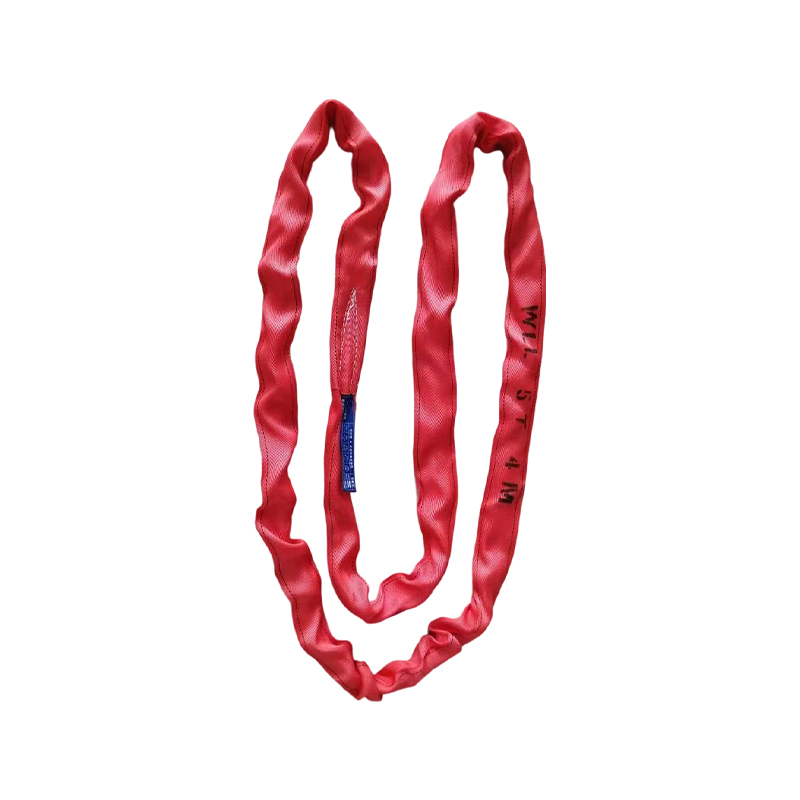
In the field of industrial lifting and hoisting, slings are a critical piece of equipment with widespread and complex applications. When developing new products, Yangzhou Jushen Rope Co., Ltd. always prioritizes customer collaboration, fully incorporating user input to optimize designs. At the same time, the company adheres to on-time production for every order, ensuring reliable product delivery.
Question: What is a sling? What core role does it play in industrial lifting?
Answer: A sling is a flexible connection device primarily used for lifting, hoisting, and securing heavy objects. It is indispensable in the construction, logistics, and manufacturing industries. Its core function is to provide safe and reliable load transfer, distributing forces to prevent equipment damage or accidents. For example, during lifting operations, a sling connects the hook to the load, ensuring smooth movement. When developing new products, Yangzhou Jushen Rope Co., Ltd. closely collaborates with customers to understand the needs of specific application scenarios. This allows them to design more practical sling solutions and avoid inefficiencies or increased risks caused by inappropriate designs. This collaborative approach enhances the adaptability of slings, enabling them to maximize their effectiveness in complex industrial environments.
Question: What are the main types of slings? What specific scenarios are each suitable for?
Answer: Common sling types include wire rope slings, synthetic fiber slings, and chain slings. Wire rope slings, with their high strength and wear resistance, are suitable for heavy industries such as mining and port lifting. Synthetic fiber slings are lightweight and corrosion-resistant, making them commonly used in the chemical and food industries. Chain slings are suitable for high-temperature or high-impact environments, such as metallurgical operations. When selecting a sling, consider load weight, environmental conditions (such as humidity and temperature), and operating frequency. When customizing these products, Yangzhou Jushen Rope Co., Ltd. conducts in-depth discussions with customers to analyze their unique operating conditions and ensure the sling type matches their specific needs, thereby optimizing performance and extending service life. Furthermore, our commitment to on-time production ensures timely delivery of orders and avoids project delays.
Question: How do you choose the right sling for a specific application? What are the key factors?
Answer: Choosing a sling requires a comprehensive assessment of multiple factors: load characteristics (such as shape and weight distribution), environmental factors (such as corrosion or temperature fluctuations), safety factor, and operating frequency. The key is calculating the working load limit (WLL) and accounting for dynamic loads to ensure the sling does not overload or fail. Material compatibility is also crucial; for example, salt spray-resistant materials are preferred in marine environments. During the development process, Yangzhou Jushen Rope Co., Ltd. repeatedly discusses these details with customers, and through professional analysis, adjusts design parameters to create the most suitable sling product. This user-centric approach, combined with the company's efficient production processes, ensures that the sling is both safe and effective in real-world applications.
Question: What are the key considerations for safe operation when using a sling?
Answer: The key to safe sling operation includes regularly inspecting for signs of wear, avoiding sharp edges, correctly calculating angle coefficients to distribute loads, and adhering to load limits. Operators must be trained to identify potential risks, such as twisting or kinking, which can lead to breakage. Environmental factors, such as chemical exposure or extreme temperatures, must also be factored into risk assessments. Yangzhou Jushen Rope Co., Ltd. emphasizes that product quality stems from strict production controls. By fulfilling orders on time and reducing inventory overstock, they provide fresh, reliable slings and mitigate safety risks associated with aging. When designing new products, the company incorporates customer feedback to optimize safety features, such as strengthening joints or adding visual warning signs.
Question: How does Sling maintenance and care affect its lifespan and reliability? What are some best practices?
Answer: Maintaining a Sling is key to extending its lifespan. This includes regular cleaning, storing in a dry environment, inspecting for damage (such as broken wires or frayed fibers), and following manufacturer guidelines for lubrication or replacement. Best practices recommend maintaining an inspection log to ensure condition assessment before each use to avoid unexpected failures. Yangzhou Jushen Rope Co., Ltd. prioritizes material durability in production and, through customer engagement, identifies common maintenance pain points to design Slings that are easier to maintain. The company's commitment to on-time delivery means products can be put into service quickly, reducing idle losses and further improving overall reliability.
Question: How does Yangzhou Jushen Rope Co., Ltd. raise industry standards with its Sling products?
Answer: Yangzhou Jushen Rope Co., Ltd. integrates customer engagement into its core processes to ensure each Sling is optimized for specific needs, driving the industry towards greater safety and efficiency. For example, by analyzing feedback to improve material selection and design details, the company's products excel in diverse working conditions. Furthermore, adhering to on-time production ensures supply chain stability and avoids project disruptions. This professional practice not only strengthens Sling's application value but also sets a benchmark for quality.

More than 20 years of experience in providing solutions to large, medium and small enterprises around the world.

+86-15150801053(Mr. Yang )
+86-514-88777688


Copyright © 2025 by Yangzhou Jushen Rope.Co.,Ltd.
All Rights Reserved.
 Custom Sling Manufacturers
