


 English
 Español
 عربى
عربى
What Are the 6 Types of Mooring Ropes? A Complete Guide
Content
- 1 The 6 Types of Mooring Ropes at a Glance
- 2 Nylon Mooring Ropes — The Shock Absorber of the Dock
- 3 Polyester Mooring Ropes — Stability and Consistency Under Load
- 4 Polypropylene Mooring Ropes — Lightweight and Buoyant but With Limits
- 5 HMPE Mooring Ropes — High-Performance Lines for Demanding Environments
- 6 Natural Fiber Mooring Ropes — Historical Context and Remaining Niche Uses
- 7 Wire Rope as a Mooring Line — Strength With Significant Trade-Offs
- 8 How Mooring Rope Construction Affects Performance
- 9 Selecting the Right Mooring Rope for Your Vessel and Berth
- 10 Mooring Rope Inspection, Maintenance, and Retirement Criteria
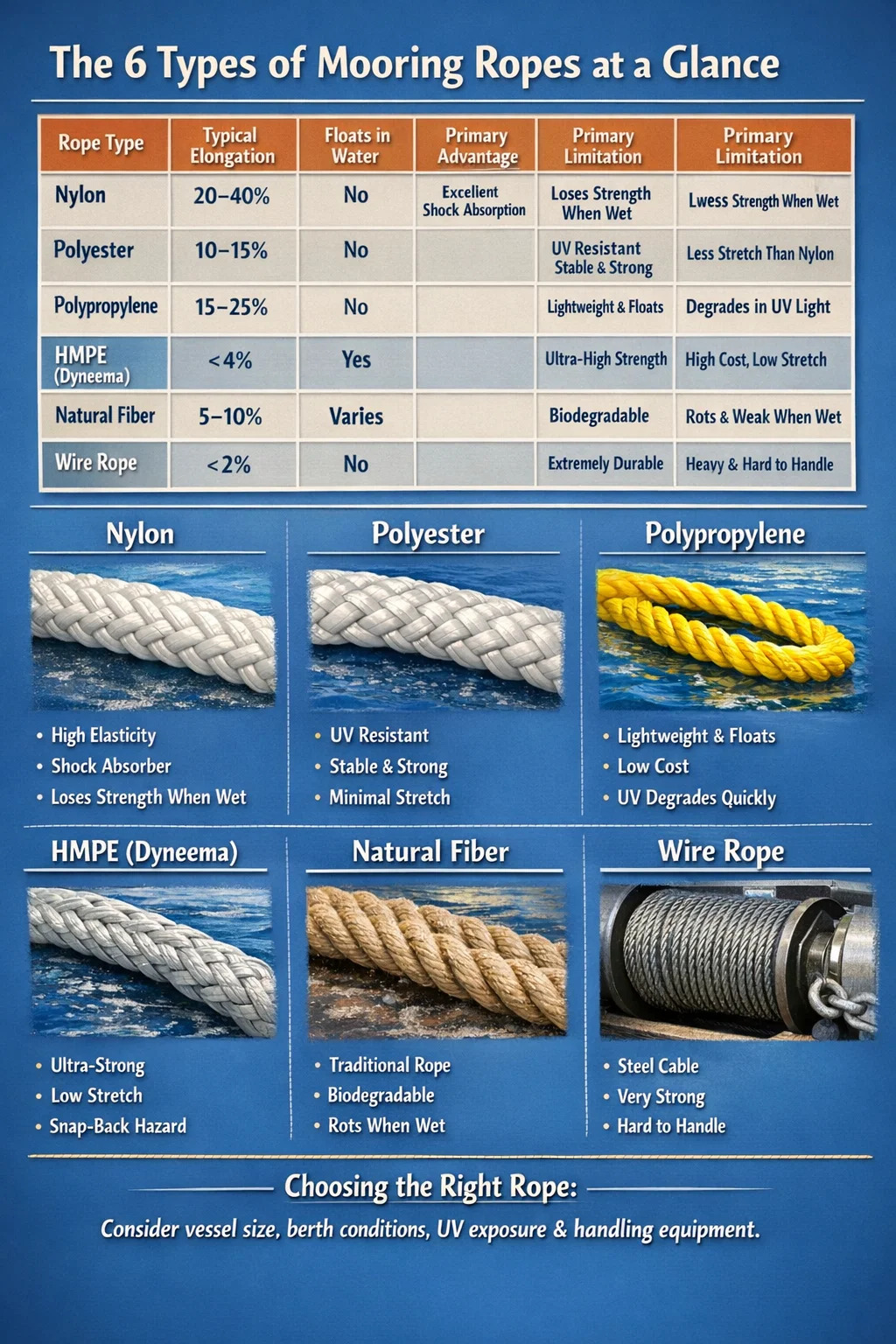
The 6 Types of Mooring Ropes at a Glance
The six main types of mooring ropes are nylon, polyester, polypropylene, high-modulus polyethylene (HMPE), natural fiber ropes, and wire rope. Each type serves a distinct role depending on the vessel size, berthing environment, tidal range, and the forces a line must absorb. Getting the rope type wrong is not just an inconvenience — it can lead to parted lines, damage to fenders, injury to dock workers, or a vessel breaking free during a storm. Understanding the specific properties of each type is essential for anyone responsible for a vessel's safe mooring.
Mooring ropes are broadly categorized by the raw material from which they are made and the construction method used. The material governs stretch, strength, UV resistance, and behavior when wet, while construction — twisted, braided, or parallel strand — affects handling, fatigue life, and how the rope seats itself on a winch drum. The table below summarizes the six types before we explore each one in depth.
| Rope Type | Typical Elongation | Floats in Water | Primary Advantage | Primary Limitation |
|---|---|---|---|---|
| Nylon | 20–40% | No | Excellent shock absorption | Loses ~15% strength when wet |
| Polyester | 10–15% | No | Stable strength, UV resistant | Less shock absorption than nylon |
| Polypropylene | 15–25% | Yes | Lightweight, low cost | Degrades quickly under UV |
| HMPE (Dyneema/Spectra) | <4% | Yes | Highest strength-to-weight ratio | High cost, low elongation risk |
| Natural Fiber | 5–10% | Varies | Traditional, biodegradable | Rots, molds, weak when wet |
| Wire Rope | <2% | No | Minimal stretch, durable | Heavy, difficult to handle |
Nylon Mooring Ropes — The Shock Absorber of the Dock
Nylon remains one of the most widely used mooring line materials in recreational and light commercial boating precisely because of its ability to stretch. A properly sized nylon mooring line can elongate by 20 to 40 percent of its working length before reaching break strength. This elasticity acts like a built-in shock absorber, dissipating surge energy that would otherwise transfer directly into cleats, bollards, or the vessel's hull fittings.
When a vessel surges forward in its berth — caused by a passing vessel's wake, tidal change, or wind gust — a nylon breast line or spring line will stretch under the load and then return toward its original length as the load eases. Without this give, even a moderate surge can produce peak loads of two to three times the static holding force. Rigid lines cannot absorb that spike; nylon can.
Construction Options and Their Trade-Offs
Nylon is available in three-strand twisted, eight-strand plaited, and double-braid constructions. Three-strand twisted nylon is inexpensive, easy to splice, and well-suited for docklines on smaller craft up to about 40 feet. Double-braid nylon offers better abrasion resistance and a smoother surface that feeds through chocks and fairleads more easily. Eight-strand plaited nylon is popular on larger commercial vessels because it lies flat on a winch drum and has predictable elongation behavior.
The Wet-Strength Penalty
One important limitation: nylon loses approximately 10 to 15 percent of its break strength when saturated with water. This is a factor that must be accounted for when sizing mooring lines. If a dry nylon line has a break strength of 10,000 lbf, its effective wet strength is closer to 8,500–9,000 lbf. Industry practice is to apply a safety factor of at least 5:1 on mooring lines, which automatically provides a buffer for this wet-strength reduction, but it is still important to understand why published break strengths may not reflect real-world conditions.
Nylon also degrades under prolonged UV exposure, though more slowly than polypropylene. Storing lines below deck or under a cover when not in use will significantly extend their service life. A well-maintained nylon dockline used seasonally can realistically last five to seven years before it needs inspection and replacement.
Polyester Mooring Ropes — Stability and Consistency Under Load
Polyester mooring ropes occupy the middle ground between the high-stretch behavior of nylon and the near-zero-stretch characteristics of HMPE. With typical elongation values of 10 to 15 percent at break, polyester lines provide enough give to avoid excessive shock loading while keeping a vessel positioned predictably within its berth.
The defining commercial advantage of polyester over nylon is that it retains virtually the same strength whether dry or wet. There is no wet-strength penalty, which makes sizing calculations straightforward. Polyester also demonstrates superior UV resistance compared to both nylon and polypropylene, making it a natural choice for vessels moored in open, sun-exposed berths or in tropical climates where UV radiation is intense year-round.
Common Applications for Polyester Lines
Polyester mooring lines are frequently chosen for:
- Mediterranean-style mooring where a vessel is secured bow- or stern-to a quay with anchor or lazy lines taking the primary load
- Long-term liveaboard situations where consistent performance over years matters more than low initial cost
- Commercial vessels that require lines to behave predictably during watch-keeping routines
- Marina operators supplying standard dock lines, because polyester's durability reduces replacement frequency
Creep Resistance
Polyester exhibits excellent resistance to creep — the gradual elongation that occurs when a rope is held under sustained load below its break strength. This matters during prolonged heavy-weather mooring, where lines may be under significant tension for hours. A line that creeps will allow the vessel to drift progressively farther from the dock, eventually making contact with fendering or neighboring vessels. Polyester's low creep rate keeps the vessel where it was initially placed.
Polypropylene Mooring Ropes — Lightweight and Buoyant but With Limits
Polypropylene is the only common synthetic mooring rope material with a density lower than water, meaning polypropylene ropes float. This single characteristic makes polypropylene lines the default choice in specific applications where a floating line is operationally necessary — most notably as a heaving line, a pick-up buoy pendant, or anywhere the rope must remain visible and accessible on the surface rather than sinking and fouling propellers.
In terms of elongation, polypropylene sits between nylon and polyester at roughly 15 to 25 percent at break. It is also one of the lightest synthetic options, making coiling, throwing, and handling easier for a single-handed operator or a small crew working a busy commercial dock.
The UV Degradation Problem
Polypropylene has a significant and well-documented weakness: it degrades faster under UV radiation than any other synthetic mooring rope material. Untreated polypropylene exposed to direct sunlight in a tropical or high-altitude environment can lose a measurable percentage of its break strength within a single season. UV-stabilized grades of polypropylene are available and do extend service life, but they still do not match the UV durability of polyester.
Visual signs of UV degradation in polypropylene lines include a chalky or faded surface color, surface fibers that break away easily when rubbed, and a general stiffness or brittleness that was not present when the rope was new. Any mooring rope showing these signs should be retired immediately, regardless of how it performs on a simple hand-pull test.
Where Polypropylene Is and Is Not Appropriate
Appropriate uses include short-term mooring lines in sheltered, low-UV environments, pick-up buoy pendants, heaving lines, and temporary lines used during haulout or delivery voyages. Polypropylene is generally not recommended as a primary long-term mooring line for vessels moored outdoors in sunny climates, nor for any application where predictable long-term strength is critical.
HMPE Mooring Ropes — High-Performance Lines for Demanding Environments
High-modulus polyethylene fiber — sold commercially under brand names such as Dyneema and Spectra — represents the high end of synthetic mooring rope technology. HMPE ropes offer a strength-to-weight ratio roughly 8 to 15 times greater than steel wire of equivalent diameter, combined with elongation values typically below 4 percent. This combination of extreme strength and minimal stretch makes HMPE mooring ropes the standard choice for large commercial vessels, offshore platforms, and cruise ships where handling heavy conventional lines would require mechanical assistance and where weight reduction is operationally significant.
A typical 64mm nylon mooring line might have a break strength around 130 tonnes. A 64mm HMPE line can exceed 400 tonnes break strength. In practical terms, this means HMPE lines can be dramatically smaller in diameter for the same holding capacity, making them easier to handle, store, and feed through hardware. HMPE also floats, which is an advantage when managing lines in busy commercial ports.
The Snap-Back Risk Associated With Low Elongation
The very property that makes HMPE valuable — low elongation — also creates a serious safety hazard that all personnel working near these lines must understand. Because HMPE stores very little elastic energy under load, a parting line does not retract gradually like a stretched nylon line. Instead, it snaps back along its length with almost no warning and at very high velocity. The snap-back zone — typically a cone-shaped area extending behind each end of the rope — must be kept clear of personnel at all times when lines are under load. Commercial port safety protocols specifically address this hazard, and it has been responsible for fatalities in major ports worldwide.
Chafe Sensitivity and Protection Requirements
Despite their impressive tensile strength, HMPE fibers are sensitive to chafe at contact points. Running an unprotected HMPE mooring line over a rough fairlead or through a corroded chock can significantly reduce the rope's effective strength at that point. Chafe guards — typically a sleeve of abrasion-resistant material such as nylon or polyester — must be fitted at every contact point. Regular inspection of these guards and the line beneath them is essential maintenance practice.
Natural Fiber Mooring Ropes — Historical Context and Remaining Niche Uses
Natural fiber ropes — including manila, sisal, hemp, and coir — dominated maritime mooring for centuries before synthetic fibers became widely available after World War II. Today, their use as primary mooring lines is largely limited to heritage vessels, theatrical or display purposes, and specific cultural maritime traditions. Understanding them remains relevant for anyone working with traditional vessels or maintaining a historically accurate working vessel.
Manila, derived from the abacá plant native to the Philippines, was historically considered the premium natural fiber rope for marine use. It has moderate elongation of around 5 to 10 percent and reasonable tensile strength for a natural material, but its working life in a wet maritime environment is measured in months rather than years. When manila rope gets wet, it swells, stiffens, and becomes harder to handle. Repeated wetting and drying cycles accelerate internal fiber degradation, and the rope may lose up to 30 percent of its dry-state strength after sustained exposure to seawater.
Rot, Mold, and Storage Challenges
The most serious limitation of all natural fiber ropes is biological degradation. Mold and rot can establish themselves within the core of a twisted natural fiber rope without showing obvious external signs, particularly if the rope is stored damp or in an enclosed space. A rope that looks intact on the outside may have lost a substantial portion of its strength internally. For this reason, natural fiber mooring ropes require more frequent and thorough inspection than synthetics — testing individual yarns for brittleness and discoloration, not just assessing surface condition.
Coir rope, made from coconut fiber, has the interesting property of floating on water and resisting rot better than most other natural fibers, but its tensile strength is low, limiting it to light-duty applications such as dinghy painters or decorative use. Hemp rope, now experiencing modest revival interest in eco-conscious maritime communities, offers better strength than coir but still requires careful drying and storage to prevent biological degradation.
Wire Rope as a Mooring Line — Strength With Significant Trade-Offs
Steel wire rope is used as a mooring line primarily on large commercial vessels, including tankers, bulk carriers, and container ships, where the sheer size of the vessel demands lines with very high break strength and minimal elongation. Wire rope elongation is typically less than 2 percent, making it essentially a rigid connection between vessel and shore fitting. This rigidity helps hold large vessels precisely in position within a berth, which is operationally important at loading terminals where alignment with pipelines, conveyor systems, or crane rails must be maintained.
Wire rope mooring lines are typically made from galvanized or stainless steel strands laid around a core, with common constructions including 6×19 and 6×37 (referring to the number of strands and wires per strand). The 6×37 construction uses more, thinner wires and is more flexible than 6×19, making it easier to handle on a winch drum. Even so, wire rope handling requires mechanical assistance — capstans, winches, or motorized mooring systems — because the weight and stiffness of a wire mooring line of commercial scale makes manual handling impractical and hazardous.
Inspection Challenges and Corrosion
Wire rope in marine service is subject to both mechanical fatigue and corrosion. Broken wires — called "meat hooks" in seamanship because of the injury hazard they present — must be counted and tracked as part of a structured inspection program. International standards such as ISO 4309 specify discard criteria based on the number of broken wires per lay length. Corrosion can be insidious because it often begins inside the rope's core where it cannot be seen during a surface inspection. Regular lubrication helps retard internal corrosion, but wire rope mooring lines on commercial vessels are typically given a defined service life and replaced on a scheduled basis rather than run to failure.
Combination Mooring Tails
Because wire rope has virtually no shock-absorbing capacity, large commercial vessels frequently use a combination system: a wire rope mooring line with a short nylon or polyester "tail" — typically 10 to 15 meters long — spliced or attached to the shore end. The tail provides the elasticity that the wire cannot, absorbing surge loads and protecting both the vessel's mooring equipment and the shore bollards from peak load spikes. This combination approach is standard practice in bulk liquid terminals and container facilities worldwide.
How Mooring Rope Construction Affects Performance
Beyond the raw material, the way a mooring rope is constructed significantly affects how it behaves in service. The three principal construction types are twisted (laid), braided, and parallel strand.
Twisted (Laid) Construction
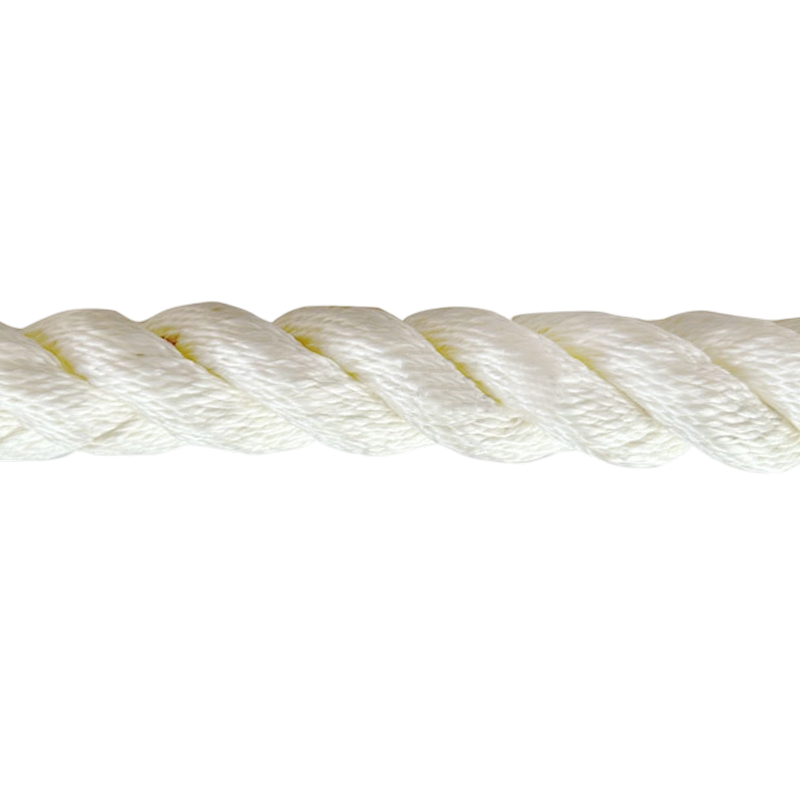
Three-strand twisted rope is the traditional construction for mooring lines. Yarns are twisted into strands, and strands are twisted together in the opposite direction to form the rope. This counter-twist locks the structure together and makes the rope easy to splice — a significant practical advantage. Three-strand rope is generally less expensive to manufacture than braided alternatives and remains popular on smaller recreational and fishing vessels. Its main limitations are that it can kink if allowed to spin freely under load, and it has a relatively rough surface that creates more friction in chocks and fairleads.
Braided Construction
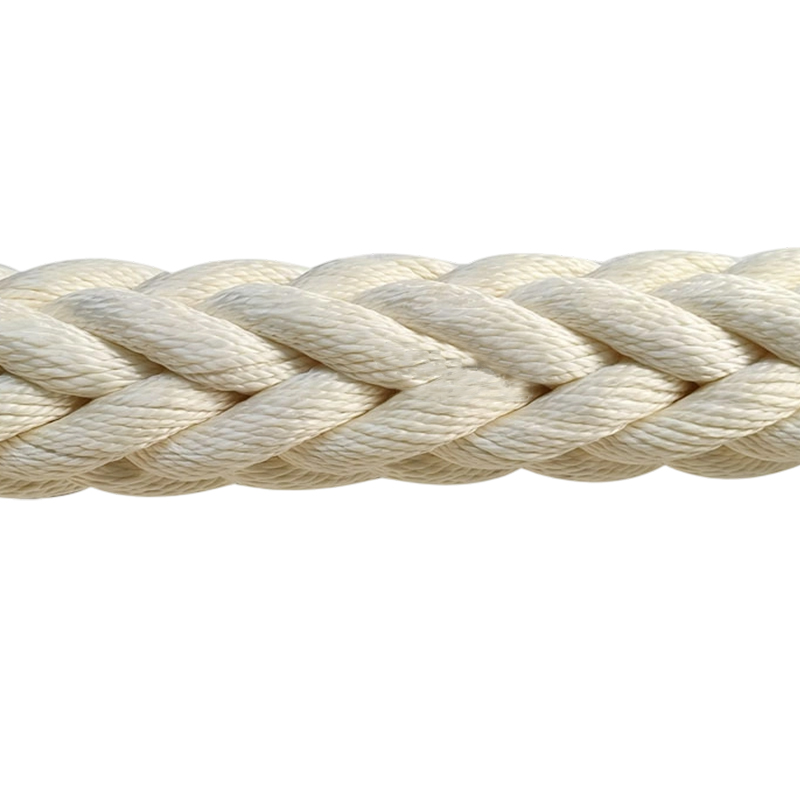
Braided mooring ropes — including eight-strand plaited, sixteen-strand plaited, and double-braid — offer a rounder, more uniform cross-section that feeds more smoothly through hardware and lies flatter on winch drums. Double-braid construction, consisting of a braided core inside a braided cover, is particularly popular because the cover protects the load-bearing core from abrasion and UV exposure, effectively extending the useful life of the rope. The cover can be inspected for wear without compromising the core, though any significant cover damage warrants close inspection of the core yarns as well.
Parallel Strand Construction
Used almost exclusively in high-performance HMPE lines and some specialty polyester products, parallel strand construction orients load-bearing fibers axially rather than twisting or braiding them. This maximizes the efficiency with which each fiber contributes to the rope's tensile strength and minimizes elongation. The result is a rope with the highest possible strength-to-diameter ratio. The trade-off is that parallel strand ropes cannot be traditionally spliced in the field — terminations require either machine-made factory splices or mechanical end fittings.
Selecting the Right Mooring Rope for Your Vessel and Berth
Choosing among the six types of mooring ropes is not simply a matter of picking the strongest or the cheapest option. The right choice depends on a combination of factors that must be assessed together.
- Vessel displacement and LOA: Larger, heavier vessels require higher break strength lines. As a general rule, the minimum break strength of a mooring line should be at least twice the vessel's displacement in tonnes, with the total mooring system applying a safety factor of 5:1 or greater against calculated maximum mooring load.
- Berth environment: An exposed tidal berth with significant wave action benefits from nylon's elasticity. A sheltered marina berth with minimal surge may be better served by polyester's dimensional stability.
- Tidal range: Large tidal ranges require longer lines to accommodate the changing geometry between vessel and shore fittings. Line material affects how the rope lies on the berth surface at low water, which in turn affects chafe risk.
- UV exposure: Consistently sunny, low-latitude environments favor polyester or UV-stabilized materials over polypropylene or untreated natural fibers.
- Handling equipment available: Wire rope and large-diameter HMPE lines require mechanical handling equipment. If the vessel or berth cannot support winches or capstans of sufficient capacity, this limits the practical options.
- Budget and replacement cycle: Polypropylene may appear cost-effective at purchase, but its short UV-degraded service life can make the total cost of ownership higher than a polyester or nylon line with a five- to seven-year service life.
For most recreational sailing and motor vessels between 25 and 50 feet, a combination of nylon spring lines and breast lines paired with polyester bow and stern lines represents a practical balance between shock absorption and positional stability. The nylon lines manage surge energy, while the polyester lines keep the vessel positioned close to the dock without the vessel working back and forth excessively on its fenders.
Mooring Rope Inspection, Maintenance, and Retirement Criteria
No mooring rope — regardless of material — lasts forever, and a parted mooring line at the wrong moment poses serious risks to the vessel, the crew, dock workers, and neighboring boats. A structured inspection and maintenance routine is not optional; it is a fundamental part of responsible seamanship and port management.
Visual and Tactile Inspection Checklist
Run the entire length of each mooring line through your hands at least once per season — more frequently for heavily used commercial lines. Look and feel for:
- Chafe damage at any point where the rope contacts a chock, fairlead, cleat, or bollard — this is the most common failure initiation point
- Core exposure in double-braid lines, where the outer cover has worn through
- Stiffness, brittleness, or powdering in synthetic lines — signs of UV degradation
- Discoloration, musty odor, or visible mold in natural fiber ropes
- Broken wire strands (meat hooks) in wire rope
- Heat glazing — a shiny, hard patch indicating the rope has been subjected to friction heat, which degrades synthetic fibers significantly
- Distortion of strand geometry in twisted ropes, which indicates the rope has been overloaded or kinked under load
When to Retire a Mooring Rope
Any mooring line with visible core damage, significant chafe reducing the cross-section by more than 10 percent, heat glazing, or confirmed overload history should be retired from service as a primary mooring line immediately. Downgrading a damaged line to secondary or backup duty is acceptable in some situations, but only if the degraded section is well away from any load-bearing use. The false economy of keeping a questionable line in service is rarely worth the consequences of a failure.
Commercial operators typically apply mandatory time-based retirement cycles regardless of visual condition — often five years for nylon and polyester, three years for polypropylene, and inspection-based cycles governed by applicable standards for wire rope and HMPE. These cycles acknowledge that internal degradation may not be visible during routine inspection and that the cost of line replacement is trivially small compared to the cost of a vessel damage incident.
PREV:Is Dyneema Good for Mooring Lines? Performance Explained
NEXT:Where Is the Ideal Place to Store a Mooring Rope?
NEXT:Where Is the Ideal Place to Store a Mooring Rope?
Related Products
-
 View More
3-Strand Polypropylene Mono-filament Mooring Rope / Line
-
 View More
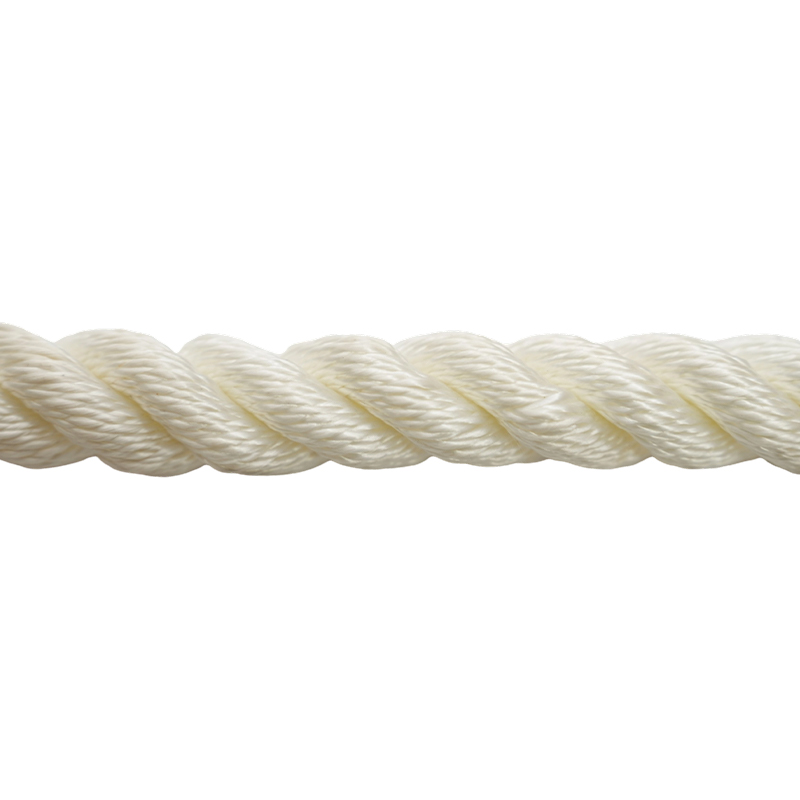
3-Strand Polypropylene Multi-Filament Hawser Mooring Rope / Line
-
 View More
8-Strand Polypropylene Mono-filament Hawser Mooring Rope / Line
-
 View More
8-Strand Polypropylene Multi-filament Mooring Rope / Line
-
 View More
12-Strand Polypropylene Multi-filament Hawser Mooring Rope / Line
-
 View More
Polypropylene Multi-filament Double Braided Hawser Mooring Rope / Line
-
 View More
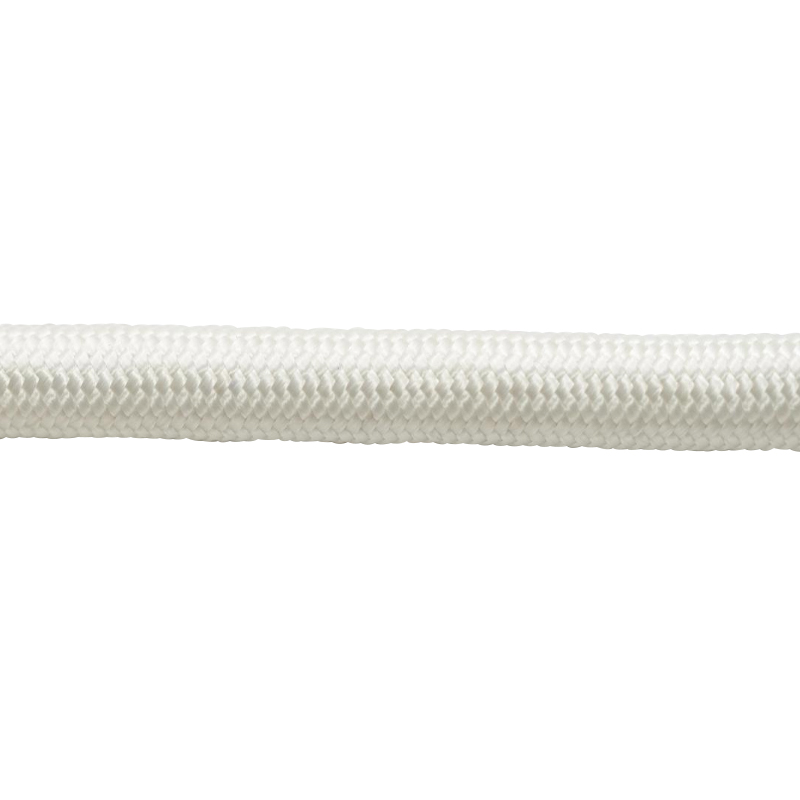
Polypropylene Multi-filament Reduced Recoil Mooring Rope / Line
-
 View More
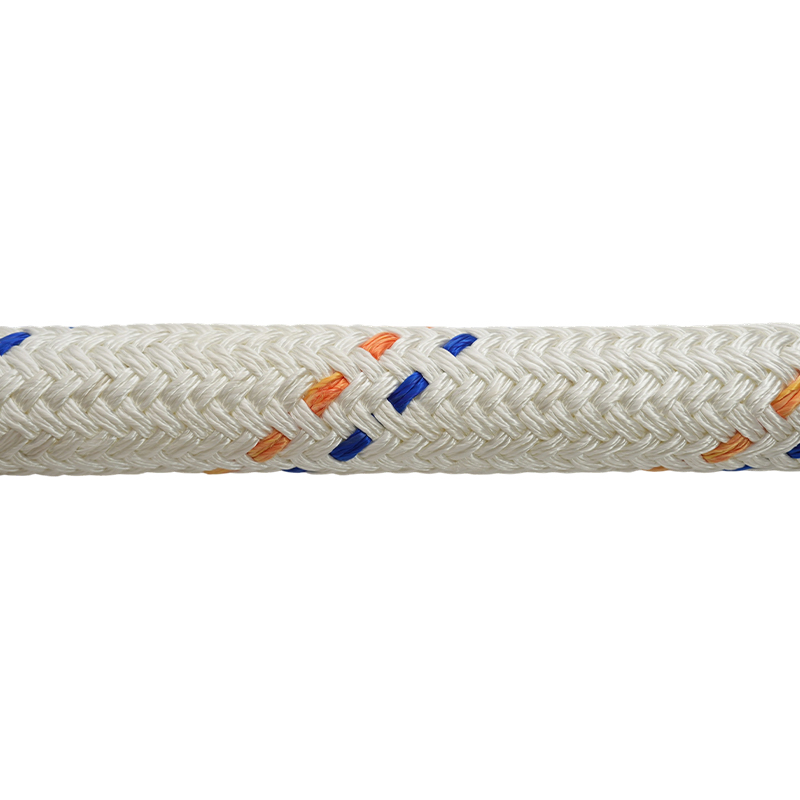
Polypropylene Multi-filament Mooring Tail
-
 View More
3-Strand Polyester Mooring Rope / Line
-
 View More
8-Strand Polyester Hawser Mooring Rope / Line
-
 View More
12-Strand Polyester Mooring Rope / Line,Hawser
-
 View More
Polyester Double Braided Hawser Mooring Rope / Line