


 English
 Español
 عربى
عربى
Boat Dock Rope Guide: Choosing the Right Mooring Rope
Content
- 1 The Short Answer: What Makes a Good Boat Dock Rope
- 2 Why the Type of Rope You Use at the Dock Actually Matters
- 3 Mooring Rope Materials: A Practical Breakdown
- 4 Rope Construction: Three-Strand vs. Double-Braid vs. Twisted
- 5 Sizing Your Mooring Rope Correctly
- 6 How to Rig a Boat Dock Rope System That Actually Works
- 7 Knots and Cleating Techniques That Hold Under Load
- 8 Chafe Protection: The Part Most Boaters Skip
- 9 Dock Rope Inspection: What to Look For and How Often
- 10 Mooring Rope Care and Storage
- 11 Special Situations: Mooring Buoys, Tidal Docks, and Storm Prep
- 12 What to Look for When Buying Mooring Rope
The Short Answer: What Makes a Good Boat Dock Rope
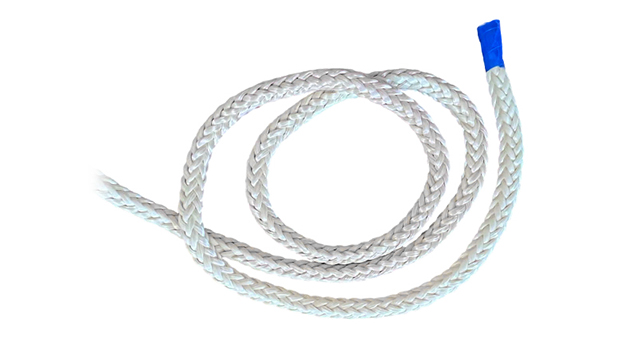
A reliable boat dock rope — more precisely called a mooring rope — needs to balance three things simultaneously: sufficient strength to hold your vessel against wind and current, enough elasticity to absorb shock loads without snapping cleats or damaging your hull, and resistance to the harsh marine environment. For most recreational boaters docking a vessel under 30 feet, a three-strand nylon rope with a diameter of 1/2 inch (12mm) hits that sweet spot. It stretches roughly 20–25% under load, which acts like a built-in shock absorber, and it resists UV degradation far better than polypropylene alternatives.
That said, the "right" mooring rope depends heavily on your boat's displacement, where you dock, how long lines need to be, and whether you're tying up for an hour or leaving the vessel unattended for weeks. This guide walks through all of it — from rope material science to proper rigging techniques to inspection schedules that actually matter.
Why the Type of Rope You Use at the Dock Actually Matters
Walk any busy marina and you'll see boats tied with everything from faded hardware-store twine to color-coded double-braid lines thick as a thumb. Not all of those boats are tied correctly, and some are one stormy night away from breaking free. The consequences range from expensive hull damage to serious injury to other boaters or dock workers — and in tidal areas, a drifting boat can sink within hours if it ends up on rocks or a sandbar.
Choosing the right boat dock rope isn't about brand loyalty or aesthetics. It comes down to understanding load calculations, material properties, and how each type of line behaves when it's been sitting wet in the sun for six months. A rope that looks fine can have lost up to 50% of its original tensile strength due to UV exposure, internal abrasion, and chemical contamination from fuel or bilge water.
The mooring rope is the last line of defense between your vessel and a costly accident. Treating it as an afterthought is a mistake that experienced mariners simply don't make twice.
Mooring Rope Materials: A Practical Breakdown
Every rope material has a different personality. Here's how the major options behave in real dock conditions:
Nylon (Polyamide)
Nylon is the gold standard for mooring lines and dock lines. Its key advantage is elasticity — it stretches 15–25% before breaking, which means it absorbs the sudden jerk load when a wake rocks your boat against the dock. It's strong, relatively affordable, sinks in water (which keeps it out of propellers), and holds knots well. The main downside is that nylon loses around 10–15% of its strength when wet, and prolonged UV exposure degrades it over time. Inspect the surface regularly for a chalky, whitish appearance — that's UV damage showing on the outer fibers.
Polyester (Dacron)
Polyester is stiffer and much less stretchy than nylon — it elongates only about 3–5% under load. That makes it a poor choice for dock lines where shock absorption matters, but it's excellent for situations where you want minimal movement, such as spring lines on a floating dock or breast lines holding a boat to a stationary pier. Polyester also has better UV resistance than nylon and doesn't weaken significantly when wet. It's a common material in double-braid construction for sailors who need low-stretch control lines.
Polypropylene
Polypropylene floats, which sounds convenient until you realize it wraps around propellers with alarming ease. It's cheap, lightweight, and fine for temporary use or marking buoys, but it degrades rapidly under UV exposure — some polypropylene ropes become dangerously brittle after just one or two seasons of outdoor use. It is not recommended as a primary mooring rope for any vessel left unattended at a dock.
High-Modulus Fibers (Dyneema, Spectra, Vectran)
These synthetic fibers offer extraordinary strength-to-weight ratios — Dyneema SK75, for example, has a breaking strength roughly 15 times greater than steel by weight. However, they have almost zero stretch, which makes them inappropriate as mooring lines unless paired with a dedicated elastic snubber or a nylon spring line in the system. They're commonly used on racing yachts for running rigging, not dock lines. Cost is also a major factor: a 30-foot length of Dyneema braid costs several times what nylon costs.
Natural Fiber Ropes (Manila, Hemp, Sisal)
Mentioned here mainly for historical context. Natural fibers rot when wet, lose significant strength when saturated, and have no place as working mooring lines on a modern boat. If you see manila dock lines still in use, they're either decorative or a safety hazard waiting to happen.
| Material | Stretch | UV Resistance | Floats? | Best Use Case |
|---|---|---|---|---|
| Nylon | 15–25% | Moderate | No | Primary dock and mooring lines |
| Polyester | 3–5% | Good | No | Spring lines, low-movement situations |
| Polypropylene | 10–20% | Poor | Yes | Temporary lines only |
| Dyneema/Spectra | <1% | Excellent | No | Racing rigging, not dock lines |
Rope Construction: Three-Strand vs. Double-Braid vs. Twisted
Beyond material, how a rope is constructed affects how it handles, how strong it is, and how well it holds knots. For boat dock and mooring applications, you'll primarily encounter two constructions:
Three-Strand Twisted Rope
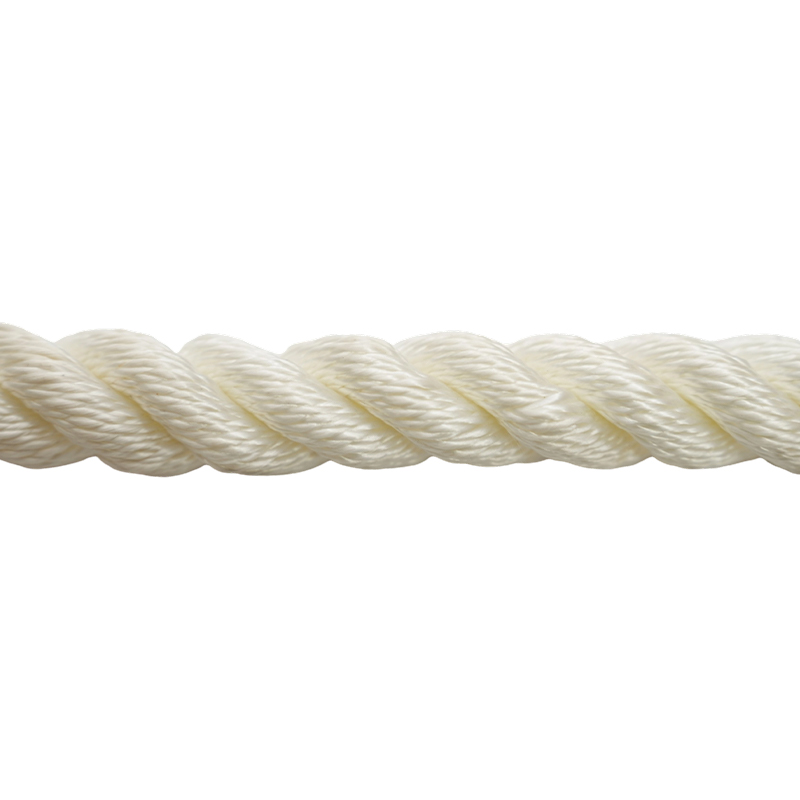
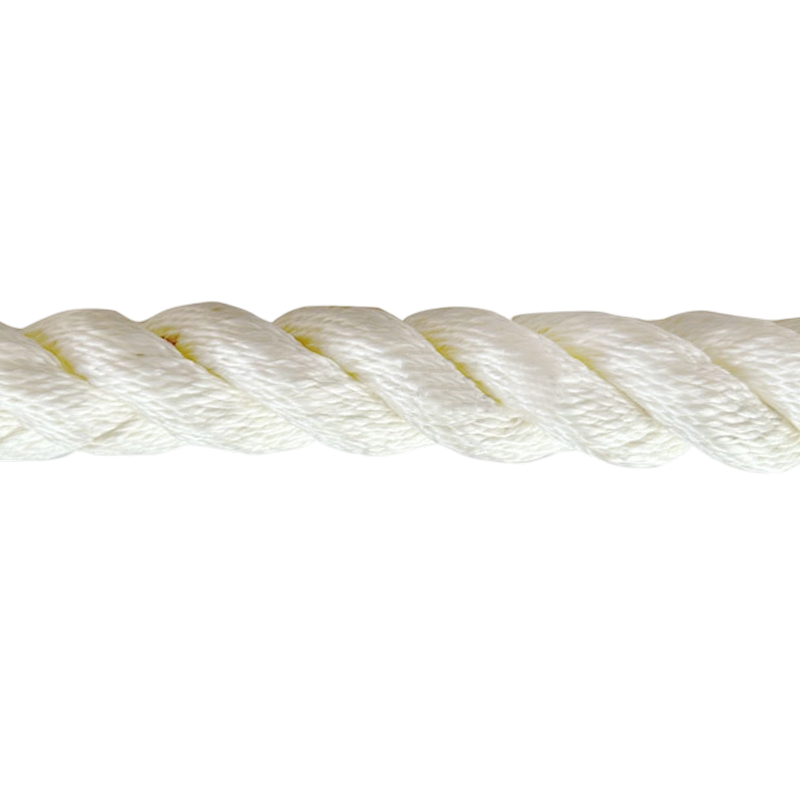
Three-strand nylon is the most traditional and most widely used mooring rope construction. Three bundles of fibers are twisted together in a helical pattern. This construction splices easily — a properly made eye splice retains about 95% of the rope's rated breaking strength, compared to around 70–75% for a knotted connection. It's economical, easy to inspect visually (you can see internal damage by untwisting the strands), and widely available in any marine supply store. Most dock line sets sold for recreational boats use three-strand nylon for these reasons.
Double-Braid (Braid-on-Braid)
Double-braid consists of a braided core inside a braided outer cover. It's softer on the hands, handles more smoothly through cleats and fairleads, and lies flatter on deck. It's also generally more expensive and harder to splice without practice. The outer cover protects the load-bearing core from abrasion and UV, but this also means internal damage can go undetected. Double-braid nylon dock lines are popular on larger vessels (40 feet and above) where ease of handling justifies the added cost, and where the lines are run through deck hardware repeatedly.
Single Braid
Single-braid ropes are less common for mooring but are occasionally used in specialty applications. They tend to be softer and have more elongation than double-braid but are not as easy to inspect or splice. For most boat dock rope needs, either three-strand or double-braid nylon will serve better.

Sizing Your Mooring Rope Correctly
Using a rope that's too thin for your vessel is an obvious hazard. But using one that's too thick also causes problems — oversized line is stiffer, harder to handle, harder to cleat, and more expensive without offering meaningful benefit. A common rule of thumb used by professional riggers is:
- For every 9 feet (approximately 3 meters) of boat length, use 1/16 inch (1.5mm) of rope diameter.
- A 27-foot boat needs roughly 3/16 inch (4.8mm) — in practice, round up to 3/8 inch (9.5mm) as the minimum working size.
- Most 25–35 foot recreational boats use 1/2 inch (12mm) dock lines as a safe, practical choice.
- Boats 35–50 feet typically need 5/8 inch (16mm) lines.
- Larger cruisers and offshore vessels over 50 feet generally use 3/4 inch (19mm) or larger mooring ropes.
These are minimums for calm-weather docking. If your boat is moored in an exposed slip where it takes direct wind or significant wake, or if you're leaving it unattended during storm season, consider going one size up. The cost difference between 1/2 inch and 5/8 inch rope is trivial compared to the cost of repairing hull damage or recovering a drifted vessel.
Line Length Recommendations
Dock line length is just as important as diameter. Lines that are too short create high peak loads because there's no rope to stretch and absorb shock. Lines that are too long drag in the water, foul on dock cleats, and create chafe points. Standard guidance:
- Bow and stern lines: approximately 2/3 the length of the boat. A 30-foot boat needs about 20-foot bow and stern lines.
- Spring lines: approximately equal to or slightly longer than the boat's overall length. A 30-foot boat needs 30–35 foot spring lines.
- In tidal areas, add extra length to bow and stern lines to accommodate tidal variation of 3–6 feet or more, depending on your location.
How to Rig a Boat Dock Rope System That Actually Works
Throwing two lines over dock cleats and calling it done is how boats end up adrift. A proper dock line configuration uses multiple lines working together to control forward movement, backward movement, and side-to-side surge simultaneously. Here's the standard four-line system used by experienced mariners:
Bow Line
Runs from the bow cleat to a dock cleat forward of the boat. It prevents the bow from swinging out from the dock. It should angle forward at roughly 45 degrees from the boat's centerline for best holding power.
Stern Line
Mirrors the bow line from the stern. It runs aft to a dock cleat at the boat's stern or just behind it. Together with the bow line, it keeps the boat positioned alongside the dock.
Forward Spring Line
Runs from a midship or forward cleat aft to a dock cleat near the stern. This is the line that prevents the boat from moving forward along the dock. It's the most important line for boats in areas with current or heavy wake. Many boaters omit spring lines and then wonder why their vessel shifts along the dock.
Aft Spring Line
The reverse of the forward spring — it runs from midship or a stern cleat forward to a dock cleat near the bow. It prevents the boat from moving astern along the dock.
In rough conditions, a breast line can be added — a short line running perpendicular from the boat directly to the dock, pulling the hull tight against dock fenders. This is particularly useful on floating docks where surge can cause the vessel to bounce away from the dock repeatedly.
Knots and Cleating Techniques That Hold Under Load
A high-quality mooring rope tied with a poor knot can fail just as badly as a weak rope tied well. The knots and cleating methods you use matter significantly.
The Cleat Hitch
The cleat hitch is the standard method for securing a dock line to a dock cleat. Done correctly — with the line taking a full wrap around the base of the cleat, then crossing in a figure-eight over the horns, then a locking half-hitch — it holds securely under load but can be released quickly even after being tensioned. Many people under-wrap the cleat and rely entirely on the locking hitch. The base wrap is what carries the load; the locking hitch just prevents slipping.
The Bowline
The bowline creates a fixed loop that won't slip under load and won't jam so tight that it can't be untied afterward. It retains approximately 65–75% of the rope's breaking strength — less than a splice but more than most other knots. It's the right choice when tying to a piling, ring, or post rather than a cleat.
Spliced Eyes vs. Knotted Ends
Pre-spliced dock lines — where one end has a factory-made eye splice — are worth the small additional cost. An eye splice retains 95% or more of the rope's breaking strength versus 70–75% for a comparable bowline, and it creates a clean, abrasion-resistant loop that drops easily over pilings or dock cleats. For a permanent mooring setup, having a rigger splice both ends is the most reliable configuration you can use.
Avoiding Jamming Knots
Some knots — like the reef knot used as a joining knot or a simple overhand loop — jam solid under high load and cannot be untied without cutting. Never use jamming knots on mooring lines. In an emergency, you need to be able to release lines quickly. Knots that require a knife to remove defeat the purpose.
Chafe Protection: The Part Most Boaters Skip
Chafe is the slow killer of mooring ropes. A line that's rubbing against a dock edge, a metal fairlead, a rough piling, or even another rope will grind through its outer fibers gradually and silently. A nylon dock line subjected to constant chafe at a single point can lose half its strength in 24 hours under moderate conditions. In a storm with sustained surge, a chafed line can part in minutes.
Wherever a mooring rope passes over or through anything — a fairlead, a chock, a dock edge, a piling — it needs chafe protection. Options include:
- Chafe sleeves: purpose-made rubber or reinforced nylon sleeves that slide over the rope at contact points. They're the cleanest solution and last for years.
- Garden hose: the classic improvised solution. Slit a section of garden hose lengthwise, wrap it around the rope at the chafe point, and secure with tape or zip ties. Inelegant but effective.
- Leather wrapping: traditional on wooden boats and still effective. Raw leather stitched around the rope at a chafe point provides excellent abrasion resistance and conforms to irregular surfaces.
- Repositioning lines: sometimes the best chafe protection is routing the line differently so it doesn't cross a hard edge in the first place.
When leaving a boat on a mooring for an extended period, inspect every contact point the rope makes and protect all of them. Then check again after the first storm — the movement of the vessel under heavy conditions often reveals new chafe points that weren't apparent in calm conditions.
Dock Rope Inspection: What to Look For and How Often
No mooring rope lasts forever. Regular inspection catches problems before they cause incidents. Here's a practical inspection checklist:
- Surface texture: run your hand along the entire length. Fuzzing or a rough, hairy texture indicates surface fiber abrasion. Some surface wear is normal, but deep fuzzing that reveals the core construction underneath means the rope should be retired.
- Discoloration: brown or black staining can indicate chemical contamination from fuel, oil, or bilge water. These chemicals degrade nylon and polyester fibers. A rope that's been soaked in fuel should be discarded regardless of how it looks.
- Flat spots or kinks: areas where the rope has been crushed or kinked and won't regain its round cross-section are weakened points. Three-strand rope that has developed permanent kinks has compromised twist geometry and reduced strength at those spots.
- Core inspection (three-strand): unlay the strands slightly at a few points along a three-strand rope. The inner fibers should be bright and well-defined. If they're gray, dull, and feel powdery or gritty, internal UV degradation or contamination has occurred.
- Splices and end fittings: inspect eye splices carefully at the throat — the point where the loop meets the standing part. This is the highest-stress area of any splice. Look for pulled fibers, separation, or signs that the splice is "walking" (the tucks pulling through under repeated load).
- Overall stiffness: very old nylon rope becomes noticeably stiff and boardy, especially in cold weather. Stiff rope has lost its elasticity — the primary reason you're using nylon in the first place — and should be replaced.
As a general rule, replace primary dock and mooring lines every 3–5 years for boats in regular use, or sooner if inspection reveals any of the conditions above. For boats left on moorings year-round in exposed locations, an annual replacement of the most loaded lines is not unreasonable.

Mooring Rope Care and Storage
Well-maintained dock lines last significantly longer than neglected ones. The maintenance is straightforward:
Washing
Rinse dock lines with fresh water after use in salt or brackish water. Salt crystals left in rope fibers are abrasive — they grind against each other internally every time the rope flexes, accelerating wear from the inside out. A thorough freshwater rinse removes surface salt effectively. Heavily soiled lines can be machine-washed on a gentle cycle in a mesh laundry bag with mild detergent — avoid hot water, which can damage nylon.
Drying and Storage
Store lines loosely coiled in a dry, ventilated location away from direct sunlight. Rope stored in a tight bundle while damp develops mildew in the core that you won't see until the rope is already compromised. UV light is the primary enemy of nylon and polypropylene — storing lines in a locker or bag when not in use can easily double their lifespan compared to leaving them coiled on deck year-round.
Avoiding Chemical Contamination
Keep dock lines away from fuel, oil, bleach, and bilge water. Even brief contact with diesel or gasoline causes measurable degradation in nylon fibers. If a line gets contaminated, wash it thoroughly and inspect carefully before returning it to service. When in doubt, replace it — the cost of a new dock line is far less than the liability of a failed mooring.
Special Situations: Mooring Buoys, Tidal Docks, and Storm Prep
Mooring Buoys
When picking up a mooring buoy, the mooring rope — sometimes called a pendant or pennant — runs from the buoy's ring to the boat's bow cleat. This line is under constant load from wind and tide, making it particularly susceptible to chafe at the buoy ring and at the bow chock. Inspect mooring pendants frequently, since they're in continuous use unlike dock lines that only load during storms or current changes. A chafed-through mooring pendant in a busy anchorage is a serious collision hazard for every boat around you.
Use a bridle on mooring buoys for boats over 35 feet — two lines running from the bow, each attached to the mooring ring, distributing load to both bow cleats and reducing the chance of any single failure releasing the boat.
Tidal Docks
On fixed docks in tidal areas, lines that are correct at high tide can put the boat in danger at low tide and vice versa. At low tide, short lines that fitted perfectly at high water can pull tight and drag the bow or stern down toward the dock edge as water drops. At high tide, the same boat can be resting on the dock itself. Calculate your tidal range — available from tide tables for any port — and add at least that much extra length to bow and stern lines. In areas with a tidal range exceeding 6 feet, this is a genuine safety-critical calculation, not just a matter of convenience.
Storm Preparation
When a storm is forecast, the standard dock line configuration is not enough. For any storm with winds expected to exceed 35 knots, experienced boaters take these additional steps:
- Double up all lines — run a second bow line, second stern line, and second spring lines on each side.
- Add breast lines pulling the hull snug against well-placed fenders.
- Check every chafe point and add protection if any rope crosses a hard edge.
- Loosen lines enough to allow for storm surge — a storm that pushes 3 feet of extra water into a marina will cause serious damage to boats whose bow and stern lines have no slack.
- Use only nylon for storm lines — never polyester or polypropylene for primary load-bearing lines in heavy weather, because only nylon provides the elasticity to absorb repeated shock loads without transmitting them destructively to cleats, stanchions, and hull fittings.

What to Look for When Buying Mooring Rope
Not all rope sold in marine supply stores is created equal. Here's what to check before buying:
- Breaking strength rating: reputable rope manufacturers publish tested breaking strengths for every diameter. For a 1/2-inch three-strand nylon dock line, expect a breaking strength of around 5,100 lbs (2,313 kg). Working load limit (the safe operating load) is typically one-tenth to one-seventh of breaking strength. Be skeptical of products with no published strength data.
- UV inhibitor additives: quality nylon marine rope includes UV stabilizer compounds in the fiber itself. Look for this called out explicitly on the packaging or product description. Generic hardware-store nylon rope often omits UV inhibitors to reduce cost.
- Core quality (for double-braid): squeeze a double-braid line firmly. You should feel a defined, firm core inside the cover. A mushy, undefined core suggests low-quality fiber construction or inadequate fill ratio.
- Even lay (for three-strand): the three strands of a quality three-strand rope should be evenly twisted with consistent tension. Uneven lay means uneven load distribution — some strands will be overloaded while others take no load, dramatically reducing effective strength.
- Pre-spliced vs. plain ends: for permanent dock installations, buying pre-spliced lines saves time and ensures professional splice quality at one end. The other end can be whipped or heat-sealed to prevent unraveling.
Well-known brands in the marine rope market — such as Samson, New England Ropes, Yale Cordage, and Marlow — publish full specification sheets and have their products independently tested. When in doubt, buying from established marine rope manufacturers rather than generic suppliers is a straightforward way to ensure you're getting what the label claims.
PREV:Rope Type Guide: How to Choose the Right Mooring Rope
NEXT:Polyester Rope: Complete Guide to Types, Strength & Best Uses
NEXT:Polyester Rope: Complete Guide to Types, Strength & Best Uses
Related Products
-
 View More
3-Strand Polypropylene Mono-filament Mooring Rope / Line
-
 View More
3-Strand Polypropylene Multi-Filament Hawser Mooring Rope / Line
-
 View More
8-Strand Polypropylene Mono-filament Hawser Mooring Rope / Line
-
 View More
8-Strand Polypropylene Multi-filament Mooring Rope / Line
-
 View More
12-Strand Polypropylene Multi-filament Hawser Mooring Rope / Line
-
 View More
Polypropylene Multi-filament Double Braided Hawser Mooring Rope / Line
-
 View More
Polypropylene Multi-filament Reduced Recoil Mooring Rope / Line
-
 View More
Polypropylene Multi-filament Mooring Tail
-
 View More
3-Strand Polyester Mooring Rope / Line
-
 View More
8-Strand Polyester Hawser Mooring Rope / Line
-
 View More
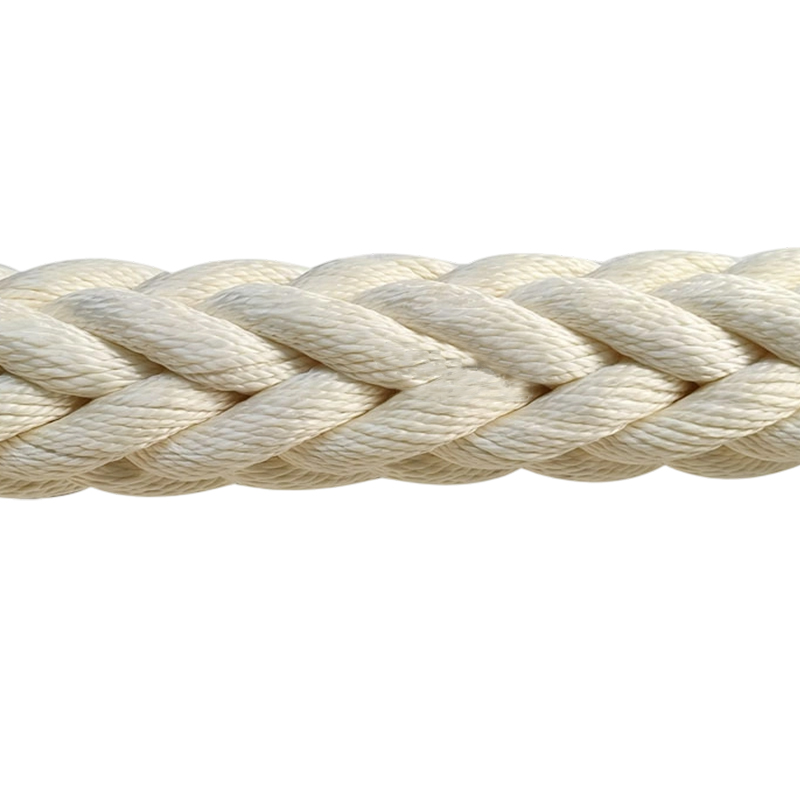
12-Strand Polyester Mooring Rope / Line,Hawser
-
 View More
Polyester Double Braided Hawser Mooring Rope / Line