


 English
 Español
 عربى
عربى
Polyester Rope: Complete Guide to Types, Strength & Best Uses
Content
- 1 What Is Polyester Rope and Why Does It Stand Out
- 2 Types of Polyester Rope and Their Structural Differences
- 3 Polyester Rope Strength: Breaking Load and Working Load Data
- 4 Polyester Rope vs. Nylon Rope vs. Polypropylene Rope
- 5 Top Applications for Polyester Rope Across Industries
- 6 How to Choose the Right Polyester Rope for Your Job
- 7 Caring for and Inspecting Polyester Rope
- 8 Splicing and Terminating Polyester Rope
- 9 Environmental Considerations and Sustainability
- 10 Common Mistakes to Avoid When Using Polyester Rope
- 11 Frequently Asked Questions About Polyester Rope
What Is Polyester Rope and Why Does It Stand Out
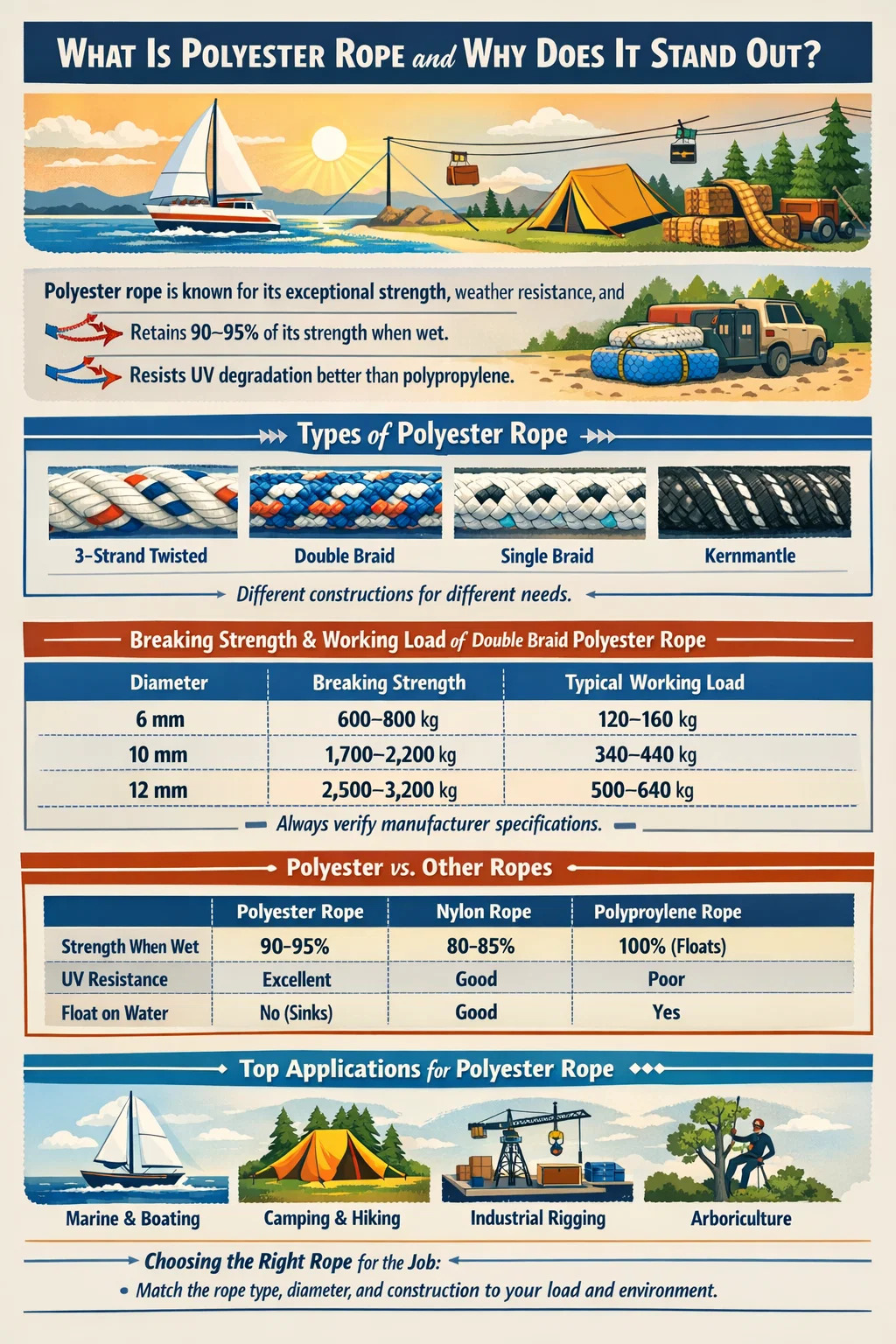
Polyester rope is one of the most reliable and widely used synthetic ropes available today. Made from polyethylene terephthalate (PET) fibers, it offers an exceptional combination of strength, weather resistance, and dimensional stability that few other rope materials can match. Whether you're rigging a sailboat, securing cargo, setting up a zip line, or anchoring a tent in high winds, polyester rope consistently performs where it matters most.
The bottom line: polyester rope retains approximately 90–95% of its dry strength when wet, making it the preferred choice for marine and outdoor applications where moisture exposure is constant. Unlike nylon rope, which can lose up to 15–20% of its tensile strength when saturated, polyester holds firm. This single characteristic alone explains why it dominates the sailing and boating industries.
Polyester rope also resists UV degradation far better than polypropylene rope, which can begin breaking down after just one season of direct sunlight. A quality polyester rope exposed to continuous outdoor conditions can maintain usable strength for 5 to 10 years or longer, depending on the braid construction and the specific UV stabilizers used during manufacturing.
Types of Polyester Rope and Their Structural Differences
Not all polyester rope is built the same way. The construction method dramatically affects how the rope handles, stretches, and wears over time. Understanding the main types helps you pick the right product for your specific load and environment.
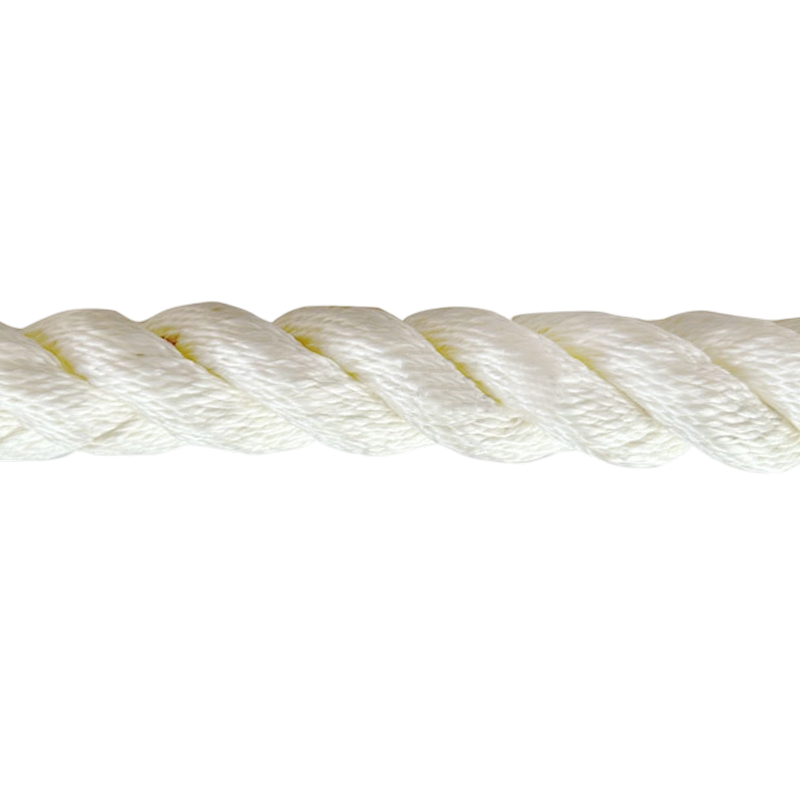
3-Strand Twisted Polyester Rope
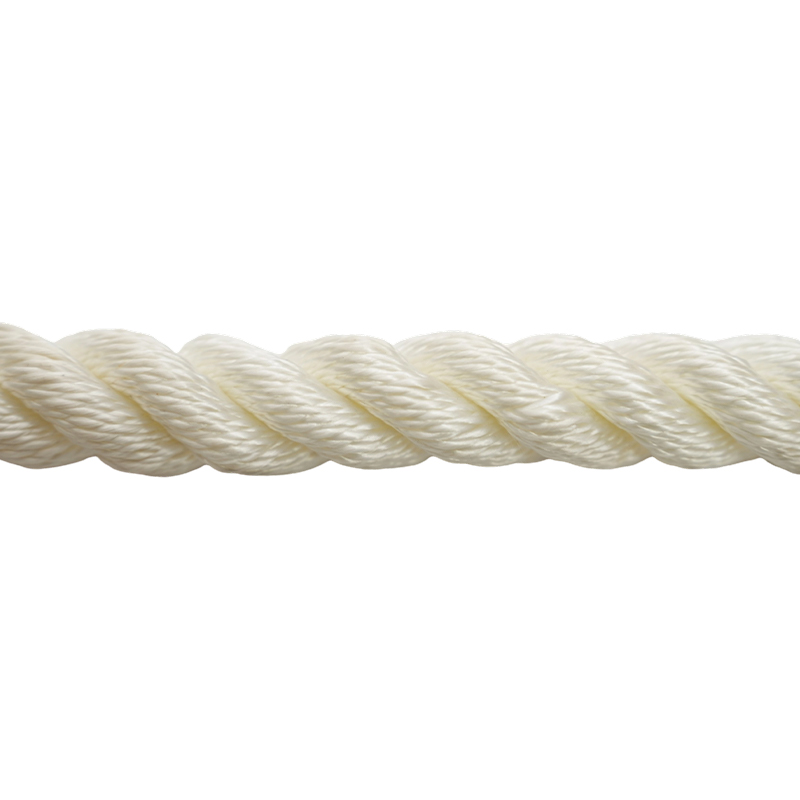
Three-strand twisted polyester rope is the traditional construction, featuring three bundles of fibers twisted together in a helical pattern. It is easy to splice, which makes it a favorite for dock lines, anchor rodes, and general utility purposes. It has a slightly higher stretch rate than braided versions — typically 3–5% elongation at working load — which can actually be beneficial for absorbing shock loads on a dock in rough conditions.
Double Braid (Braid-on-Braid) Polyester Rope
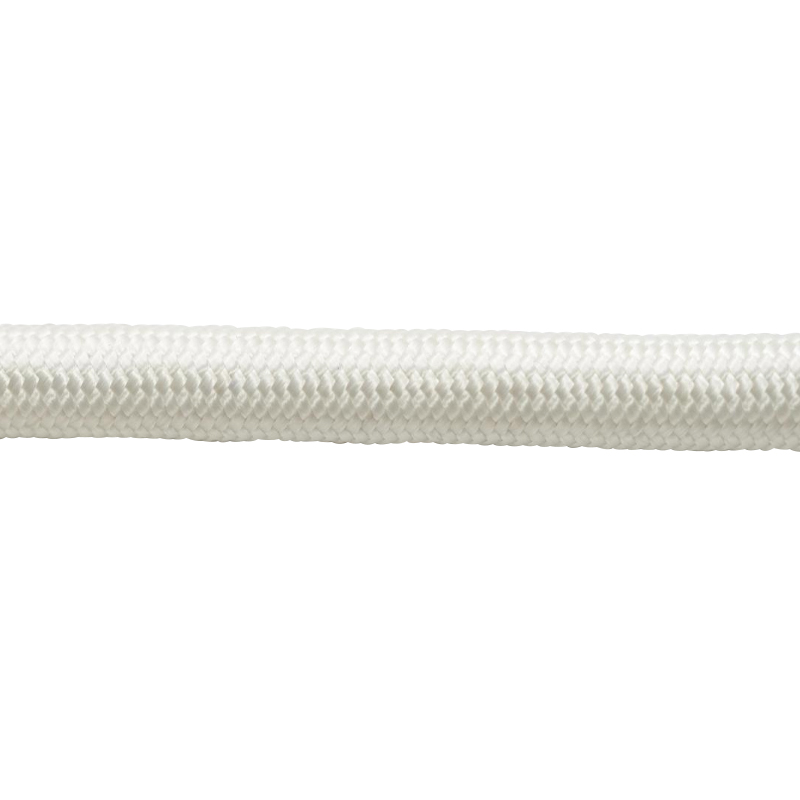
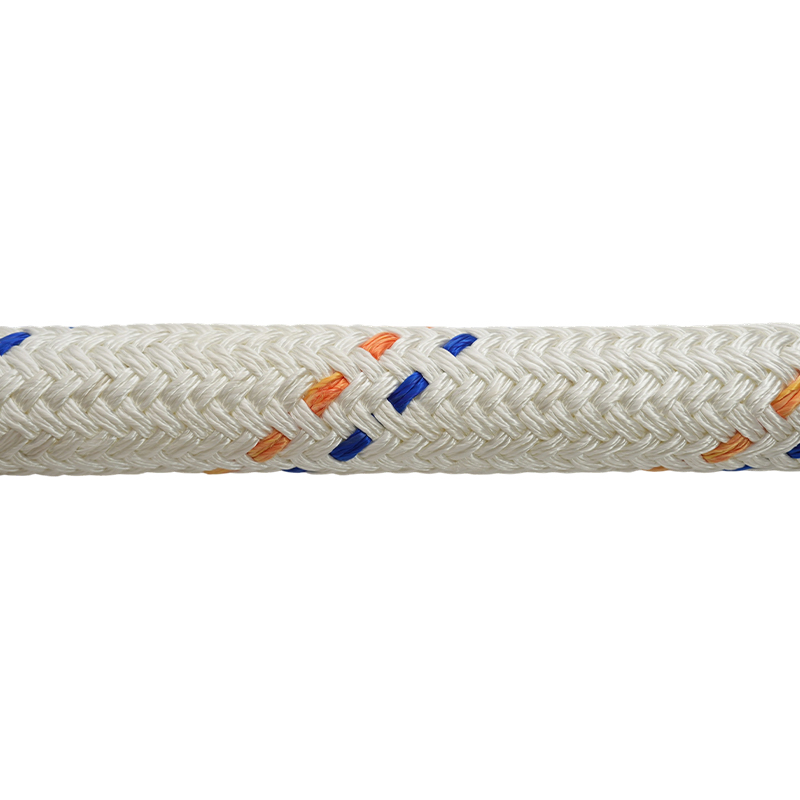
Double braid polyester rope consists of a braided core surrounded by a braided cover. This construction delivers high tensile strength, excellent abrasion resistance, and a smooth, comfortable surface for handling. It is the standard choice for yacht halyards, sheets, and running rigging. A 12mm double braid polyester rope typically has a breaking strength in the range of 2,500 to 3,200 kg (approximately 5,500–7,000 lbs), depending on the manufacturer and fiber quality.
Single Braid Polyester Rope
Single braid constructions use a single interlocked series of strands with no separate core. These ropes are soft, flexible, and easy to handle but are generally used in lower-load applications such as flag halyards, light rigging, or decorative purposes. They are less abrasion-resistant than double braid options.
Kernmantle Polyester Rope
Kernmantle ropes use a twisted or parallel core (kern) wrapped by a woven sheath (mantle). This construction is common in climbing and rope rescue applications where a combination of load-bearing strength and protective outer sheath is critical. Static kernmantle polyester ropes designed for rescue use typically meet elongation standards of less than 2% at 10% of minimum breaking strength.
Polyester Rope Strength: Breaking Load and Working Load Data
One of the most important factors when selecting polyester rope is understanding the difference between breaking strength (minimum break load, or MBL) and working load limit (WLL). As a general industry rule, the working load limit is set at one-fifth to one-tenth of the breaking strength, depending on the application and risk level involved.
Below is a reference table for typical breaking strengths of double braid polyester rope at various diameters:
| Diameter (mm) | Approximate Breaking Strength (kg) | Typical Working Load Limit (kg) | Common Applications |
|---|---|---|---|
| 6 mm | 600–800 kg | 120–160 kg | Flag halyards, light lashing |
| 8 mm | 1,100–1,400 kg | 220–280 kg | Small boat sheets, securing loads |
| 10 mm | 1,700–2,200 kg | 340–440 kg | Sailing halyards, climbing |
| 12 mm | 2,500–3,200 kg | 500–640 kg | Yacht running rigging, rescue lines |
| 16 mm | 4,500–5,500 kg | 900–1,100 kg | Dock lines, towing, heavy mooring |
| 20 mm | 7,000–8,500 kg | 1,400–1,700 kg | Commercial mooring, industrial lifting |
Always verify specific breaking strength figures with your supplier's technical data sheet before use in safety-critical applications. Knots can reduce breaking strength by 30–50%, so use proper splices wherever possible to preserve the rated load capacity.
Polyester Rope vs. Nylon Rope vs. Polypropylene Rope
Choosing between synthetic rope materials is not a matter of which is universally "better" — it depends entirely on the conditions and loads you're working with. Here is a direct comparison of the three most common synthetic ropes:
| Property | Polyester Rope | Nylon Rope | Polypropylene Rope |
|---|---|---|---|
| Tensile Strength (dry) | High | High | Moderate |
| Strength when wet | 90–95% retained | 80–85% retained | 100% retained (floats) |
| UV Resistance | Excellent | Good | Poor |
| Elasticity / Stretch | Low (1–3%) | High (15–30%) | Moderate (10–20%) |
| Abrasion Resistance | Very Good | Good | Moderate |
| Floats on Water | No (sinks) | No (sinks) | Yes |
| Chemical Resistance | Good | Moderate | Excellent |
| Cost | Moderate–High | Moderate–High | Low |
| Best Use Case | Marine rigging, outdoor anchoring | Anchor rodes, shock loads | Water rescue, temporary lines |
The key takeaway here is that polyester rope sits at the intersection of dimensional stability and outdoor durability. It does not stretch as much as nylon, which makes it far more predictable under sustained loads. It does not degrade as quickly as polypropylene when exposed to sunlight, which is critical in any application where the rope lives outside year-round.
Top Applications for Polyester Rope Across Industries
Polyester rope is found in an enormous range of applications. Its consistent mechanical properties across wet and dry conditions, combined with resistance to sunlight and mild chemicals, make it suitable for settings that other rope materials would fail in months.
Marine and Sailing
Polyester rope is the backbone of modern sailing rigging. Running rigging on a 40-foot yacht can include over 200 meters of various diameters of polyester braid covering halyards, sheets, control lines, and furling lines. The low stretch properties of double braid polyester allow precise sail trim adjustments — a 1mm change in a halyard's tension translates directly to sail shape rather than being absorbed by rope elongation. Dock lines made from three-strand polyester are a standard fixture at marinas worldwide because they resist the constant wet-dry cycling that rapidly deteriorates inferior materials.
Outdoor Recreation and Camping
For campers, hikers, and overlanders, polyester rope serves as guy lines, bear bag hang lines, clotheslines, and tarping systems. A 4mm polyester braid has a breaking strength of around 300–400 kg — far more than needed to secure a tarp against a 50 mph gust. Paracord-style polyester braids are compact and lightweight, making them easy to carry in a pack without the weight penalty of heavier cordage.
Industrial and Construction
In industrial environments, polyester rope is used for load securing, rigging, crane tag lines, and safety barriers. Heavy-duty polyester ropes of 24mm or larger diameter are specified for permanent mooring systems at commercial docks and offshore platforms. The rope's resistance to acids, alkalis, and most organic solvents makes it suitable for chemical plant environments where natural fiber ropes would disintegrate rapidly.
Arboriculture and Tree Care
Arborists regularly use polyester climbing ropes and throw lines. A typical arborist climbing system relies on a 12–13mm kernmantle polyester rope with a break strength of around 2,500–3,000 kg and a static elongation of less than 2%. The International Society of Arboriculture and manufacturers like Samson and Teufelberger specify polyester as the base material for many certified climbing lines. The low stretch is essential — the climber needs predictable positioning, and a high-stretch rope would make precise movement impossible.
Agricultural and Farm Use
On farms and ranches, polyester rope is used for tying, bundling, fencing support, livestock handling, and irrigation system tie-downs. The rope's rot resistance means it can be left outside in soil contact or under irrigation schedules without degrading in a single season the way sisal or manila rope would.
How to Choose the Right Polyester Rope for Your Job
Selecting the right polyester rope involves matching the rope's specific properties to the demands of the application. Here are the key variables to work through:
Determine the Load Requirements
Start with the maximum load the rope will experience, including any dynamic or shock loading. Add a safety factor appropriate to the risk level. For life-safety applications (climbing, rescue), most standards require a safety factor of at least 10:1 (working load is 10% of breaking strength). For general cargo securing, 5:1 is common. For static non-critical loads, some applications use 3:1. Once you know the required working load, select a rope with a breaking strength at least equal to your load multiplied by the safety factor.
Decide on Construction Type
If you need to splice the rope or want a traditional look and feel, three-strand twisted polyester is practical and cost-effective. If you need high strength-to-diameter ratio, smooth handling, and low elongation for running rigging or mechanical systems, double braid polyester is the standard. If the rope must pass over pulleys, through clutches, or around sheaves repeatedly, double braid construction handles cyclic bending far better than three-strand.
Consider Diameter and Weight
Larger diameter means greater breaking strength but also greater weight and bulk. In weight-sensitive applications like backpacking or racing yacht rigging, minimizing diameter while meeting strength requirements is a priority. A 6mm double braid polyester weighs roughly 22–25 grams per meter; a 16mm version weighs approximately 160–180 grams per meter. On a 40-foot racing yacht, upgrading from 12mm to 10mm halyards across six lines can eliminate over 1 kg of moving weight aloft — a meaningful performance gain.
Color Coding for Organized Systems
Polyester rope is available in virtually any color and in multi-color tracers. Using color coding for different lines — for instance, blue for halyards, red for sheets, and yellow for control lines — significantly reduces the chance of handling errors in high-pressure situations. This is standard practice on racing boats and in professional rigging setups.
Caring for and Inspecting Polyester Rope
Even the best polyester rope will fail prematurely if it is not properly maintained and inspected. A systematic care routine extends service life significantly and prevents unexpected failures.
Routine Cleaning
Dirt and grit particles work their way into the braid structure and act like sandpaper on individual fibers from the inside out. Washing polyester rope in lukewarm fresh water with a mild soap removes salt, grit, and organic matter. Avoid hot water above 60°C (140°F), as prolonged heat exposure can begin to affect the crystalline structure of polyester fibers. Rinse thoroughly and air dry away from direct sunlight when possible, or dry quickly and store out of UV. Never use bleach or strong solvents on polyester rope.
Visual and Tactile Inspection
Run the rope through your hands slowly, feeling for flat spots, stiff sections, or areas where the braid feels significantly different from the rest of the line. These are indicators of internal core damage, crushing, or heat fusion from friction. Visually look for:
- Fuzzing or pilling on the outer sheath (indicates abrasion wear)
- Glazed or shiny sections (indicates heat damage from friction)
- Cuts, snags, or broken braid strands on the cover
- Core protrusion through the sheath (a serious sign of sheath slippage or core failure)
- Discoloration from chemical exposure
- Significant loss of flexibility over the full length
Any rope showing core damage or heat glazing should be removed from service immediately, regardless of how the outer sheath appears.
Storage Best Practices
Store polyester rope coiled or on a reel in a cool, dry location away from direct UV exposure. Do not store rope in contact with petroleum products, battery acid, or chlorine-based chemicals. Even though polyester has good chemical resistance, prolonged contact will cause degradation. Avoid leaving rope piled on decks or ground surfaces where it will be stepped on repeatedly — repeated point loading from footsteps causes internal fiber fatigue over time.
Splicing and Terminating Polyester Rope
A properly executed splice in polyester rope retains close to 100% of the rope's rated breaking strength — a critical advantage over knotted terminations, which can reduce strength by 30 to 50 percent. This is not a minor detail in safety-critical applications: a bowline knot in a 12mm polyester rope rated at 3,000 kg reduces that effective strength to roughly 1,500–2,000 kg. A correctly finished eye splice in the same rope retains approximately 2,800–2,950 kg.
Common Splice Types for Polyester Rope
- Eye splice: Creates a fixed loop at the end of the rope. Standard on dock lines, mooring lines, and rigging terminations. Can be done in both three-strand and double braid constructions with proper technique.
- End-to-end splice (short splice or long splice): Joins two rope ends. Long splice is preferred for running rigging as it maintains a consistent diameter that passes through blocks cleanly.
- Brummel eye splice: Used in single braid and some double braid constructions. The core locks through itself to create a very secure eye without any separate tuck-and-bury work.
- Bury splice (for double braid): The cover and core are spliced separately, then buried inside each other to create an eye with a finished, clean appearance. This is the professional standard for yacht running rigging.
If you are new to splicing, three-strand polyester is the easiest to learn on because the construction is simple and the tucks are easy to visualize. Double braid splicing requires a fid set and some practice to get consistent results, but the technique is well-documented and many manufacturers provide free splicing guides specific to their product lines.
Environmental Considerations and Sustainability
Polyester rope is a petroleum-derived synthetic product, and its environmental footprint is worth understanding. On the positive side, its long service life — often 5 to 15 years in active use — means fewer replacement cycles and less material consumption over time compared to lower-durability alternatives. A single polyester dock line that lasts 10 years generates less cumulative waste than three polypropylene lines over the same period.
However, polyester rope does shed microplastic fibers, particularly when worn. Some estimates suggest that synthetic textiles and ropes release millions of microfibers per wash or use cycle, contributing to ocean and freshwater microplastic pollution. This is an active area of research, and responsible users should:
- Retire worn ropes rather than continuing to use heavily abraded lines that shed fiber rapidly
- Dispose of old rope at designated synthetic material recycling facilities where available
- Avoid cutting rope into small pieces, which dramatically increases fiber shedding potential
Several rope manufacturers are now producing polyester ropes from recycled PET bottles. One kilogram of recycled polyester rope can divert approximately 25–30 plastic bottles from landfill or ocean waste streams. Brands like Marlow, Samson, and Beal have introduced recycled-fiber product lines that perform comparably to virgin-polyester ropes in standard applications, giving environmentally conscious buyers a more sustainable option without compromising performance.
Common Mistakes to Avoid When Using Polyester Rope
Even experienced users make preventable errors that lead to rope failure or shortened service life. These are the most frequent mistakes to watch for:
- Using knots instead of splices for permanent terminations. As noted above, knots can reduce effective strength by 30–50%. In any installation where the rope will stay in place for days, weeks, or longer, a proper splice is worth the effort.
- Running rope over sharp edges. Even small edge radii — a metal cleat corner, a rough fairlead, an unfinished weld bead — generate enormous point loads on a rope under tension. A sharp 2mm edge can cut the effective strength of a line by 60% or more. Use rollers, fairleads, and edge guards wherever the rope changes direction under load.
- Ignoring heat damage. Polyester begins to soften at around 230–240°C (446–464°F) and loses structural integrity well before melting. Friction from a fast-running line through a jammed block or cleat can generate localized heat sufficient to fuse fiber bundles internally. A rope that has experienced a heat event may look intact on the outside while being structurally compromised internally.
- Overloading through mechanical advantage systems. Pulleys, blocks, and tackle systems multiply pulling force — and also multiply the load on the rope at the anchor point. A 6:1 block-and-tackle system driven by a 100 kg load applies 600 kg to the standing end of the rope. Always calculate the highest load in the system, not just the input force.
- Storing rope while wet for extended periods. While polyester does not absorb water significantly (it absorbs less than 0.4% by weight), a rope that is coiled and stored wet in a dark enclosed space can develop mildew on the outer sheath. This does not typically affect tensile strength but causes discoloration and can create unpleasant odors.
- Using damaged or end-of-life rope to save money. The cost difference between a new rope and an injury or equipment failure is enormous. A 50-meter length of quality 12mm double braid polyester costs $80–$200 depending on supplier and grade — a negligible expense against the consequences of a line failure under load.
Frequently Asked Questions About Polyester Rope
Does polyester rope sink or float?
Polyester rope sinks. Its density (approximately 1.38 g/cm³) is greater than water (1.0 g/cm³), so it will sink when submerged. This is actually useful in many marine applications — anchor rodes and mooring lines that sink stay clear of propellers and do not create surface hazards. If you need a rope that floats, polypropylene is the correct choice.
How long does polyester rope last outdoors?
With proper care and use, quality polyester rope can last 7 to 15 years in outdoor conditions. In high-UV environments like the tropics or high altitudes, UV degradation accelerates and the practical life may be closer to 5–8 years. Ropes that experience heavy cyclic loading will wear faster than those used only for static applications. For any life-safety use, many manufacturers and certifying bodies recommend retirement based on time in service, number of cycles, or any incident involving a significant shock load — not solely on visible appearance.
Can polyester rope be used for a tire swing or hammock?
Yes, polyester rope is an excellent choice for tire swings and hammocks. A 16mm double braid or three-strand polyester rope with a working load limit of 900 kg is more than adequate for these applications, which typically see maximum dynamic loads of 200–400 kg depending on the user and swing dynamics. Make sure to inspect the rope regularly — especially the sections in contact with tree bark, metal hardware, or knot points — and replace the rope at the first sign of significant wear or fiber damage.
What temperature range can polyester rope handle?
Polyester rope performs well across a broad temperature range. It retains good flexibility at temperatures as low as -40°C (-40°F), which is important for cold-weather outdoor use. At the high end, continuous exposure above 150°C (302°F) begins to degrade tensile strength, and temperatures above 230°C (446°F) will cause melting and structural failure. For most outdoor, marine, and industrial applications, these limits are irrelevant — but users near furnaces, kilns, or friction-generating machinery should take note.
Is polyester rope safe for pulling vehicles?
Polyester rope can be used for vehicle recovery in some situations, but its low elasticity is actually a drawback in this specific application. Recovery straps and kinetic ropes for vehicle extraction are typically made from nylon because the high stretch (up to 30%) absorbs shock loads and gradually transfers energy to the stuck vehicle rather than generating a violent jerk. Using a low-stretch polyester rope for kinetic vehicle recovery creates severe shock loads on both vehicles and the attachment points, significantly increasing the risk of hardware failure or structural damage. Use proper nylon recovery straps or kinetic ropes for vehicle recovery situations.
PREV:Boat Dock Rope Guide: Choosing the Right Mooring Rope
NEXT:Synthetic vs Natural Mooring Lines: Which Is Better?
NEXT:Synthetic vs Natural Mooring Lines: Which Is Better?
Related Products
-
 View More
3-Strand Polypropylene Mono-filament Mooring Rope / Line
-
 View More
3-Strand Polypropylene Multi-Filament Hawser Mooring Rope / Line
-
 View More
8-Strand Polypropylene Mono-filament Hawser Mooring Rope / Line
-
 View More
8-Strand Polypropylene Multi-filament Mooring Rope / Line
-
 View More
12-Strand Polypropylene Multi-filament Hawser Mooring Rope / Line
-
 View More
Polypropylene Multi-filament Double Braided Hawser Mooring Rope / Line
-
 View More
Polypropylene Multi-filament Reduced Recoil Mooring Rope / Line
-
 View More
Polypropylene Multi-filament Mooring Tail
-
 View More
3-Strand Polyester Mooring Rope / Line
-
 View More
8-Strand Polyester Hawser Mooring Rope / Line
-
 View More
12-Strand Polyester Mooring Rope / Line,Hawser
-
 View More
Polyester Double Braided Hawser Mooring Rope / Line