


 English
 Español
 عربى
عربى
How is a mooring rope made?
Here's how mooring ropes are typically manufactured:
1.Raw Material Selection:
The process begins with choosing the base synthetic polymer. Common choices are Nylon, Polyester, Polypropylene, or advanced fibers like Dyneema.
This material comes in the form of small plastic pellets or chips.
2.Fiber Creation (Extrusion):
The plastic pellets are fed into an extruder machine.
Inside the extruder, the pellets are melted into a liquid polymer under heat and pressure.
This molten plastic is then forced through a metal plate with many tiny holes, called a spinneret.
As the thin streams of molten plastic emerge, they cool and solidify into continuous individual fibers or thin ribbons (fibrillated tape for PP).
3.Yarn Formation:
Multiple individual fibers are gathered together and lightly twisted or bundled to form a continuous, stronger yarn.
This yarn is wound onto large spools called bobbins or cones for the next stage.
4.Twisting or Braiding (Core Construction):
For Twisted (3-Strand) Rope:
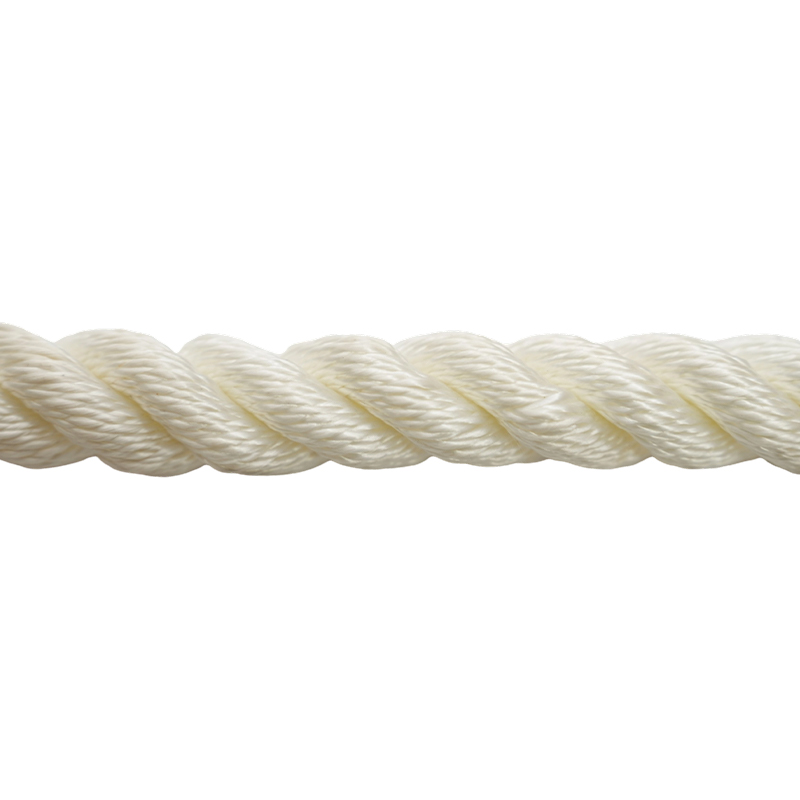
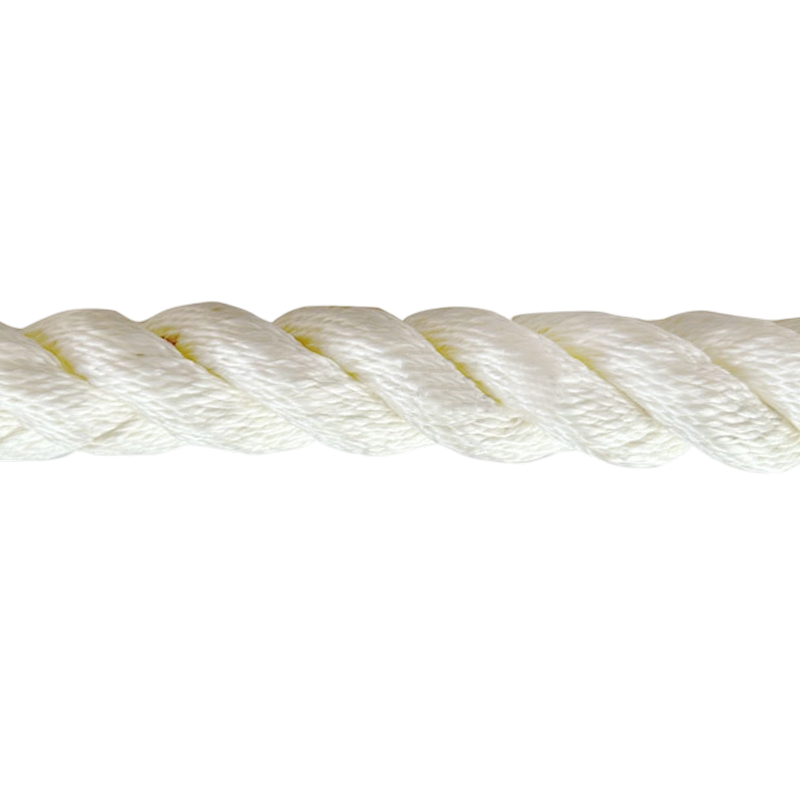
Multiple yarns are fed together and twisted tightly in one direction to form a strand.
Three of these strands are then twisted together tightly in the opposite direction around a central core (which might be empty or contain filler yarns). This counter-twisting locks the structure.
5.For Braided Rope:
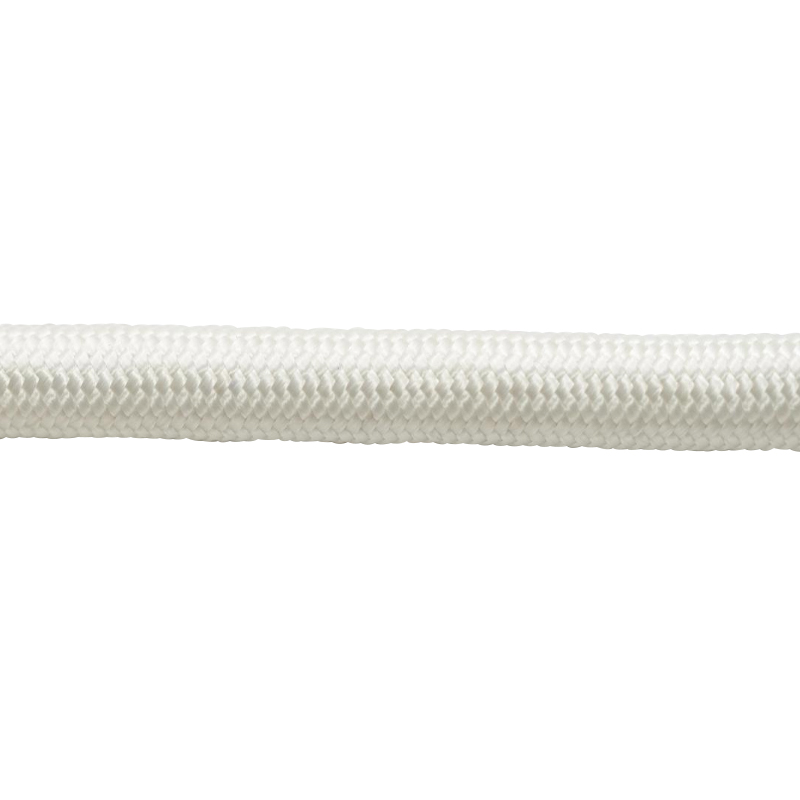
Single Braid: Many yarns are fed onto carriers moving in complex interlocking paths on a braiding machine. The carriers weave over and under each other to form a dense, tubular braid.
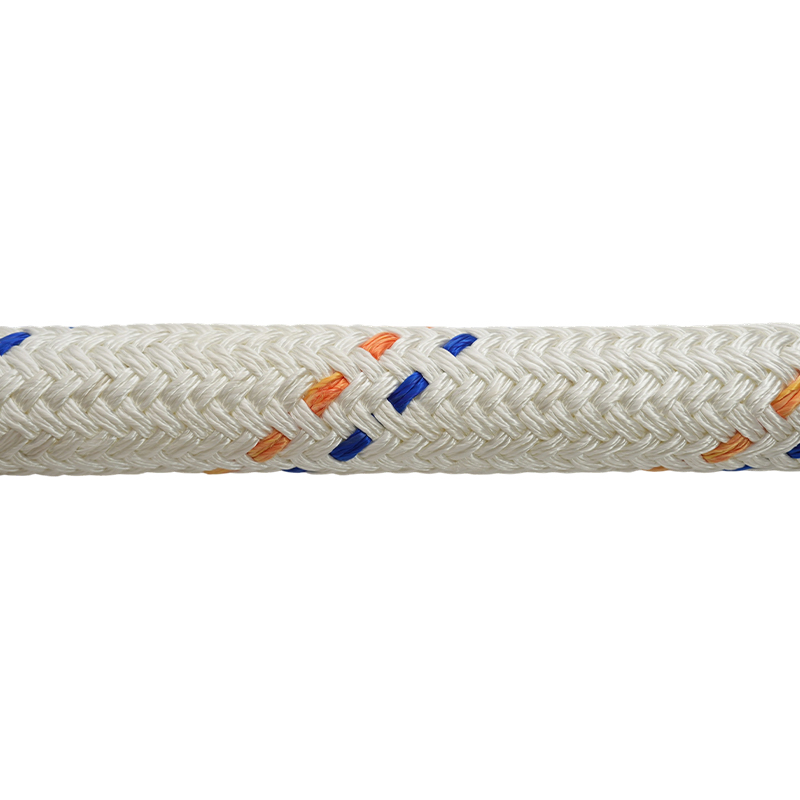
Double Braid (Braid-on-Braid): Two distinct braided layers are made simultaneously on specialized machinery. First, a core (inner braid) is formed from many yarns is formed from many yarns for strength. Then, a separate cover (outer braid) is braided tightly over this core layer.
6.Heat Setting & Stabilization:
The newly formed rope passes through a heat treatment oven or chamber.
Controlled heat relaxes internal stresses caused by twisting or braiding.
This step stabilizes the rope's structure, sets the twists/braids firmly in place, and reduces future shrinkage or unwanted stretching.
7.Cooling & Winding:
After heat setting, the rope is cooled, often with air or water sprays.
The continuous rope is then wound onto large reels for storage, transport, or further processing into cut lengths.
8.Cutting to Length:
The rope is cut from the large reel into the specific lengths required for mooring lines.
9.Eye Splice Creation:
The most common and critical finishing step for a mooring rope is forming a secure loop (eye splice) at each end.
The rope strands are meticulously unraveled for a certain distance.
Using specialized techniques (like a tuck splice for 3-strand or a locked brummel for braid), the strands are woven back into the body of the rope itself under tension.
This creates a permanent, incredibly strong loop where the rope's strength is largely retained. Thimbles (metal inserts) are often added inside the eye during splicing to prevent crushing and reduce wear.
10.Chafe Protection (Optional but Common):
At points where the rope is expected to rub against hard surfaces (like near the eye or where it passes through a chock), protective sleeves may be added.
This can involve stitching on leather patches, threading the rope through a section of durable plastic or rubber hose, or applying a specialized woven or molded guard.
11.Final Inspection & Packaging:
The finished ropes undergo visual and sometimes mechanical inspection for defects in construction, splicing, or material.
They are then coiled or bundled, often with the eyes protected, and packaged for shipment and sale. Labels typically indicate material, construction, diameter, and length.
Related Products
-
 View More
3-Strand Polypropylene Mono-filament Mooring Rope / Line
-
 View More
3-Strand Polypropylene Multi-Filament Hawser Mooring Rope / Line
-
 View More
8-Strand Polypropylene Mono-filament Hawser Mooring Rope / Line
-
 View More
8-Strand Polypropylene Multi-filament Mooring Rope / Line
-
 View More
12-Strand Polypropylene Multi-filament Hawser Mooring Rope / Line
-
 View More
Polypropylene Multi-filament Double Braided Hawser Mooring Rope / Line
-
 View More
Polypropylene Multi-filament Reduced Recoil Mooring Rope / Line
-
 View More
Polypropylene Multi-filament Mooring Tail
-
 View More
3-Strand Polyester Mooring Rope / Line
-
 View More
8-Strand Polyester Hawser Mooring Rope / Line
-
 View More
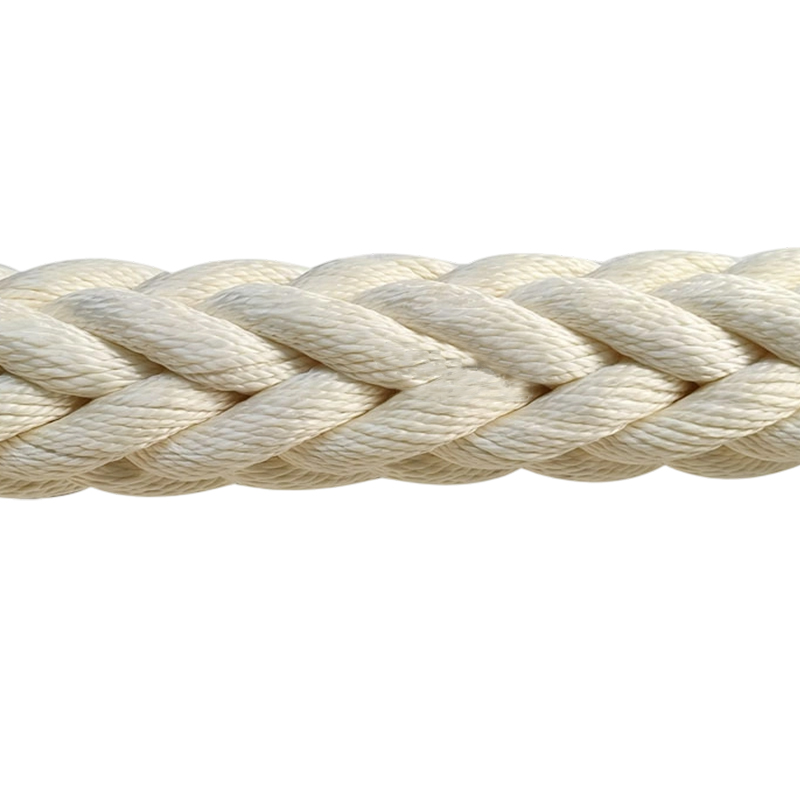
12-Strand Polyester Mooring Rope / Line,Hawser
-
 View More
Polyester Double Braided Hawser Mooring Rope / Line