


 English
 Español
 عربى
عربى
What are the types of mooring ropes?
Here's a breakdown of mooring rope types, focusing on key distinctions:
●By Material (Dominant Factor):
•Nylon (Polyamide):
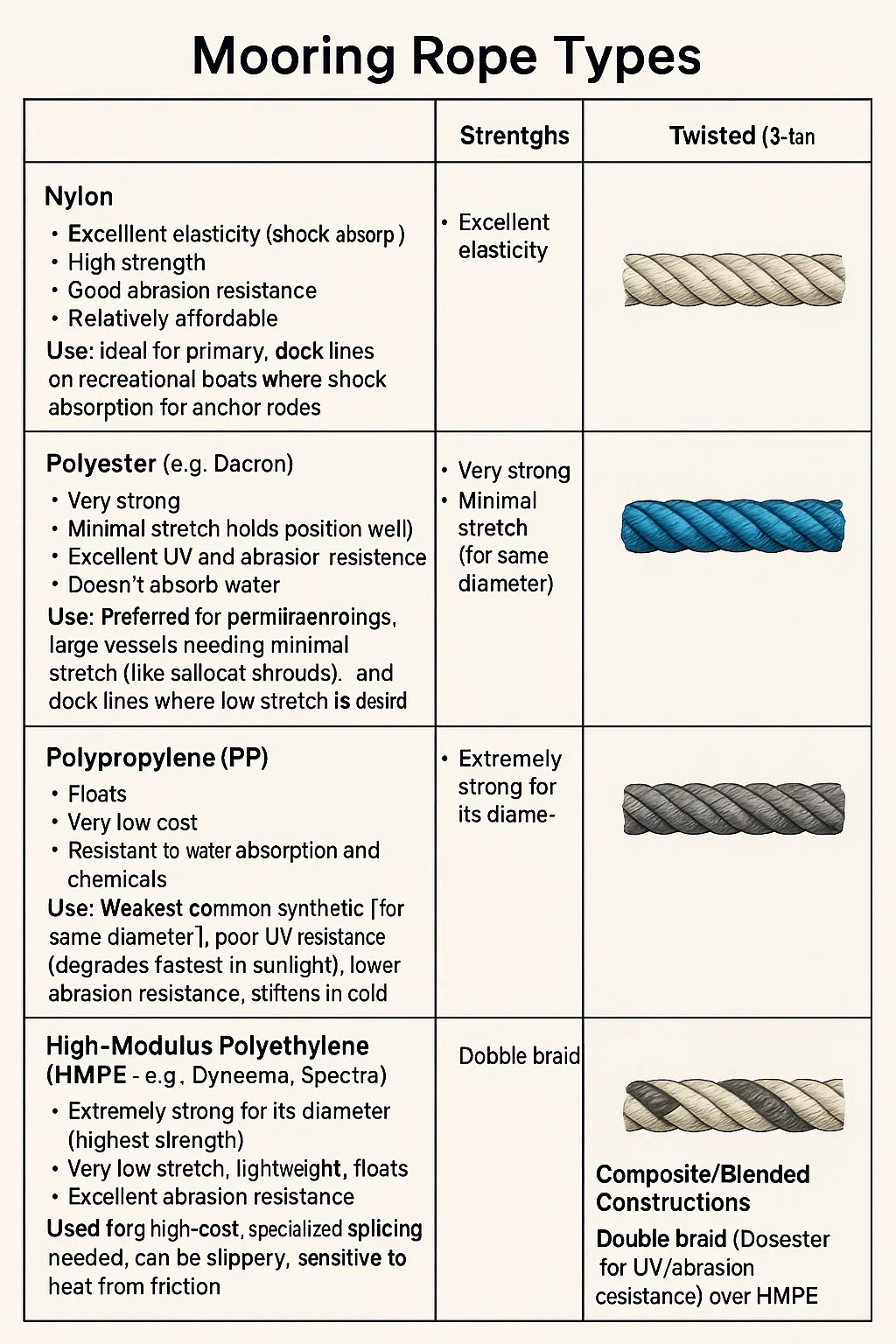
Strengths: Excellent elasticity (shock absorption), high strength, good abrasion resistance, relatively affordable.
Weaknesses: Absorbs water (gets heavier, slightly weaker when wet), degrades faster than polyester in constant sunlight (UV).
Use: Ideal for primary dock lines on recreational boats where shock absorption (waves, wind gusts) is critical. Common for anchor rodes.
•Polyester (e.g., Dacron):
Strengths: Very strong, minimal stretch (holds position well), excellent UV and abrasion resistance, doesn't absorb water.
Weaknesses: Less stretch than nylon (poorer shock absorption), stiffer feel, usually more expensive than nylon.
Use: Preferred for permanent moorings, large vessels needing minimal stretch (like sailboat shrouds), and situations where holding precise position is key. Great for dock lines where low stretch is desired.
•Polypropylene (PP):
Strengths: Floats, very low cost, resistant to water absorption and chemicals.
Weaknesses: Weakest common synthetic (for same diameter), poor UV resistance (degrades fastest in sunlight), lower abrasion resistance, stiffens in cold.
Use: Primarily for mooring pennants (floating section between buoy and chain), temporary lines for small boats/dinghies, water-ski ropes. Avoid for critical, permanent mooring.
•High-Modulus Polyethylene (HMPE - e.g., Dyneema, Spectra):
Strengths: Extremely strong for its diameter (highest strength), very low stretch, lightweight, floats, excellent abrasion resistance.
Weaknesses: Very high cost, specialized splicing needed, can be slippery, sensitive to heat from friction.
Use: High-performance applications on racing yachts, large commercial vessels where weight/size savings are crucial, or replacing wire rope where low stretch is vital. Often used as cores in composite ropes.
•Composite/Blended Constructions:
Combine materials to leverage advantages. Common example: Double braid with a polyester cover (for UV/abrasion resistance) over a HMPE core (for high strength, low stretch).
●By Construction (How it's Built):
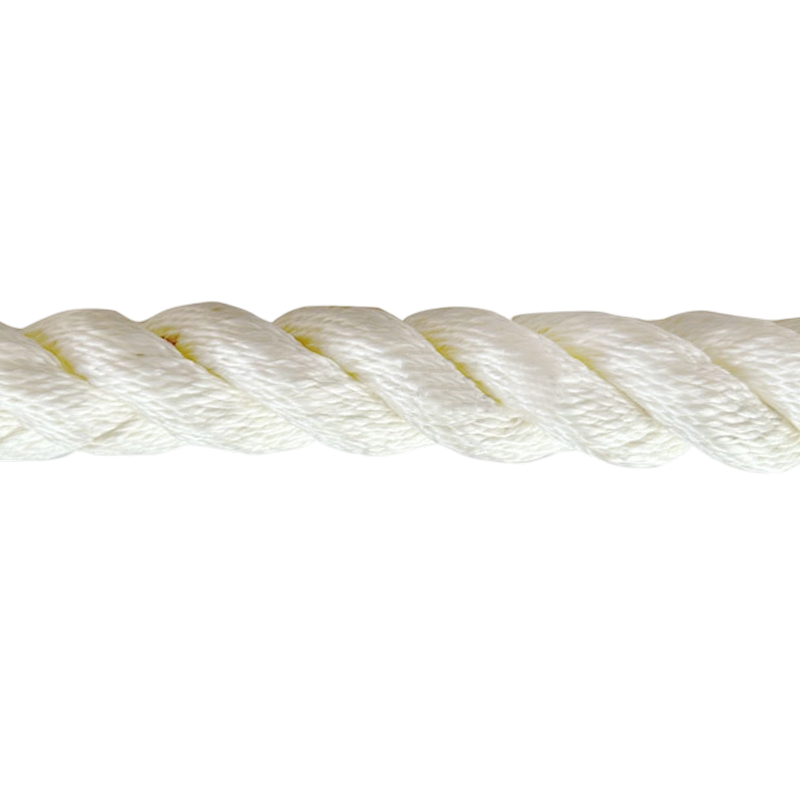
•Twisted (3-Strand):
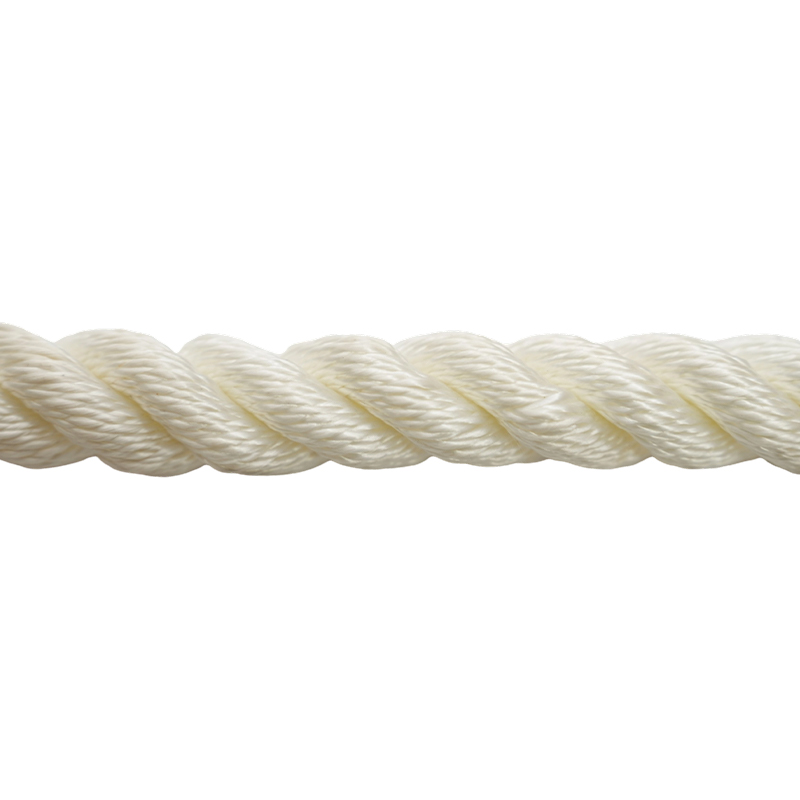
Three distinct strands twisted together. Traditional look and feel.
Pros: Good grip, natural stretch, easy to splice, most affordable construction.
Cons: Can hockle (kink) if coiled incorrectly, surface can "fuzz" with abrasion.
Common Materials: Nylon, Polyester, Polypropylene.
•Braided:
Multiple yarns interwoven in a tubular pattern. Smoother surface.
Single/Diamond Braid: Tight, dense, round construction. Flexible but can be harder to splice.
Double Braid (Braid-on-Braid): A braided core inside a separate braided cover.
Pros: Smoother handling, higher strength-to-diameter ratio than twisted, better abrasion resistance, less prone to hockling.
Cons: More expensive than twisted, splicing is slightly more complex.
Common Materials: Nylon, Polyester, HMPE (often as core).
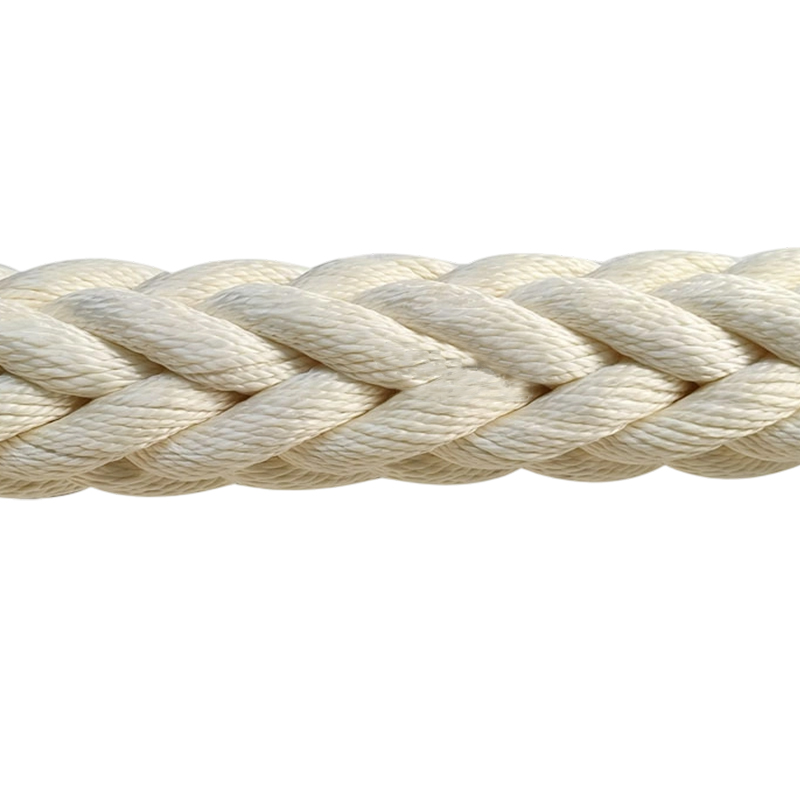
•Plaited (8-Strand or 12-Strand):
Strands are paired and interlaced in a square pattern. Round, firm feel.
Pros: Resists twisting forces well, good handling, strong.
Cons: Less common than twisted or braided, splicing requires expertise.
Common Materials: Polyester.
●By Stretch Behavior:
•High Elongation (Stretchy): Nylon (especially twisted). Best for shock absorption.
•Low Elongation (Low Stretch): Polyester, HMPE, Polypropylene. Best for holding precise position.
•Note: Construction also affects stretch (braided nylon stretches less than twisted nylon).
●By Buoyancy:
•Floating Lines: Polypropylene, HMPE. Essential for pennants or where sinking is a hazard.
•Sinking Lines: Nylon, Polyester (they absorb some water and sink slowly). Preferred for dock lines to stay clear of props.
●Shared Features Across Types:
•Spliced Eyes: Virtually all dedicated mooring lines have professionally spliced loops (eyes) at each end for secure attachment to cleats or bollards, often fitted with metal thimbles to prevent wear.
•Chafe Protection: Frequently added (leather, PVC, specialty sleeves) at vulnerable wear points like the eye or where the rope passes through fairleads/chocks.
•Diameter & Length: Sized specifically for the vessel's displacement and mooring conditions (calm harbor vs. exposed anchorage).
Related Products
-
 View More
3-Strand Polypropylene Mono-filament Mooring Rope / Line
-
 View More
3-Strand Polypropylene Multi-Filament Hawser Mooring Rope / Line
-
 View More
8-Strand Polypropylene Mono-filament Hawser Mooring Rope / Line
-
 View More
8-Strand Polypropylene Multi-filament Mooring Rope / Line
-
 View More
12-Strand Polypropylene Multi-filament Hawser Mooring Rope / Line
-
 View More
Polypropylene Multi-filament Double Braided Hawser Mooring Rope / Line
-
 View More
Polypropylene Multi-filament Reduced Recoil Mooring Rope / Line
-
 View More
Polypropylene Multi-filament Mooring Tail
-
 View More
3-Strand Polyester Mooring Rope / Line
-
 View More
8-Strand Polyester Hawser Mooring Rope / Line
-
 View More
12-Strand Polyester Mooring Rope / Line,Hawser
-
 View More
Polyester Double Braided Hawser Mooring Rope / Line