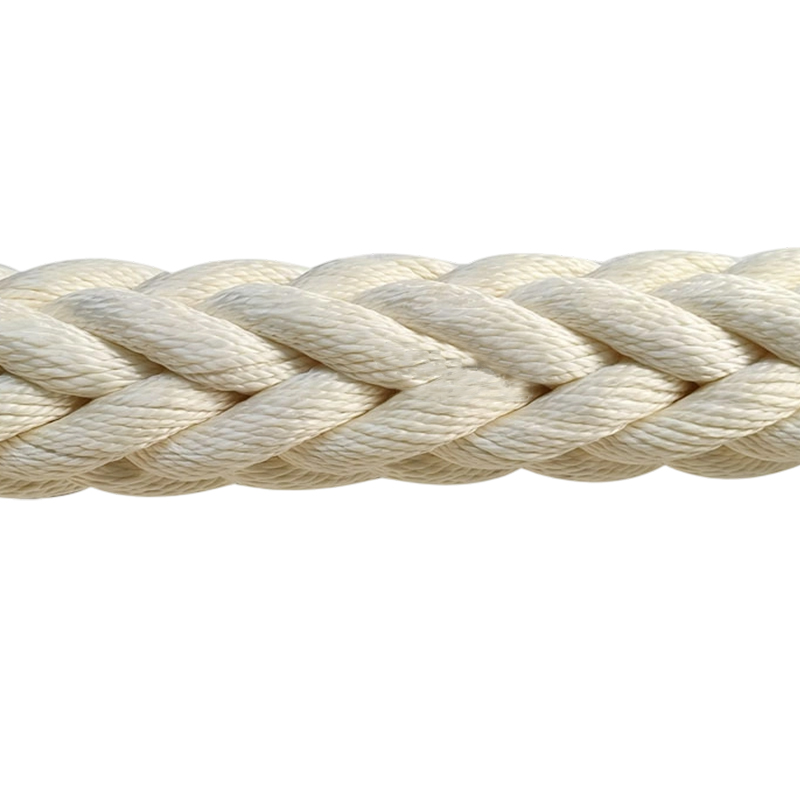
What Are Mooring Lines and Why They Matter for Every Boat Owner
Mooring lines are the ropes or lines used to secure a boat to a dock, pier, buoy, or another vessel. Without the right mooring lines rigged correctly, even a calm night at the marina can end with a boat adrift, scraped against pilings, or worse. The choice of line material, diameter, length, and configuration directly determines how safely a vessel stays put under varying wind, tide, and current conditions.
Most boat damage at marinas happens not from collisions on the water but from poor mooring setups. A 30-foot cruiser swinging against a wooden dock in a 20-knot breeze, held only by two undersized dock lines, is a scenario that plays out at marinas across the world every season. Understanding mooring lines — their materials, breaking strengths, stretch characteristics, and proper configurations — is one of the most practical skills any boat owner can develop.
This guide covers everything from the basic types of boat mooring lines to advanced rigging configurations, with specific data and examples to help you make the right call for your vessel.
Types of Mooring Lines: Materials and Their Real-World Performance
The material of your mooring lines determines stretch, UV resistance, abrasion tolerance, and how they behave under load. There is no single "best" rope for all mooring situations — each material has trade-offs that suit different conditions and vessel types.
Nylon: The Standard for Dock Lines
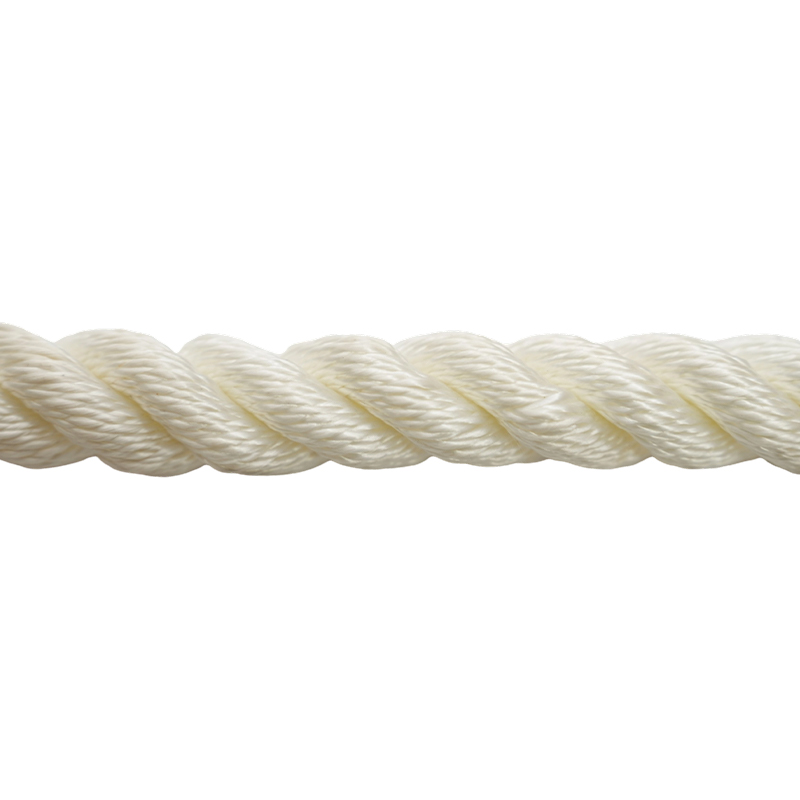
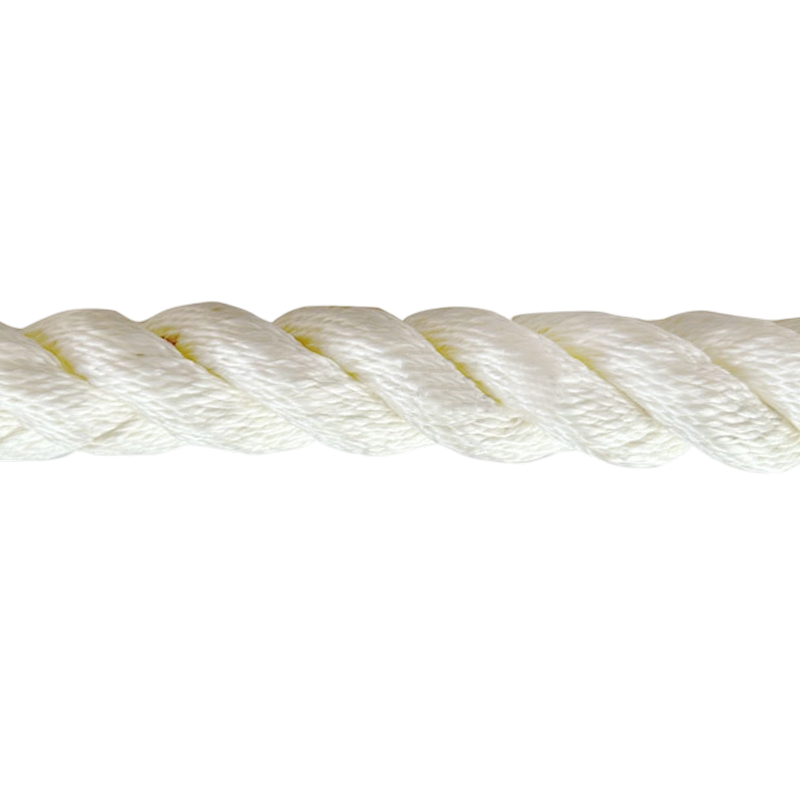
Nylon is the most widely used material for boat mooring lines, and for good reason. Three-strand nylon can stretch up to 25–30% of its length before breaking, which acts as a shock absorber when waves, wakes, or wind gusts jerk the boat against its dock lines. That elasticity is particularly valuable in tidal anchorages or exposed slips where conditions change rapidly.
For a 30-foot sailboat, a typical 5/8-inch (16mm) three-strand nylon dock line has a breaking strength of approximately 10,200 lbs. Working load is usually rated at 10–15% of breaking strength for sustained use, giving a practical working load of around 1,020–1,530 lbs. That's more than adequate for most coastal mooring situations, but it's worth remembering these figures drop as rope ages, gets UV-degraded, or is subjected to repeated shock loading.
Polyester: Stability Over Stretch
Polyester (often sold under brand names like Dacron) stretches only 5–10% under load — much less than nylon. This makes it a preferred choice for situations where you want the boat to stay in a precise position, such as stern-to Mediterranean mooring or when using spring lines where minimal movement is critical. Polyester also resists UV degradation better than nylon and holds its strength longer over years of outdoor use.
The downside: because polyester doesn't absorb shock the way nylon does, cleats, chocks, and attachment points on the boat take more stress during sudden load events. Using polyester dock lines on a vessel without well-bedded, substantial hardware is asking for hardware failure.
Polypropylene: Floating and Affordable, with Caveats
Polypropylene floats, which makes it useful for dinghy painters and certain mooring pendant applications where you want the line visible on the surface. However, it degrades rapidly under UV exposure — losing up to 50% of its strength after just one season in full sun. It's also slippery and difficult to knot securely. Most experienced mariners avoid polypropylene for primary mooring lines and reserve it for temporary or very short-term uses.
High-Modulus Lines: HMPE and Dyneema
High-modulus polyethylene lines (HMPE), sold under names like Dyneema or Spectra, are extraordinarily strong for their diameter — roughly 10–15 times stronger than steel by weight. However, they have virtually no stretch, which means they transmit every shock load directly to fittings and cleats. For most mooring applications, HMPE is overkill and potentially damaging to hardware unless used with an elastic snubber or bungee component. They are better suited for running rigging on performance sailboats.
| Material |
Stretch (%) |
UV Resistance |
Best Use |
| Nylon (3-strand) |
25–30% |
Moderate |
General dock lines, anchor rodes |
| Polyester (Dacron) |
5–10% |
High |
Spring lines, Med mooring |
| Polypropylene |
15–20% |
Poor |
Temporary uses, dinghy painters |
| HMPE / Dyneema |
<1% |
High |
Performance rigging, not general mooring |
Comparison of common mooring line materials by stretch, UV resistance, and ideal application
Choosing the Right Diameter and Length for Your Boat's Mooring Lines
Diameter and length are not arbitrary — they should match your boat's size, the hardware on board, and the expected conditions at your berth.
Sizing by Boat Length
A commonly used rule of thumb in the marine industry is 1/8 inch of line diameter for every 9 feet of boat length, with a minimum of 1/2 inch for most recreational vessels. Here's how that breaks down:
- Up to 27 feet: 1/2-inch (12mm) lines
- 27–36 feet: 5/8-inch (16mm) lines
- 36–45 feet: 3/4-inch (19mm) lines
- 45–54 feet: 7/8-inch (22mm) lines
- Over 54 feet: 1-inch (25mm) or larger
Keep in mind this is a starting point. Heavier displacement boats, those in exposed locations, or vessels regularly subject to strong tidal flows should go up one size from the formula recommendation.
Line Length: Getting It Right
Dock lines that are too short create rigid connections that concentrate load; lines that are too long allow excessive surge and can foul propellers or neighboring boats. For bow and stern lines on a typical slip, a common guideline is a length equal to 2/3 of the boat's overall length. Spring lines typically run the full length of the boat or longer to control fore-and-aft movement effectively.
In a tidal environment with 4–6 feet of tide, longer dock lines allow the boat to rise and fall without pulling cleats off the dock. A 35-foot boat in a 5-foot tidal range should have bow and stern lines of at least 25 feet, with spring lines of 35–40 feet.
The Six Standard Mooring Line Positions Every Boater Should Know
A proper mooring setup doesn't rely on just two lines. Professional dock crews and experienced cruisers use up to six lines in combination to control motion in every direction. Each line has a specific job:
- Bow Line: Runs from the bow forward to the dock. Prevents the boat from moving astern.
- Stern Line: Runs from the stern aft to the dock. Prevents the boat from moving forward.
- Forward Bow Spring: Runs from the bow aft to a dock cleat roughly amidships. Limits forward surge.
- After Bow Spring: Runs from near the bow aft and forward along the dock. Limits backward movement.
- Forward Quarter Spring: Runs from the stern forward to the dock. Prevents the stern from swinging out.
- After Quarter Spring: Runs from the stern aft and forward. Controls the boat's tendency to move astern.
In calm conditions at a protected marina, two or four lines are often sufficient. In exposed conditions, a full six-line setup distributes load across more attachment points and reduces individual line stress significantly. During a documented 45-knot storm at a Florida marina, boats with six-line setups suffered less hardware damage and zero line failures compared to nearby boats held by only two lines.
Mooring Buoys vs. Dock Lines: Different Scenarios, Different Approaches
Not all mooring situations involve a dock. Mooring buoys — permanent anchoring systems with a buoy on the surface connected to a heavy anchor or concrete block on the seabed — require a different type of line and rigging technique than dock lines.
Mooring Pendants and Pickup Lines
When tying up to a mooring buoy, the line that connects your boat to the buoy is called a mooring pendant (or pennant). Mooring pendants take significant chafe at the bow roller or chock, so they are typically made from nylon with a polyester or stainless steel chafe guard at the wear point. A pendant for a 40-foot boat should be at least 3/4 inch in diameter and long enough that the buoy rides several feet ahead of the bow to prevent it from banging the hull.
Using two pendants through separate bow cleats is standard practice in exposed anchorages. If one chafes through — which can happen in as little as a few hours in rough conditions on a hard chock — the second line keeps the boat on the mooring.
Inspecting the Mooring System Itself
When using a mooring buoy provided by a marina or harbor authority, never assume it has been recently inspected. The underwater chain connecting the buoy to the anchor block corrodes, and swivels can fail without any visible sign from the surface. In several well-documented incidents, boats broke free from seemingly intact buoys because underwater shackles had corroded through. Always ask the harbor master when the mooring was last serviced, and if you can't get a satisfactory answer, consider anchoring instead.
Chafe: The Silent Destroyer of Mooring Lines
Chafe is the single most common cause of mooring line failure. A line in good condition, running over a sharp or rough surface under repeated cyclic loading, can wear through in a matter of hours. The problem is invisible from the deck — the damage happens where the line contacts the chock, cleat, or dock edge.
Where Chafe Happens Most
- Bow chocks and fairleads, especially on older boats with cast fittings that have developed rough spots or burrs
- Where lines cross dock edges, particularly on floating docks that move differently from the boat
- At cleat bases, where lines can saw back and forth under tension
- Mooring pendants at the bow roller, where motion is greatest
Effective Chafe Protection Methods
The most practical chafe protection is a chafe sleeve — a length of reinforced rubber hose or leather split over the line at the wear point. Commercial chafe gear is available, but many cruisers use radiator hose slit lengthwise and secured with cable ties for a cheap, effective solution. Garden hose also works in a pinch. The sleeve should extend at least 6 inches on either side of the contact point to account for the line shifting as conditions change.
Stainless steel chocks are less aggressive than cast iron but still cause chafe over time. The real enemy is a sharp edge combined with cyclic motion. Sanding rough spots on chocks smooth and keeping them free of barnacle growth eliminates much of the problem. In storm conditions, checking and repositioning chafe gear every few hours is a standard practice on well-run offshore boats.
How to Properly Tie and Secure Mooring Lines
The strongest line in the world does no good if the knot fails. For mooring applications, the goal is a connection that holds securely under load, can be released when needed, and doesn't jam after being under tension for days.
Essential Knots for Boat Mooring Lines
- Bowline: The standard loop knot for dock lines. It doesn't slip, is easy to untie after loading, and retains approximately 65% of the line's breaking strength. A bowline on a bight gives you a double loop for extra security.
- Cleat Hitch: The correct way to belay a line on a dock or boat cleat. A cleat hitch that is incorrectly tied — wrapping too many times or crossing the wrong way — can jam under load and be impossible to remove.
- Round Turn and Two Half Hitches: Secure for attaching a line to a ring or post. The round turn absorbs load before the half hitches, reducing the chance of jamming.
- Eye Splice: A permanently formed loop at the end of a line, retaining 90–95% of the line's breaking strength. Far superior to a bowline for permanent dock line eyes. Most quality dock lines come pre-spliced.
For boats with dock lines regularly left unattended — such as liveaboards or boats in paid slips — eye-spliced lines with a loop over a dock cleat are the most secure and hassle-free option. The eye doesn't jam, doesn't need to be retied, and can be adjusted quickly when needed.
Seasonal Inspection and Maintenance of Mooring Lines
Mooring lines don't last forever. UV radiation, abrasion, chemical exposure (fuel, bilge water), and cyclic stress all degrade fiber over time. Most marine safety organizations recommend replacing nylon dock lines every 3–5 years for vessels in year-round use, and more frequently for boats stored in full sun or used in highly tidal environments.
Signs Your Mooring Lines Need Replacement
- Visible fuzziness or "halo" around the line — broken surface fibers indicating abrasion damage beneath
- Flat spots or stiffness in three-strand lines, indicating internal fiber breakdown
- Significant color fading concentrated in areas of high UV exposure
- Visible core exposure on braided lines — the line has worn through its outer jacket
- Any point where the line feels noticeably thinner than the rest — local abrasion has reduced the cross-section
Storage and Cleaning
Rinsing dock lines with fresh water after salt water use slows UV and salt degradation considerably. Salt crystals left in rope fibers act as an abrasive with every flexing cycle. For storage, coiling lines loosely and keeping them out of direct sunlight — even during a single season — makes a measurable difference. Storing lines in a locker instead of leaving them coiled on a sunny dock extends their service life by years.
Washing heavily soiled lines in a front-loading washing machine on a cold cycle with mild detergent is entirely safe for nylon and polyester and removes grime that accelerates degradation. Never machine dry rope — the heat breaks down the fibers rapidly.
Storm Mooring: Preparing Your Lines for Severe Weather
Standard dock line setups are not adequate for tropical storms, hurricanes, or severe gale conditions. Storm mooring requires a fundamentally different approach — more lines, larger diameters, longer lengths, and more attachment points both on the boat and the dock.
Increasing Line Count and Size
When a tropical storm is forecast, doubling the number of dock lines is the minimum recommendation. Using lines one to two sizes larger than normal increases breaking strength substantially — going from 5/8-inch to 3/4-inch nylon increases breaking strength from approximately 10,200 lbs to approximately 14,400 lbs, a 41% increase. Many professional boat captains carry a set of dedicated storm lines larger and longer than their standard dock lines for exactly this purpose.
The Bridle System for Storm Conditions
A bridle — where two lines from different points on the bow run to the same dock cleat or piling — distributes bow load across two attachment points and reduces the tendency of the boat to "sail" sideways in strong wind. When combined with doubled spring lines and chafe protection at every contact point, a bridle setup significantly reduces the risk of catastrophic line failure in storm conditions.
Ensure that dock cleats, pilings, and fairleads on the boat are up to the task. A 10,000-lb breaking strength line attached to a cleat bolted with 1/4-inch bolts through a rotted deck will fail at the hardware, not the line. Inspect all deck hardware annually and rebolt anything that shows movement or soft deck material beneath it.
Snubbers and Shock Absorbers
Nylon's natural stretch is helpful in normal conditions but may not be enough in severe weather. Dedicated mooring snubbers — elastic bungee-type devices inserted inline with a dock line — add additional shock absorption. These are particularly useful when using low-stretch polyester lines or when docking in areas where wave action or wakes from passing vessels create repeated, sharp load spikes on the mooring lines for boats.
Common Mistakes Boat Owners Make with Mooring Lines
Even experienced boaters fall into habits that compromise their mooring setups. These are the most frequently observed errors at marinas and anchorages:
- Using lines that are too short: Short bow and stern lines create steep angles that amplify shock loads and allow very little give. A line at 45 degrees from dock to cleat puts nearly 1.4 times the actual boat load on each fitting.
- No spring lines: Skipping spring lines allows the boat to surge fore and aft, wearing dock lines through continuous cyclic loading and banging the vessel into pilings repeatedly.
- Ignoring chafe until it's too late: Most chafe develops gradually and is invisible until the line has already been significantly weakened. Regular inspection — reaching down and feeling the line at each contact point — catches developing problems before they become failures.
- Tying to dock cleats that are already loaded by other boats: In a shared marina, cleats are sometimes daisy-chained. Adding your lines to an already-loaded cleat means your boat's security depends entirely on that cleat's capacity and on the security of the boats ahead of you in the chain.
- Not adjusting for tide: Lines set correctly at high tide can become dangerously taut at low tide, pulling cleats, breaking lines, or preventing the boat from floating freely as the tide falls. Always check your dock lines at the tidal extremes expected over your stay.
- Reusing heavily worn lines: Old lines that have visible wear, stiffness, or color fading are kept "just for the dock" by many boat owners. These lines are the ones most likely to fail in the conditions when you need them most.
Buying Mooring Lines: What to Look For
Not all dock lines sold at marine retailers are equal in quality. When shopping for mooring lines, several factors distinguish good from mediocre products.
Construction: Three-Strand vs. Double Braid
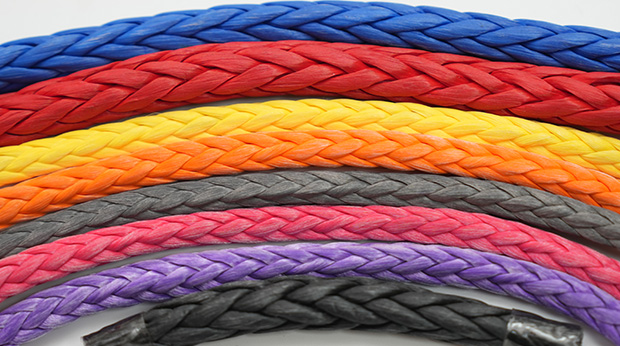
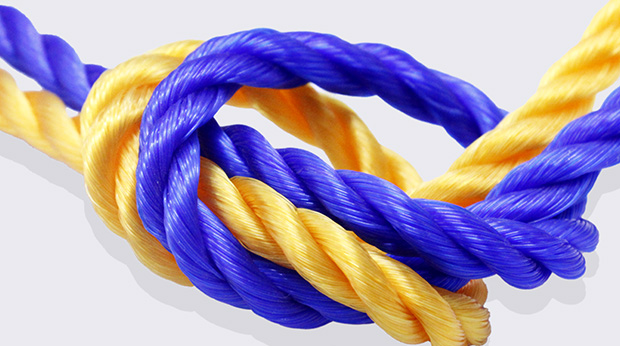
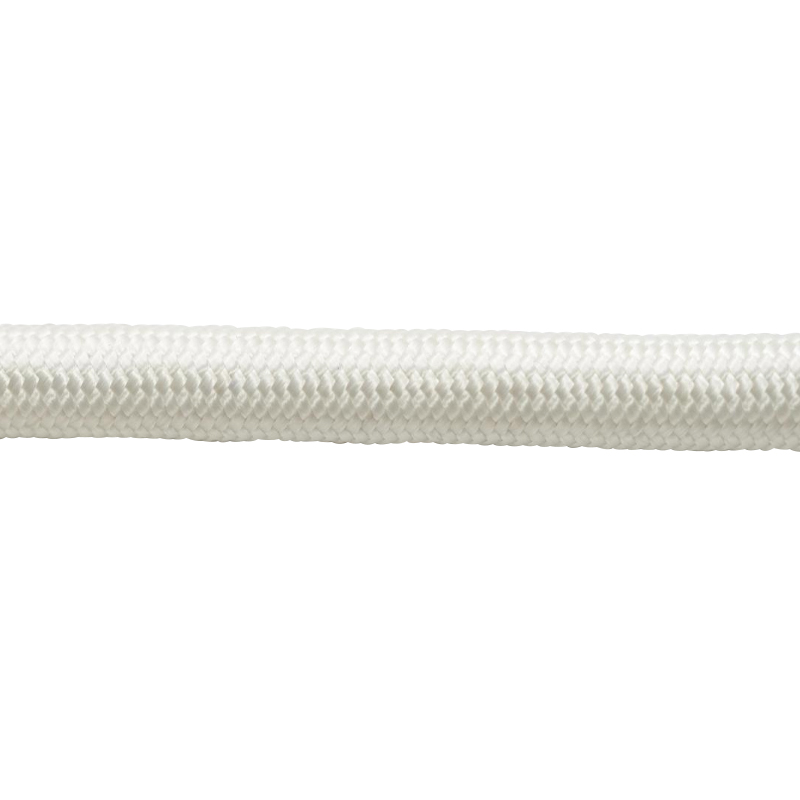
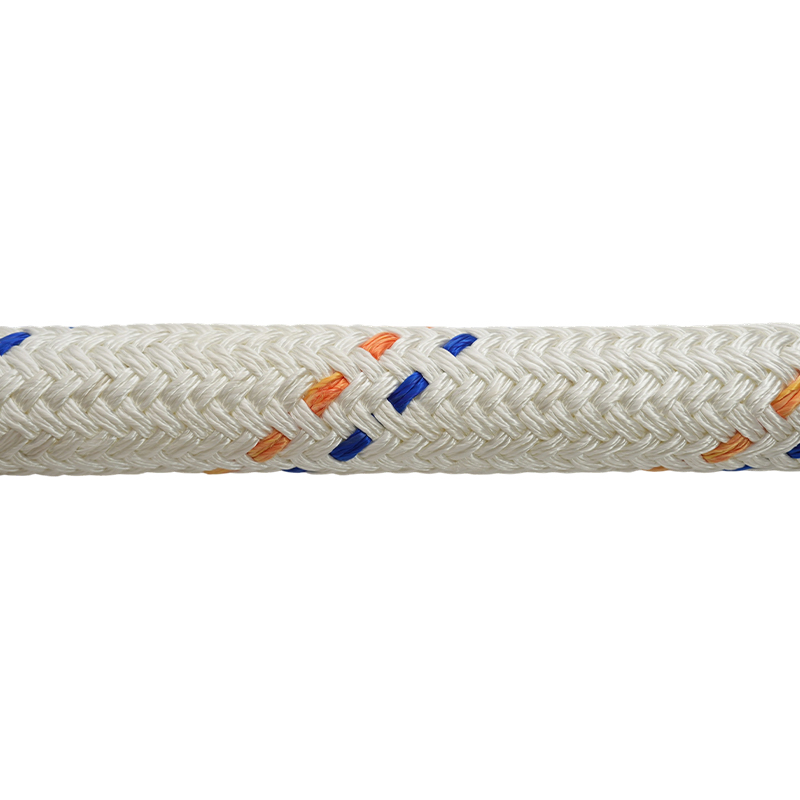
Three-strand nylon is the traditional choice and remains excellent for most mooring applications. It's easy to splice, splices are strong, and the construction is transparent — damage is easy to spot. Double-braid (braid-on-braid) lines are more flexible, easier to handle, and kink less, but they're harder to splice and damage to the core beneath the jacket can be hidden.
For general dock line use, three-strand nylon is the more practical and inspectable choice. For mooring pendants where flexibility and ease of handling matter, double-braid is a reasonable alternative.
Pre-Spliced Eyes vs. Raw Line
Pre-spliced dock lines with a 12-inch eye at one end are convenient and strong. The splice retains 90–95% of breaking strength compared to 65–70% for a tied bowline. If you're buying raw line and tying your own eyes, use a bowline — it's the most reliable knot for the purpose — but understand you're working with a reduced strength margin. Machine-spliced or hand-spliced eyes from a rigger are worth the cost for permanent dock lines.
Brand and Quality Indicators
Reputable marine rope manufacturers publish breaking strength and working load data for every product. If a manufacturer doesn't publish breaking strength data, that's a significant warning sign. Look for lines that have consistent twist in three-strand construction, uniform color throughout (indicating consistent dyeing and UV inhibitor distribution), and a firm, tight lay that doesn't feel loose or spongy. Cheap lines often have lower actual fiber content than they appear to, and break well below advertised values.



 English
 Español
 عربى
عربى