


 English
 Español
 عربى
عربى
Rope for Boating: How to Choose the Right Mooring Rope
Content
- 1 What Rope for Boating Actually Means — and Why It Matters More Than You Think
- 2 Core Rope Materials Used in Boating
- 3 Rope Construction: Three-Strand vs. Double Braid vs. Single Braid
- 4 How to Size a Mooring Rope for Your Boat
- 5 Types of Rope Needed on a Fully Rigged Boat
- 6 Mooring Rope in Specific Environments: What Changes
- 7 Inspecting and Replacing Boat Ropes: Realistic Timelines
- 8 Knots, Splices, and Terminations for Boating Rope
- 9 Chafe Protection: The Detail That Extends Rope Life by Years
- 10 Storing and Maintaining Rope for Boating
- 11 Frequently Asked Questions About Rope for Boating
- 11.1 What is the difference between a mooring rope and a dock line?
- 11.2 Can I use the same rope for mooring and anchoring?
- 11.3 How do I know when a mooring rope needs to be replaced?
- 11.4 Is polyester or nylon better for dock lines?
- 11.5 How many dock lines does a boat need?
- 11.6 What color rope should I use for mooring?
What Rope for Boating Actually Means — and Why It Matters More Than You Think
The right rope for boating is not a minor detail. It is the difference between a vessel that stays secure through a storm and one that drifts into a dock, a rocky shore, or another boat. Among all the lines on a boat, the mooring rope bears the most sustained load — holding the vessel in place against current, wind, and wave action for hours or even days at a time. Getting this choice wrong is expensive, dangerous, and entirely avoidable.
Boat ropes are not interchangeable. A line used for towing has different requirements than one used for anchoring. A dock line endures different stress patterns than a halyardor a sheet. This article breaks down exactly which materials, constructions, and diameters suit which jobs — with hard numbers, not vague generalities — so you can make the right call before you ever leave the dock.
Core Rope Materials Used in Boating
Every rope for boating is built from one of a handful of fiber materials, and each behaves differently under load, UV exposure, and wet conditions. Understanding these materials is the first step toward choosing correctly.
Nylon — The Standard for Mooring and Docking
Nylon is the most widely used material for mooring rope and dock lines. Its key property is elasticity: nylon can stretch 15–25% of its length before breaking, which means it absorbs shock loads rather than transmitting them to cleats, clevis pins, or hull fittings. When a powerboat surges against a dock in choppy water, a nylon mooring rope stretches and recoils instead of slamming the hardware repeatedly.
Nylon also holds a breaking strength that is genuinely impressive for its weight. A 1/2-inch (12mm) three-strand nylon line has a minimum break load of around 5,600 lbs (2,540 kg). It resists abrasion reasonably well, softens when wet — making it easy to handle — and costs far less than high-performance synthetics like Dyneema or Vectran.
The downside: nylon loses roughly 10–15% of its dry breaking strength when wet. It also degrades under prolonged UV exposure, though this takes years of continuous outdoor use.
Polyester — Stable, Low-Stretch, and UV-Resistant
Polyester stretches far less than nylon — typically under 3% at working loads — which makes it preferred for sheets, halyards, and control lines where you need predictable, minimal movement. It retains close to 100% of its strength when wet, handles UV exposure better than nylon, and is highly resistant to chemicals and fuel splashes common in engine compartments.
However, its low stretch means it does not dampen shock loads well. Using a low-stretch polyester line as a mooring rope in a tidal area with heavy boat traffic is asking for cleats and deck hardware to take a beating. Polyester earns its place in running rigging, not at the dock cleat.
Polypropylene — Floats, But Use Carefully
Polypropylene is the only common rope material that floats, which makes it useful for tow lines and water-ski ropes where being run over by a propeller is a genuine risk. It is cheap, lightweight, and dyes well into high-visibility colors.
The problems are significant enough that most experienced boaters avoid polypropylene for any load-bearing application. It has the lowest UV resistance of all synthetic rope materials — degrading visibly in as little as one season of sun exposure — and its breaking strength is considerably lower than nylon or polyester at the same diameter. Never use it as a mooring rope or dock line for anything more than very light-duty temporary use.
HMPE / Dyneema — High-Performance, Low-Stretch, High Cost
High-modulus polyethylene — sold under brand names like Dyneema and Spectra — offers breaking strengths 8–10 times higher than steel at the same weight. A 6mm Dyneema SK75 braid has a breaking load of around 6,200 kg (13,700 lbs). It is virtually non-stretch, extremely resistant to UV and saltwater, and lasts far longer than nylon under continuous outdoor exposure.
The downsides: it is expensive (often 5–8x the cost of nylon of equal diameter), has very low resistance to heat, can creep under sustained high load, and its slippery surface makes knots unreliable — proper termination usually requires splicing. HMPE finds its place in offshore racing halyards, backstays, and high-load control lines rather than as everyday dock lines.

Rope Construction: Three-Strand vs. Double Braid vs. Single Braid
The same material behaves differently depending on how the fibers are organized. Construction affects handling, stretch, abrasion resistance, ease of splicing, and how the rope responds to cyclic loading.
| Construction | Typical Stretch | Best For | Splice Ease | Typical Cost |
|---|---|---|---|---|
| Three-Strand Twisted | High (15–25%) | Mooring rope, anchor lines | Easy | Low |
| Double Braid (Braid on Braid) | Moderate (5–10%) | Dock lines, sheets, halyards | Moderate | Medium |
| Single Braid (Hollow) | Low to moderate | Control lines, furling lines | Easy | Medium |
| Kernmantle (Core + Sheath) | Very low (<3%) | Racing halyards, control lines | Difficult | High |
For mooring rope specifically, three-strand nylon remains the industry default — particularly in the United States — because of its shock-absorption, easy splicing, and low cost. Double-braid nylon is preferred in Europe and among boaters who want a softer, easier-to-coil line that still absorbs dock shock adequately.
How to Size a Mooring Rope for Your Boat
Undersizing is the most common mistake boaters make with rope selection. A mooring rope that is too thin will chafe through faster, break under unexpected load spikes, and wear out hardware at the point of contact. The widely accepted industry guideline is 1/8 inch of diameter for every 9 feet of boat length, measured in three-strand nylon.
In practical terms, this translates to:
- Boats up to 27 feet: 3/8 inch (10mm) mooring rope minimum
- Boats 27–36 feet: 1/2 inch (12mm)
- Boats 36–45 feet: 5/8 inch (16mm)
- Boats 45–60 feet: 3/4 inch (18–20mm)
- Vessels over 60 feet: 7/8 inch (22mm) or larger, often with a professional rigging assessment
These figures assume calm to moderate marina conditions. If you moor in an exposed anchorage, a tidal estuary with significant current, or a location prone to wakes from large vessels, size up by one increment. Working load limits for mooring rope are typically set at 10–15% of the minimum breaking load — a safety factor that accounts for shock loading, knot loss, and UV degradation over time.
Length is the other variable people underestimate. A mooring rope that is too short holds the boat too rigidly against the dock and amplifies shock loads. The standard recommendation is that dock lines should be approximately equal to 2/3 of the boat's overall length for bow and stern lines, with spring lines running roughly equal to the boat's full length to prevent surging forward and backward.
Types of Rope Needed on a Fully Rigged Boat
A well-prepared vessel carries several different types of rope, each optimized for a specific function. Consolidating everything into one generic line type is a false economy — the performance trade-offs are real and sometimes dangerous.
Mooring Rope and Dock Lines
Mooring rope is the rope that secures a vessel to a dock, buoy, or pile. It endures prolonged loading and cyclic stress from wave action and current. Nylon — either three-strand or double-braid — is the material of choice because of its elasticity. A typical boat between 30 and 40 feet should carry at least six dock lines: two bow lines, two stern lines, and two spring lines. Many experienced sailors carry two extras for unexpected berthing situations.
When choosing a mooring rope with a pre-spliced eye, ensure the eye diameter fits cleanly over the largest cleat or pile head at your regular berth. Undersized eyes create chafe points and make lines difficult to remove quickly in an emergency.
Anchor Lines (Rode)
Anchor rode is typically a combination of chain (at the anchor end) and rope (leading back to the boat). The rope portion is almost always nylon three-strand or double-braid for shock absorption. A minimum scope ratio of 5:1 rope-to-water-depth is standard in calm conditions; this increases to 7:1 or more in heavy weather. For a boat anchored in 20 feet of water during a storm, that means at least 140 feet of rode deployed.
Halyards
Halyards raise and lower sails. They must be low-stretch to hold sail shape accurately and prevent the head of the sail from creeping down under load. Modern cruising halyards are typically polyester double-braid; performance boats use Dyneema or mixed-core halyards that weigh significantly less and stretch near zero.
Sheets
Sheets control the angle of the sails while underway. They need to run smoothly through blocks and clutches, hold their shape under repeated loading, and be easy to handle while wet. Polyester double-braid is the practical standard for cruising. Racing sailors often opt for high-tech blended lines with Dyneema cores and polyester sheaths for reduced weight aloft and minimal stretch.
Tow Lines and Safety Lines
A tow line must handle sudden shock loads when a towed vessel surges in waves. Nylon is again preferred for its elasticity. A proper offshore tow line should be at least 50–100 feet long to dampen surging and should have a breaking strength well above the combined displacement of both vessels. Never use polypropylene or polyester alone for towing — the first is too weak, the second too stiff.

Mooring Rope in Specific Environments: What Changes
The same mooring rope does not perform equally in a calm freshwater lake marina and a tidal saltwater anchorage. Environment shapes rope selection significantly.
Saltwater and Coastal Marinas
Salt accelerates degradation in natural fibers and contributes to abrasion on synthetic ones. Rinse mooring ropes with fresh water regularly — at minimum after each voyage and at the start of each season. Saltwater marinas often have rougher dock conditions due to tidal variation and boat wake, which means mooring rope needs chafe protection wherever it runs through a fairlead, over a dock edge, or contacts any metal fitting. Marine-grade chafe guards or split leather chafe sleeves protect rope at these high-wear points and can extend line life by two to three seasons.
Tidal Environments
In tidal waters, the boat rises and falls — sometimes by 10–20 feet or more in areas like the Bay of Fundy or coastal UK harbors. This imposes constant adjustment on dock lines. Lines that are set correctly at high tide become dangerously taut at low tide and vice versa. The solution is to use longer mooring lines with more slack, position them at low angles relative to the dock, and use adjustable dock line systems with shock-absorbing snubbers where possible.
Freshwater and Inland Waterways
Freshwater is gentler on ropes than saltwater — there is no salt residue and typically less biofouling. However, mold and mildew can become issues when ropes are stored wet in warm climates. Allow mooring ropes to dry fully before coiling and storing in a locker, and inspect them annually for core degradation even if the sheath looks intact.
Offshore and Passage-Making Use
Offshore passages demand that every line on board be in excellent condition before departure. A mooring rope that looks serviceable in a marina may fail at sea when shock loads are far higher. Inspect mooring ropes, halyards, and sheets carefully before any offshore passage: look for core damage by squeezing the rope along its length, feel for hard spots that indicate broken core strands, and check splice terminations for separation or slippage.
Inspecting and Replacing Boat Ropes: Realistic Timelines
Rope fatigue is not always visible. A three-strand nylon mooring rope that looks fine on the outside may have significant internal core degradation from UV exposure, cyclic loading, and friction. Relying solely on visual inspection misses the damage that causes failures.
Practical replacement intervals vary by usage and environment, but these are reasonable starting points used by experienced delivery skippers and marina managers:
- Mooring rope and dock lines: Replace every 3–5 years for boats in continuous use; inspect annually and replace sooner if any of the warning signs below appear
- Halyards and sheets: Racing use every 1–2 seasons; cruising use every 3–5 years
- Anchor rode (rope portion): Every 5–7 years or after any grounding incident that put extreme load on the line
- Safety and tow lines: At a minimum every 3 years; inspect after every deployment
Warning signs that a rope should be replaced immediately, regardless of age:
- Visible chafe cuts or abraded sections longer than 2–3 inches
- Powdering or fuzz on the outer surface indicating UV-induced fiber breakdown
- Stiff or brittle sections that do not flex smoothly when bent
- Hard spots felt along the length, indicating broken internal strands
- Any splice showing slippage, separation, or tuck failure
- Significant color fading, particularly in white or light-colored nylon mooring rope — a reliable indicator of UV degradation
The cost of replacing a mooring rope is trivial compared to the cost of a damaged boat, broken hardware, or an insurance claim. A full set of properly sized nylon dock lines for a 35-foot sailboat runs under $200 in three-strand nylon — less than one hour of marina repairs.
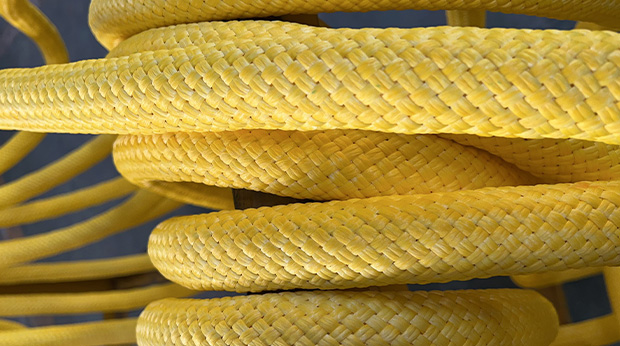
Knots, Splices, and Terminations for Boating Rope
How a rope is terminated matters as much as the rope itself. Knots reduce the effective breaking strength of a line — sometimes dramatically. Understanding the strength loss introduced by different terminations informs whether a knot or a splice is appropriate for a given application.
| Termination Type | Strength Retained | Typical Use | Notes |
|---|---|---|---|
| Eye Splice (three-strand) | 95–100% | Mooring rope loops, dock eyes | Strongest permanent termination |
| Bowline Knot | 60–70% | Temporary attachment to cleats, rings | Easy to untie, widely trusted |
| Cleat Hitch | No significant loss | Dock cleats | Load carried by cleat, not knot |
| Round Turn and Two Half-Hitches | 70–75% | Pile mooring, ring attachment | Adjustable under load |
| Double Fisherman's Knot | 65–75% | Joining two lines | Difficult to untie after loading |
For a mooring rope used in a permanent or semi-permanent berth, a machine-spliced or hand-spliced eye is always worth having. The difference between a bowline at 65% retained strength and a splice at 98% is meaningful when the rope's working load limit has already been calculated based on full breaking strength. On pre-made mooring ropes with factory splices, verify that the splice follows at least five full tuck passes for three-strand nylon — a three-tuck splice is not adequate for offshore or high-load use.
Chafe Protection: The Detail That Extends Rope Life by Years
Chafe is the number one cause of rope failure in boating. A mooring rope can have excellent construction and appropriate sizing but still fail in days if it runs unprotected over a sharp dock edge, through a tight fairlead, or against a rough cleat. The failure is not dramatic — the rope just wears through, one fiber at a time, until the remaining cross-section can no longer hold the load.
Effective chafe protection solutions include:
- Commercial chafe guards — rubber or leather sleeves that wrap around the rope at the contact point and are secured with whipping twine or velcro
- Leather chafe patches — traditional and highly effective, particularly for mooring rope where it contacts wooden or metal dock infrastructure
- Nylon hose sections — a simple DIY chafe sleeve using a length of garden hose threaded over the rope before attachment
- Proper fairlead use — routing mooring rope through properly sized, smooth-bore fairleads instead of over raw dock edges dramatically reduces chafe rate
- Oversizing the rope diameter — a rope that is slightly larger than minimum required is inherently more abrasion-resistant because there is more material to wear through
Check chafe guard placement every few weeks on a boat in regular use. Guards can slide out of position, particularly on boats that experience significant tidal variation or are exposed to persistent swell. A chafe guard that has migrated three inches from its original position is protecting nothing.
Storing and Maintaining Rope for Boating
Rope stored improperly degrades faster than rope in active use. A mooring rope coiled wet and left in a sealed locker in a hot climate will develop mold in the core, which weakens fibers from the inside out without any visible external sign. The following practices extend rope life significantly and reduce the chance of unexpected failure.
Washing
Wash dock lines and mooring ropes in a standard washing machine on a cold, gentle cycle with mild detergent — no bleach, no fabric softener. Place the rope in a mesh laundry bag to prevent tangling in the drum. This removes salt, sand, diesel residue, and biological material that accelerate fiber breakdown. Air-dry completely before storage; never use a dryer, as heat damages synthetic fibers.
Coiling
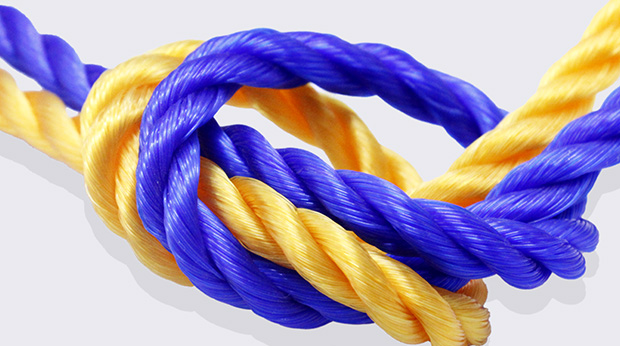
Three-strand rope must be coiled clockwise (with the lay of the rope) to avoid creating hockles — permanent kinks that damage the internal structure. Double-braid rope can be coiled in figure-eight patterns to avoid induced twist. Rope that is consistently coiled correctly lies flat, runs out smoothly, and lasts longer than rope that is bundled and thrown into a locker.
UV Protection During Storage
When mooring ropes are not in use for extended periods — during a winter lay-up, for example — store them below decks or in UV-opaque bags rather than on deck. UV is the primary driver of long-term strength loss in nylon. A nylon mooring rope left on deck in tropical sunlight for a full year can lose 30–40% of its original breaking strength even if it has never been loaded significantly.
Frequently Asked Questions About Rope for Boating
What is the difference between a mooring rope and a dock line?
In practice, the terms are often used interchangeably. Technically, a mooring rope secures a vessel to a mooring buoy, pile, or cleat — typically a fixed point at a marina or anchorage. Dock lines are the specific lines (bow, stern, and spring lines) used to secure the boat to a dock or pier. Both are typically made from nylon for its shock-absorbing stretch, and sizing principles are the same.
Can I use the same rope for mooring and anchoring?
Technically yes — both applications benefit from nylon's elasticity and both involve prolonged static load. However, anchor rope (rode) is typically stored in a wet locker or rode bin and spends extended periods coiled in salt water and mud. Using dedicated anchor rode protects your dock lines from premature wear and allows you to track the service life of each line type independently.
How do I know when a mooring rope needs to be replaced?
Replace a mooring rope immediately if you find any of the following: visible chafe cuts longer than 1–2 inches, hard or brittle sections, surface powdering, splice slippage, significant color fading from UV, or any section that has been subjected to a shock load beyond the estimated safe working load. When in doubt, replace it — the cost of a new rope is far lower than the cost of a damaged vessel.
Is polyester or nylon better for dock lines?
Nylon is better for dock lines and mooring rope in almost all circumstances because its elasticity absorbs the shock loads generated by waves, wakes, and surge. Polyester has minimal stretch and would transmit those loads directly to deck hardware and hull fittings, accelerating wear and risking damage. Polyester is appropriate for halyards, sheets, and control lines where minimal stretch is an advantage.
How many dock lines does a boat need?
A minimum practical set is six lines: two bow lines, two stern lines, and two spring lines (one forward spring and one aft spring). This provides redundancy and allows for proper load distribution around the boat. Boats moored in exposed locations, tidal areas, or during storm conditions should add additional lines — some experienced cruisers double every line when a gale is forecast.
What color rope should I use for mooring?
Color is primarily a preference and identification issue rather than a performance one. White and light tan are traditional for mooring rope and dock lines, while blue, green, and red are common for lines needing identification (such as distinguishing bow from stern lines in a dark locker). High-visibility colors like yellow or orange are sometimes used for tow lines and safety equipment to improve visibility in water. Functionally, dark colors absorb more UV heat, which can marginally accelerate degradation — but this is a minor factor compared to rope diameter, construction, and maintenance practices.
PREV:Mooring Lines for Boats: Types, Sizing & Setup Guide
NEXT:Rope Sizes Guide: How to Choose the Right Mooring Rope
NEXT:Rope Sizes Guide: How to Choose the Right Mooring Rope
Related Products
-
 View More
3-Strand Polypropylene Mono-filament Mooring Rope / Line
-
 View More
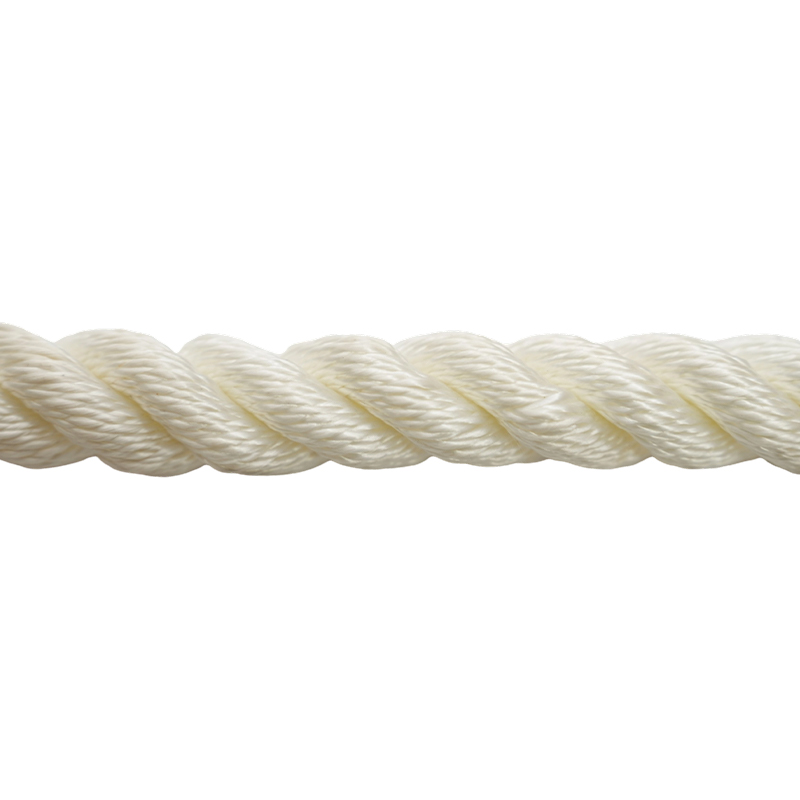
3-Strand Polypropylene Multi-Filament Hawser Mooring Rope / Line
-
 View More
8-Strand Polypropylene Mono-filament Hawser Mooring Rope / Line
-
 View More
8-Strand Polypropylene Multi-filament Mooring Rope / Line
-
 View More
12-Strand Polypropylene Multi-filament Hawser Mooring Rope / Line
-
 View More
Polypropylene Multi-filament Double Braided Hawser Mooring Rope / Line
-
 View More
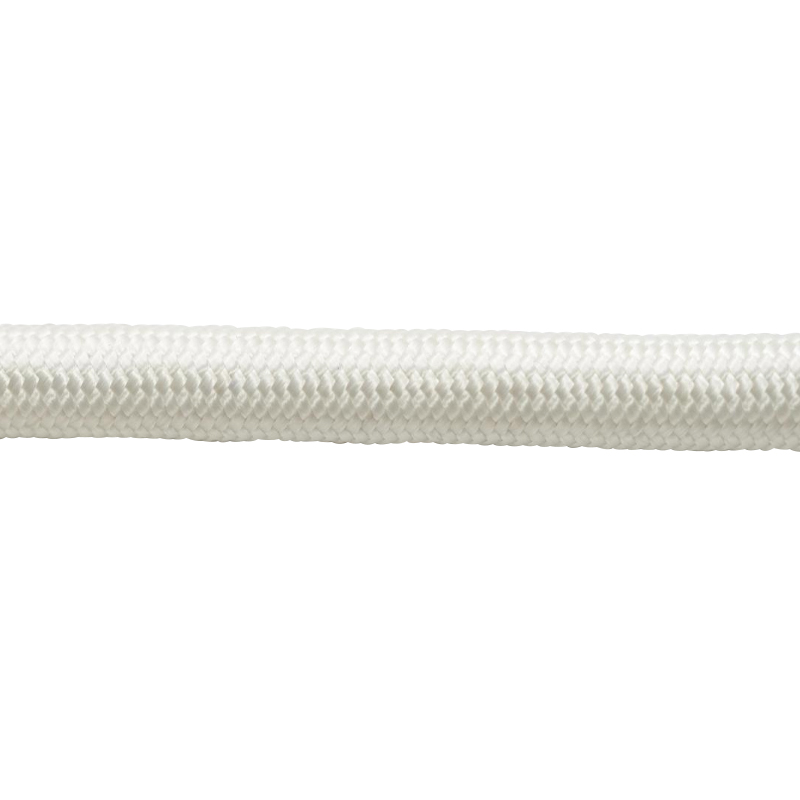
Polypropylene Multi-filament Reduced Recoil Mooring Rope / Line
-
 View More
Polypropylene Multi-filament Mooring Tail
-
 View More
3-Strand Polyester Mooring Rope / Line
-
 View More
8-Strand Polyester Hawser Mooring Rope / Line
-
 View More
12-Strand Polyester Mooring Rope / Line,Hawser
-
 View More
Polyester Double Braided Hawser Mooring Rope / Line