


 English
 Español
 عربى
عربى
Mooring Rope Diameter: How to Select the Right Size
Content
- 1 Why Rope Diameter Is the Starting Point for Any Mooring System
- 2 Rope Diameter vs. Minimum Breaking Load: A Practical Reference
- 3 How to Calculate the Required Mooring Rope Diameter for Your Vessel
- 4 Mooring Rope Material vs. Diameter: What Each Fiber Changes
- 5 Rope Diameter and Stretch: How Diameter Affects Dynamic Load Response
- 6 Recommended Mooring Rope Diameter by Vessel Type and Size
- 7 How to Measure Rope Diameter Correctly — And Why It's Harder Than It Looks
- 8 Common Mistakes When Choosing Mooring Rope Diameter
- 9 Rope Diameter in Automated and Vacuum Mooring Systems
- 10 Inspecting Mooring Rope Diameter Over Service Life
- 11 Frequently Asked Questions About Mooring Rope Diameter
- 11.1 What rope diameter should I use for a 12-meter sailing boat?
- 11.2 Is a larger rope diameter always stronger?
- 11.3 How does rope diameter affect handling on a winch or capstan?
- 11.4 Can I use the same diameter mooring rope for all lines in my arrangement?
- 11.5 What is the difference between rope diameter and rope circumference?
- 11.6 How often should I measure my mooring rope diameter in service?
- 11.7 Does rope color affect which diameter I should choose?
- 11.8 What is the typical service life of a mooring rope before diameter-related retirement?
Mooring Rope Essentials
Rope diameter is the single most critical specification when selecting a mooring rope. Get it wrong and you face either a snapped line under load or a rope so heavy it creates handling hazards on deck. For most commercial vessels, mooring rope diameters range from 28 mm to 96 mm depending on vessel deadweight tonnage (DWT), while small craft typically use lines between 10 mm and 24 mm. This guide breaks down exactly how rope diameter interacts with breaking load, stretch behavior, material choice, and real-world mooring performance — so you can specify the right line every time.
Foundation
Why Rope Diameter Is the Starting Point for Any Mooring System
When a vessel moves — pushed by wind, current, or surge — every force transfers through the mooring rope to the bollard or cleat. That transfer depends entirely on the rope's cross-sectional area, which scales with diameter squared. A mooring rope with double the diameter carries roughly four times the load-bearing cross section, not twice. This relationship explains why even small diameter differences translate into major changes in a line's safe working load (SWL).
Beyond breaking strength, diameter determines several practical factors aboard ship. Thicker ropes require larger capstans, fairleads, and bitts designed to accept that diameter. They also affect how quickly a line can be handled manually — a 64 mm polypropylene mooring rope weighs roughly 2.2 kg per meter, while the same construction in 32 mm weighs only about 0.55 kg per meter. Over a 200-meter working length, that difference amounts to 330 kg of extra mass the crew must manage on deck.
Rope diameter also governs compatibility with automated mooring systems. Quick-release hooks on modern mooring platforms are rated for specific diameter ranges, and exceeding them creates a safety hazard regardless of the rope's tensile strength. The International Maritime Organization (IMO) recommends that mooring equipment — including ropes — be matched to documented ship-specific mooring arrangements, making diameter a document-level specification, not just a purchase decision.
4× Load-bearing cross section increase when rope diameter doubles
2.2 kg/m Weight of 64 mm polypropylene mooring rope per running meter
10–96 mm Typical rope diameter range across recreational and commercial vessels
Reference Data
Rope Diameter vs. Minimum Breaking Load: A Practical Reference
The table below compares typical minimum breaking loads (MBL) for three common mooring rope materials across the most widely used commercial diameters. Values are approximate and depend on construction (8-strand, 12-strand, double-braid) and manufacturer specifications. Data sourced from general industry references including Samson Rope product data sheets and OCIMF (Oil Companies International Marine Forum) mooring guidelines.
| Rope Diameter (mm) | Polypropylene MBL (kN) | Polyester MBL (kN) | HMPE / Dyneema MBL (kN) |
|---|---|---|---|
| 28 | 155 | 195 | 490 |
| 40 | 315 | 400 | 1010 |
| 56 | 620 | 780 | 1960 |
| 72 | 1020 | 1290 | 3240 |
| 96 | 1810 | 2290 | 5730 |
The HMPE column illustrates the core commercial argument for high-modulus fibers: a 40 mm HMPE mooring rope delivers over 1,000 kN MBL — matching what a conventional 72 mm polyester rope achieves at roughly a quarter of the weight. This strength-to-weight ratio matters enormously on vessels where handling large-diameter conventional ropes creates real crew fatigue and injury risk over long shifts.

Calculation
How to Calculate the Required Mooring Rope Diameter for Your Vessel
01
Determine the Vessel's Design Mooring Load
The starting point is the maximum expected environmental load on the mooring arrangement — typically calculated from the vessel's windage area, current drag, and wave-induced surge forces. OCIMF's Mooring Equipment Guidelines (MEG4) provide a standardized methodology. For a 50,000 DWT tanker, design mooring loads typically reach 1,500 to 2,000 kN total per arrangement. For a 300,000 DWT VLCC, total mooring load can exceed 7,000 kN.
02
Divide Load Across Lines
Mooring loads are shared among multiple lines. A typical tanker arrangement uses 4–6 breast lines, 2–4 spring lines, and 2 head/stern lines. Assuming even distribution (conservative), divide the total design load by the number of working lines to get the load per line. For six breast lines sharing 2,000 kN, each line carries approximately 333 kN — though in practice, breast lines carry more transverse load and springs carry more surge.
03
Apply a Safety Factor
Industry convention applies a minimum safety factor of 1.67 to 2.0 between the design load per line and the rope's MBL. Using 1.75: if a line must handle 333 kN, the minimum MBL required is 333 × 1.75 = 582 kN. This accounts for dynamic loading, snap-load events, and strength reduction from bending over chocks and bitts.
04
Match MBL to Rope Diameter
Using the material's published MBL-vs-diameter table, find the diameter that meets or exceeds 582 kN. For polyester 8-strand, this falls between 56 mm (780 kN) — confirming that 56 mm polyester mooring rope is the minimum appropriate selection. Always round up, never down, and verify compatibility with your vessel's fairleads and capstans.
Material Guide
Mooring Rope Material vs. Diameter: What Each Fiber Changes
No single fiber is best across every application. The table below summarizes how five common mooring rope materials affect the diameter needed to achieve equivalent strength, and what that means operationally.
Polypropylene
- Density: Floats on water
- Relative diameter for 500 kN MBL: ~72 mm
- Stretch: 15–25% elongation at break
- UV resistance: Moderate — degrades with prolonged sun exposure
- Best for: Cost-sensitive applications, inland waters, smaller vessels
Polyester
- Density: Sinks in water
- Relative diameter for 500 kN MBL: ~56 mm
- Stretch: 10–15% — good shock absorption
- UV resistance: Good — stable over years of outdoor use
- Best for: General commercial mooring, ferry berths, general cargo
Nylon (Polyamide)
- Density: Sinks in water
- Relative diameter for 500 kN MBL: ~60 mm
- Stretch: 30–40% — highest elasticity of conventional fibers
- UV resistance: Moderate — loses strength when wet (approx. 15% MBL reduction)
- Best for: Tidal berths, locations with large surge, head/stern lines
HMPE / Dyneema
- Density: Floats (only synthetic fiber lighter than water)
- Relative diameter for 500 kN MBL: ~28 mm
- Stretch: Less than 4% — very low elongation
- UV resistance: Good with protective jacket; bare HMPE degrades in UV
- Best for: Large tankers, LNG carriers, vessels with automated mooring systems
LCP / Vectran
- Density: Sinks in water
- Relative diameter for 500 kN MBL: ~30 mm
- Stretch: Less than 3%
- UV resistance: Requires protective jacket for outdoor use
- Best for: Offshore mooring, floating platforms, high-cycle applications
Performance
Rope Diameter and Stretch: How Diameter Affects Dynamic Load Response
Diameter and elongation interact in ways that are not immediately obvious. For a rope of a given material and construction, a larger diameter at the same length stores significantly more energy under equal strain. This has direct consequences for snap-load hazards — the sudden rebound when a heavily loaded line is released or breaks.
A 72 mm nylon mooring rope stretched to 20% elongation stores approximately 3.5 times the elastic energy of a 40 mm rope of the same material stretched by the same percentage. If that line parts under load, the stored energy converts instantly into a snap-back that can be lethal. This is why the UK Maritime and Coastguard Agency (MCA) and OCIMF guidelines emphasize exclusion zones behind any line under tension, regardless of diameter — but particularly for larger-diameter high-stretch lines.
On the other end of the spectrum, small-diameter HMPE mooring ropes store very little energy due to their ultra-low elongation (often below 4% at MBL). This makes snap-back events less violent, but it shifts the risk profile: HMPE lines can fail suddenly without the visible elongation warning that conventional fibers provide. Crew training must account for this behavioral difference when transitioning from conventional mooring ropes to HMPE alternatives.
Minimum Bend Radius and Diameter
Every rope material has a minimum bend radius — the smallest diameter around which it can be bent without structural damage. As a general rule, the safe bending radius should be at least three to five times the rope's own diameter for conventional synthetic fibers, and often eight to twelve times for HMPE and LCP fibers. A 56 mm HMPE mooring rope, for example, should not be bent around a chock with an inner radius smaller than 448 mm (8 × 56 mm). Many older vessels have fairleads and chocks designed for steel wire, and these can be too tight for large-diameter high-modulus rope — a critical compatibility check before installation.
Abrasion Wear and Rope Diameter
Abrasion resistance scales with surface area, which increases with diameter. A 56 mm rope presents approximately 1.4 times the outer surface of a 40 mm rope per unit length. In practical terms, larger-diameter mooring ropes tolerate chafe and abrasion at contact points better than smaller-diameter lines of the same material — though the absolute number of cycles to failure still depends on fiber type and construction. Polyester double-braid outperforms 8-strand constructions in abrasion resistance regardless of diameter, making construction choice as important as diameter selection in chafe-prone locations like chocks and fairleads.

Standards
Recommended Mooring Rope Diameter by Vessel Type and Size
The following recommendations are drawn from OCIMF MEG4 and general industry practice. They represent minimum starting points — specific berth conditions, tidal range, and environmental exposure can push diameter requirements higher.
| Vessel Type | DWT / LOA | Conventional Fiber Diameter (mm) | HMPE Equivalent Diameter (mm) |
|---|---|---|---|
| Recreational sail / motor | Up to 12 m LOA | 10–14 | — |
| Coastal fishing / small workboat | 12–24 m LOA | 16–24 | — |
| Coastal ferry / RoPax | 2,000–10,000 GT | 40–56 | 22–32 |
| Handymax / Supramax bulk carrier | 40,000–60,000 DWT | 56–72 | 32–44 |
| Aframax / Suezmax tanker | 80,000–160,000 DWT | 72–88 | 44–56 |
| VLCC / ULCC | 200,000+ DWT | 88–96+ | 56–72 |
Practical Skills
How to Measure Rope Diameter Correctly — And Why It's Harder Than It Looks
Rope diameter is not simply the distance across the rope at any point. The nominal diameter published by manufacturers is typically the mean diameter under a defined light reference load, measured in accordance with ISO 2307 or equivalent national standards. In practice, ropes are not perfectly circular — braided and twisted constructions have external textures and gaps that cause a simple caliper measurement to overread by 5–15%.
Apply a Reference Tension
Before measuring, tension the rope to approximately 10% of its MBL. This compresses the construction and removes slack from the braid or lay, giving a diameter reading closer to the nominal specification. Measuring a completely slack rope can give readings 10–20% larger than the actual nominal diameter.
Use a Proper Rope Gauge
A standard vernier caliper placed across the exterior of a braided rope captures the widest point — not the representative cross section. A rope gauge (sometimes called a rope micrometer) applies a standardized contact pressure across a defined width and gives a reading that accounts for surface texture. ISO 2307:2010 specifies the measurement method for fiber ropes in detail, including the gauge design, reference load, and measurement locations along the rope length.
Take Multiple Readings
Measure at three locations at least 1 meter apart, and at each location take two readings 90 degrees to each other. Average all six readings. If any individual reading differs from the mean by more than 5%, the rope may have uneven wear or construction defects that require closer inspection before continued service.
Compare to New Rope Baseline
A mooring rope in service gradually loses diameter as fibers break and the construction compresses. A reduction in diameter of more than 10% compared to the original nominal dimension is a standard indicator that the rope should be retired from service, even if no visible external damage is present. Record the as-new diameter at installation to enable meaningful future comparisons.
Risk Management
Common Mistakes When Choosing Mooring Rope Diameter
Replacing Wire with Same-Diameter Fiber Rope
Steel wire mooring lines and synthetic fiber mooring ropes with the same nominal diameter have dramatically different MBLs. A 40 mm steel wire rope typically breaks at 700–900 kN; a 40 mm polyester rope breaks at around 400 kN. Swapping materials without recalculating diameter leads to undersized mooring lines. The correct approach is to specify fiber rope by required MBL and find the diameter that achieves it, not to match the outgoing wire's diameter.
Ignoring Knotting and Splicing Strength Loss
Knots reduce rope strength by 30–50%; a poorly made eye splice in a braided rope can reduce MBL by 15–25%. This strength reduction must be factored into diameter selection. A 56 mm rope with a knotted end connection may deliver less effective MBL than a properly spliced 48 mm rope of the same material. Always use professionally made eye splices at mooring rope ends, and always request splice efficiency data from the manufacturer.
Upsizing Diameter to Compensate for Wear
A worn rope with reduced MBL should be replaced, not compensated for by switching to a larger diameter. Larger-diameter ropes require different equipment and create new compatibility issues with fairleads and winch drums. Upsizing is only appropriate when the original design loads were insufficient — not as a workaround for maintaining degraded ropes in service.
Mixing Diameters in the Same Arrangement
When mooring lines of different diameters are used in the same breast line arrangement, load distribution becomes uneven. Stiffer, smaller-diameter HMPE lines attract disproportionate load compared to larger-diameter polyester lines, even if the latter have higher MBLs. OCIMF MEG4 advises that ropes in the same lead should have matched stiffness characteristics — which in practice means matched material and diameter — to ensure predictable load sharing.
Innovation
Rope Diameter in Automated and Vacuum Mooring Systems
Automated mooring systems — such as those produced by Cavotec and Trelleborg — use vacuum suction pads or electro-mechanical clamps rather than conventional rope lines as the primary holding force. However, mooring ropes remain part of these installations as secondary safety lines and as the primary means for vessels operating at terminals not yet equipped with automation.
In fully automated installations, rope diameter requirements are often reduced because the vacuum system handles the majority of the environmental load. A large tanker that would normally require 88 mm polyester breast lines might use 56 mm polyester safety lines at an automated berth — a meaningful reduction in weight and handling difficulty for the crew. However, the secondary rope lines must still be compatible with any remaining manual equipment on the vessel.
Rapid mooring systems for passenger ferries — where turnaround time is critical — drive an additional pressure on rope diameter: smaller, lighter ropes can be handled faster by fewer crew. Norwegian ferry operator Fjord1, operating on the Bergen route, has reported that switching from 48 mm nylon to 28 mm HMPE mooring ropes reduced shore-tie time by approximately 40 seconds per call — a compounding saving across 30+ daily calls. Source: Norwegian Maritime Authority operational case studies, 2019.

Maintenance
Inspecting Mooring Rope Diameter Over Service Life
Diameter change over time is one of the most reliable visible indicators of rope degradation. Understanding how different failure modes express themselves as diameter changes enables smarter inspection routines.
Uniform Diameter Reduction
Gradual reduction across the full length of the rope indicates normal fatigue wear — fibers breaking incrementally under repeated load cycles. This is the expected aging pattern. Most manufacturers and OCIMF recommend rope retirement when diameter drops below 90% of the original nominal value, corresponding to significant loss of structural cross section.
Localized Diameter Reduction (Necking)
A visible constriction at one location — sometimes called necking — indicates that the rope has been subjected to a severe overload event that partially broke the internal structure. Even if the overall rope still appears sound, a necked section will fail at a fraction of the nominal MBL. Retire immediately upon finding any necking regardless of length of service.
Localized Diameter Increase (Hockle or Core Extrusion)
A sudden diameter increase — a lump or bump in the profile — typically indicates that the core has separated from the outer braid (in double-braid construction) or that one strand has been overloaded and has extruded outward (in braided constructions). This represents severe structural compromise and is cause for immediate retirement.
Hardening Without Diameter Change
HMPE and polyester ropes exposed to repeated high loads can creep into a hardened condition where the fibers become tightly compacted. The nominal diameter may appear unchanged, but the rope's stiffness increases dramatically and its fatigue resistance drops. Hardened ropes often fail suddenly without the elongation warning typical of softer fiber constructions. Conduct stiffness checks as part of any inspection protocol for high-modulus mooring ropes.
FAQ
Frequently Asked Questions About Mooring Rope Diameter
What rope diameter should I use for a 12-meter sailing boat?
For a typical 12-meter sailing vessel, mooring ropes (dock lines) of 12 mm to 16 mm diameter in nylon or polyester are standard. Nylon is the preferred material because its 30–40% elongation absorbs surge and wake forces that would otherwise jerk the boat hard against cleats. Use a minimum of four lines — two springs and two breast lines — and size the line length to roughly 2/3 of the vessel's overall length for springs and equal to the beam for breast lines.
Is a larger rope diameter always stronger?
Within the same material and construction, yes — larger diameter means greater cross-sectional area and higher breaking load. However, across materials, this does not hold. A 28 mm HMPE mooring rope typically delivers higher MBL than a 56 mm polypropylene rope. When comparing ropes, always compare MBL values directly, not diameter values, unless the materials are identical.
How does rope diameter affect handling on a winch or capstan?
Winches and capstans are rated for a specific diameter range. Using a rope too thin means it can slip or ride over itself on the drum. Using a rope too thick means it may not seat correctly and can generate excessive friction or fail to hold under load. Always check the equipment manufacturer's diameter specifications before selecting mooring rope diameter. As a practical note, most mooring winches on tankers are designed for a range of plus or minus 8 mm around the nominal rated diameter.
Can I use the same diameter mooring rope for all lines in my arrangement?
Using the same diameter throughout the arrangement is operationally convenient and load-sharing consistent, but it is not always the most effective approach. Breast lines carry transverse load and benefit from moderate stretch; spring lines carry surge forces and need some elasticity; head and stern lines carry both. Some vessel operators use slightly larger-diameter, higher-stretch nylon for breast lines and smaller-diameter, stiffer polyester or HMPE for spring lines to optimize performance at each position. Consult your vessel's mooring system design documentation for specific guidance.
What is the difference between rope diameter and rope circumference?
Historically, natural fiber ropes were specified by circumference — a 6-inch rope was 6 inches around, which corresponds to a diameter of approximately 48 mm. Modern synthetic mooring ropes are always specified by diameter, which is the straight-line distance across the cross section. When reading older specifications or dealing with legacy equipment, multiply circumference by 0.318 to convert to diameter (diameter = circumference / pi). A 6-inch circumference rope is approximately 48 mm in diameter.
How often should I measure my mooring rope diameter in service?
OCIMF recommends that mooring ropes undergo a full documented inspection at least every 30 months, but this interval should be shortened based on usage intensity. High-frequency operations — ferries making 10+ moorings per day, or vessels in high-surge environments — should inspect lines every 12 months or after any incident involving suspected overload. Diameter measurement should be part of every inspection routine, with readings recorded against the original nominal value and trended over successive inspections.
Does rope color affect which diameter I should choose?
Rope color is typically used for visual identification — to distinguish mooring ropes from towing lines, or to identify different lines in a complex arrangement. Color does not affect structural performance. However, darker-colored ropes absorb more solar radiation, which can elevate internal rope temperature and accelerate UV degradation of polypropylene fibers over time. In very high UV climates, this can be a secondary consideration, but it does not drive diameter selection.
There is no universal service life — it depends on intensity of use, maintenance, and storage. OCIMF MEG4 does not specify a maximum age for retirement; instead, it mandates condition-based criteria, of which diameter is one. In commercial tanker operations, mooring ropes often last 5–10 years in moderate use. Ferry operations — with 20+ moorings per day in some cases — may retire lines after 2–3 years due to accelerated fatigue. Regular diameter measurement enables condition-based retirement rather than arbitrary age-based replacement.
PREV:What Is a Rope Ruler and Why It Matters for Mooring Rope?
NEXT:Mooring Rope Measurements: Diameter, Length & Load Guide
NEXT:Mooring Rope Measurements: Diameter, Length & Load Guide
Related Products
-
 View More
3-Strand Polypropylene Mono-filament Mooring Rope / Line
-
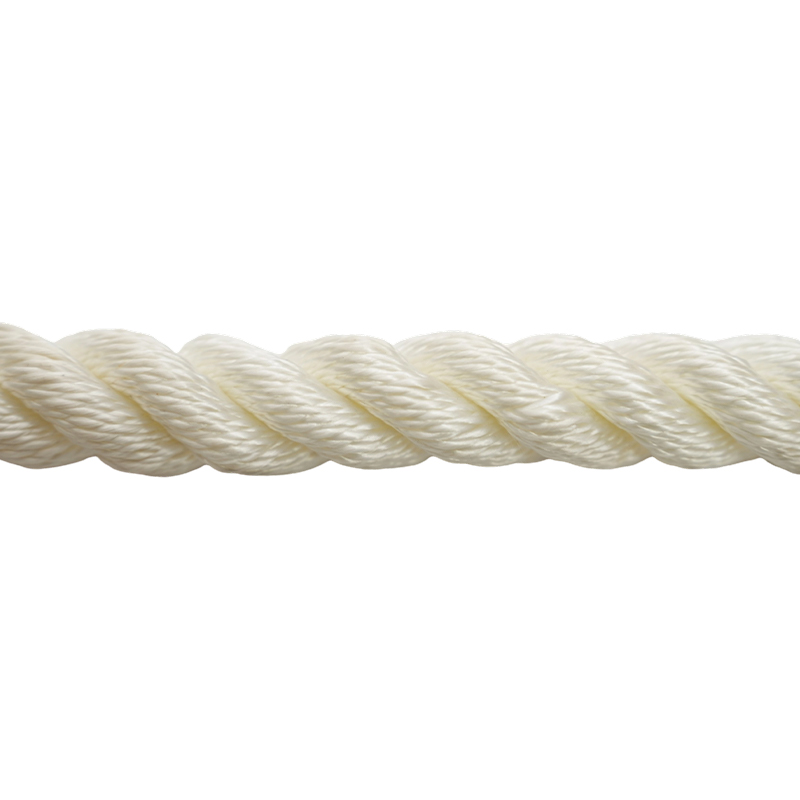 View More
3-Strand Polypropylene Multi-Filament Hawser Mooring Rope / Line
-
 View More
8-Strand Polypropylene Mono-filament Hawser Mooring Rope / Line
-
 View More
8-Strand Polypropylene Multi-filament Mooring Rope / Line
-
 View More
12-Strand Polypropylene Multi-filament Hawser Mooring Rope / Line
-
 View More
Polypropylene Multi-filament Double Braided Hawser Mooring Rope / Line
-
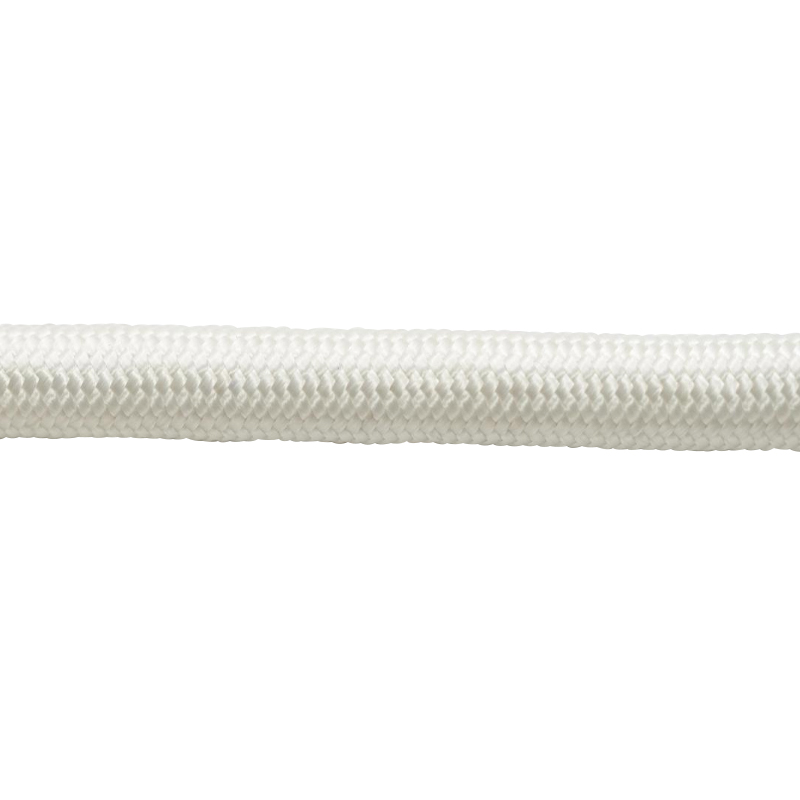 View More
Polypropylene Multi-filament Reduced Recoil Mooring Rope / Line
-
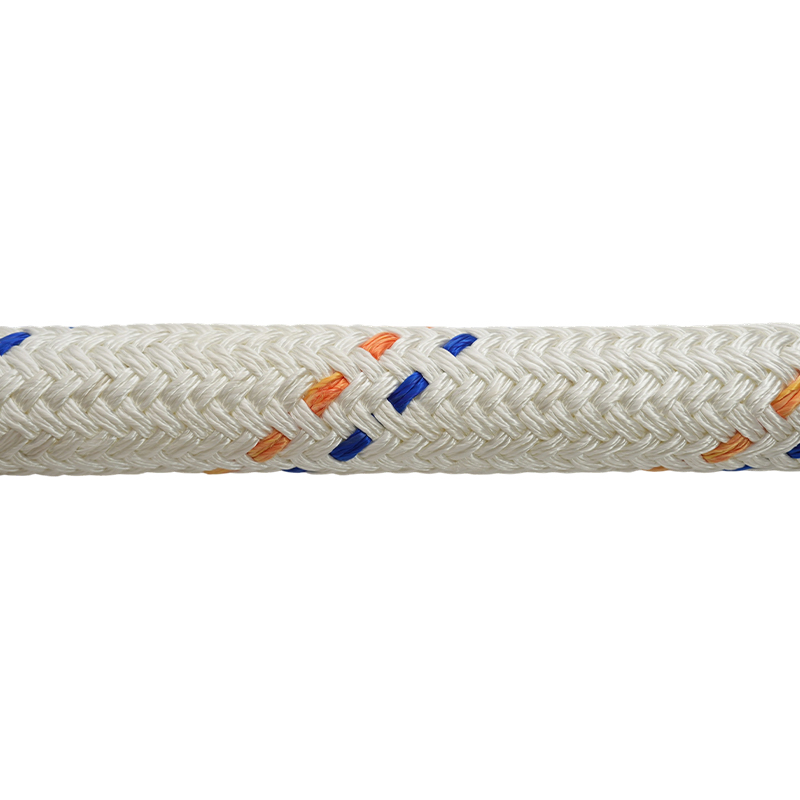 View More
Polypropylene Multi-filament Mooring Tail
-
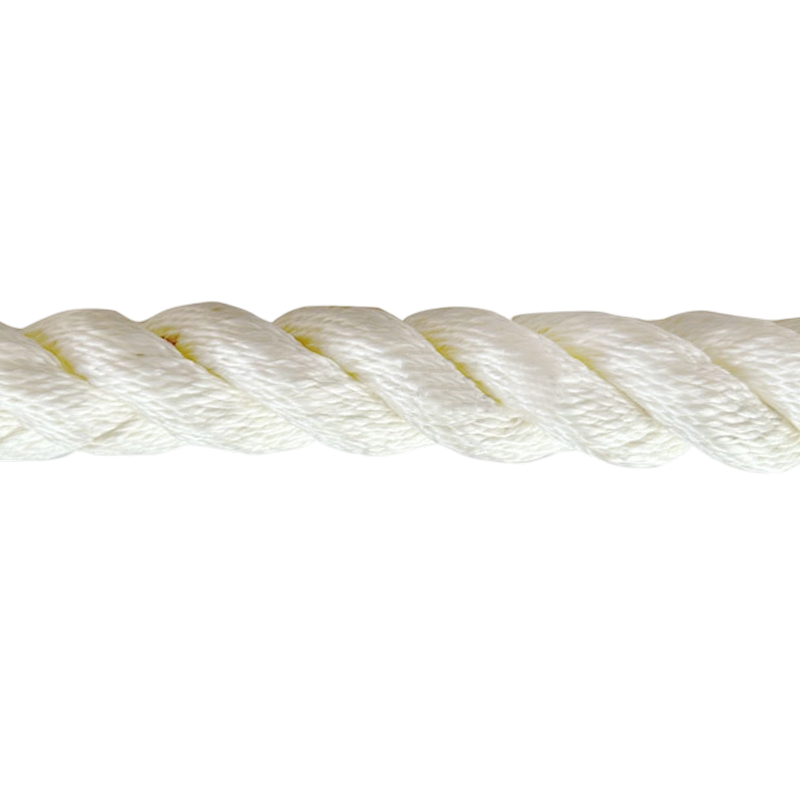 View More
3-Strand Polyester Mooring Rope / Line
-
 View More
8-Strand Polyester Hawser Mooring Rope / Line
-
 View More
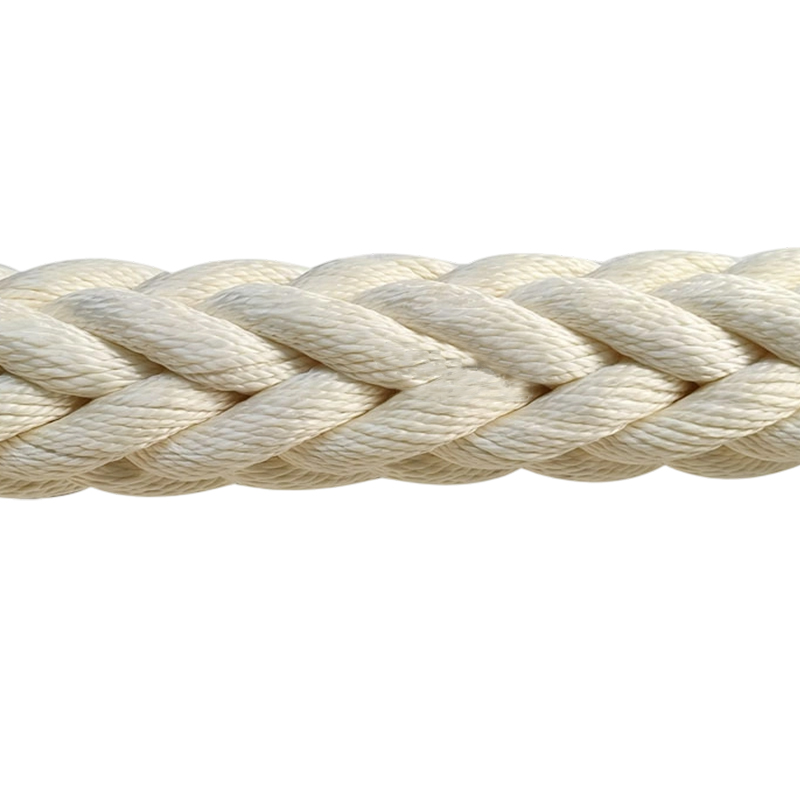
12-Strand Polyester Mooring Rope / Line,Hawser
-
 View More
Polyester Double Braided Hawser Mooring Rope / Line